

Fr Davide Pagliarani
Fr Pagliarani’s letter to Pope Leo XIV over episcopal consecrations
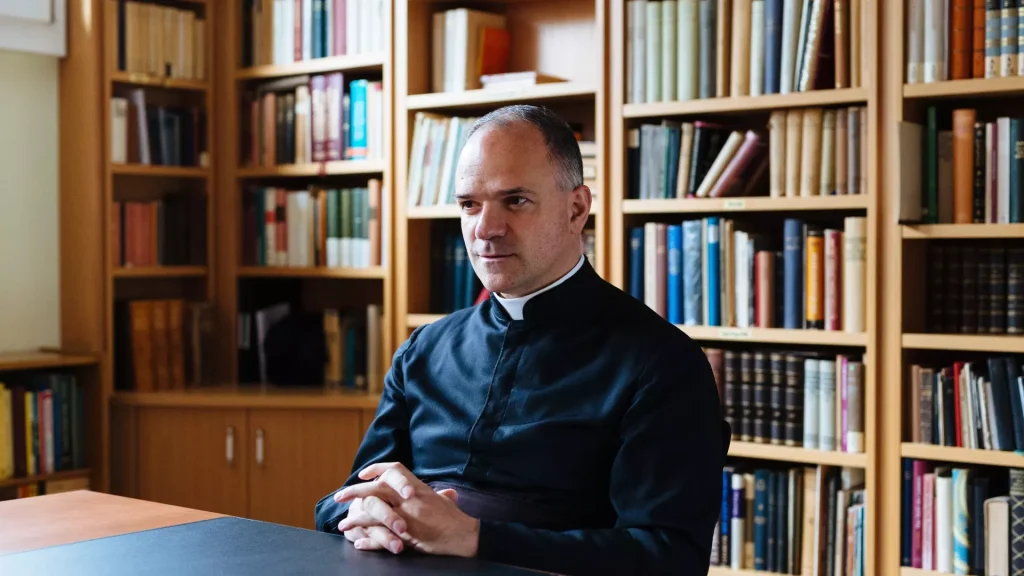
Fr Davide Pagliarani has responded to Pope Leo’s letter regarding the Society of Saint Pius X’s planned episcopal consecrations but stopped short of saying whether the fraternity intends to suspend the ceremony. Responding to the Pope’s personal letter, published by the Vatican on 30 June, the Superior General of the Society thanked the Holy Father […] Fr Davide Pagliarani has responded to Pope Leo’s letter regarding the Society of Saint Pius X’s planned episcopal consecrations but stopped short of saying whether the fraternity intends to suspend the ceremony. Responding to the Pope’s personal letter, published by the Vatican on 30 June, the Superior General of the Society thanked the Holy Father for his “paternal solicitude” before appealing for more time and asking him not to make a final decision concerning the fraternity. “Thank you very much for the letter that Your Holiness so kindly addressed to me. I have been deeply touched by Your paternal solicitude,” Fr Pagliarani wrote. He said he had long hoped to meet Pope Leo personally to explain the Society’s position. “For a long time, I had hoped to have the opportunity of meeting You in person, in order to express to You directly our sincere desire to serve the Church. Unfortunately, that opportunity has not presented itself,” he said. Fr Pagliarani insisted the Society’s intentions towards Rome remained genuine, adding: “I ask only that You consider the sincerity of this intention, which is in no way feigned.” He argued that, in the Society’s view, its actions were aimed at preserving rather than damaging the unity of the Church. “Paradoxically, in the present circumstances, we believe it to be our very duty to do everything possible to mend Christ’s seamless garment, torn by forces and pressures incompatible with a truly Catholic spirit. I ask only that You consider the authenticity of this intention before making a decision concerning the Society of Saint Pius X. It is not yet too late.” The Superior General also rejected any suggestion that the Society wished to break communion with Rome, writing: “Far be it from us to separate ourselves from the Roman Church. We desire, on the contrary, to serve her by means that are extraordinary, as one would assist a mother in distress who requires particular help, even if such help is not understood by everyone. Yet I am certain that the Holy Father could understand it.” Rather than announcing whether the planned episcopal consecrations would proceed, Fr Pagliarani instead urged Pope Leo to delay any judgement, writing: “The Holy See has shown itself capable of understanding very complex situations and of allowing time for discernment. “May I therefore filially ask Your Holiness to take the time necessary for that discernment.” The Society’s Superior General also pointed to the history of relations between the Holy See and the fraternity following the episcopal consecrations carried out by Archbishop Marcel Lefebvre in 1988. “First, in 1988 the Society was already declared schismatic, for reasons and in circumstances entirely analogous to those of today. Yet, after so many years, we are speaking together as a father and his son.” He continued: “Your Holiness is paternally urging me to avoid a schism which, theoretically, has already taken place. Does not Your very attitude—whose paternal concern I deeply appreciate—constitute proof that the Society is neither schismatic nor hostile to the Church?” Fr Pagliarani also referred to the late Bishop Vitus Huonder, the former Bishop of Chur, and Bishop Athanasius Schneider, Auxiliary Bishop of Astana, both of whom he said had engaged with the Society on behalf of the Holy See. Fr Davide Pagliarani also referred to the late Bishop Vitus Huonder, the former Bishop of Chur, and Bishop Athanasius Schneider, Auxiliary Bishop of Astana, both of whom he said had engaged with the Society on behalf of the Holy See. “Both, after taking the necessary time for discernment, recognised the profoundly Catholic spirit of the Society and bore public witness to it.” Appealing on behalf of the Society’s faithful, Fr Pagliarani wrote that “thousands of souls” had rediscovered the Catholic faith through the fraternity’s apostolate. “These souls have but one desire: to attain salvation through this instrument which Divine Providence has placed at their disposal. They have suffered, and they are sincere.” He added that he believed Pope Leo’s “paternal heart as universal Shepherd will be moved by this very particular situation”, expressing confidence that “one day, all the difficulties between the Holy See and the Society will be resolved.” The letter concluded with a direct appeal to the Pope to allow the consecrations to proceed: “A gesture of understanding on Your part, far from harming unity, could only manifest before the world and before all Christians Your concern for unity and Your goodness as a father. “I leave all this to Your consideration. I renew my prayers for Your Holiness.” Fr Pagliarani ended by referring to his prayers to St Rita, writing: “For a long time, even before Your election, I have been praying to Saint Rita for the present situation. I saw in the election of an Augustinian Pope a sign of hope. I am certain that the Saint will intercede. It is never too late.” The Society’s letter came hours after Pope Leo XIV issued an unprecedented public appeal urging the fraternity to abandon its plans to consecrate bishops without a pontifical mandate. Writing “with a paternal heart”, the Pope praised members of the Society for their “devotion to liturgical life, commitment to priestly formation, apostolic zeal and desire for fidelity to Tradition”, adding that these qualities had inspired the “attentive and generous attitude” shown by his predecessors. The Pope nevertheless warned that proceeding with the ceremony would amount to “a schismatic act” and made a personal plea to the Society. He wrote: “In this spirit, and filled with Christian affection, I plead with you and ask you with all my heart: please turn back!” The Pontiff also warned of the consequences for the faithful attached to the Society, writing: “I urge you to consider carefully the spiritual good of the faithful, because the schismatic act you are about to undertake would deprive them of the licit and, in some cases, even valid reception of the Sacraments, which they love and seek for their sanctification.” While reaffirming that “the Church is open to a path of dialogue and understanding that the Holy Spirit can make possible and fruitful”, Pope Leo concluded with a final appeal: “With a sorrowful yet hopeful heart, I feel it is my duty, through the authority received from Christ, to ask you to desist from your intended act.” The Vatican published the Pope’s letter on 30 June, the eve of the consecrations due to take place at the Society’s international seminary at Écône.
Jun. 30, 2026
SSPX superior: consecrations ‘even more necessary in 2026’
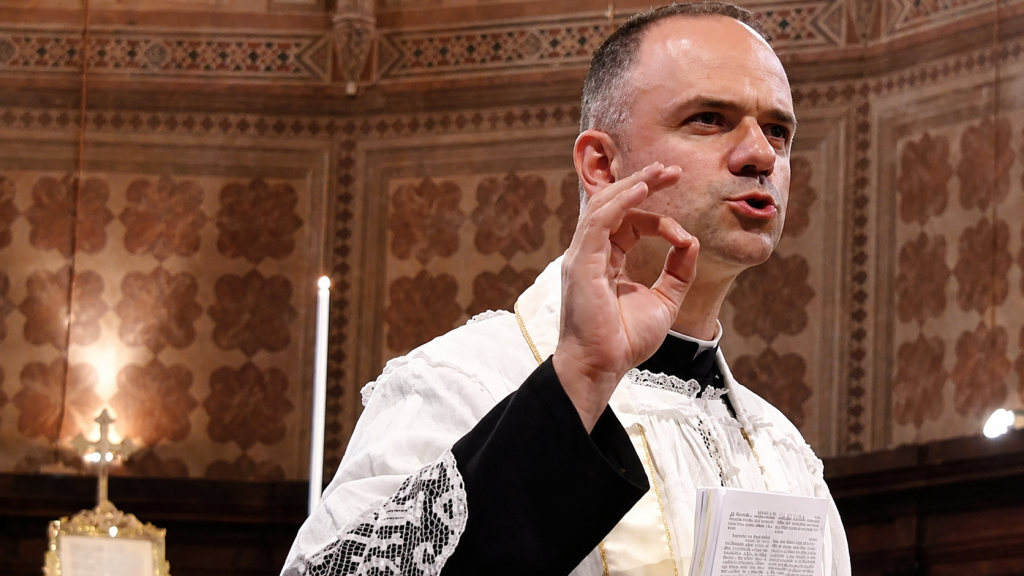
SSPX superior: consecrations ‘even more necessary in 2026’ The Society of St Pius X has defended its decision to proceed with episcopal consecrations this summer, with its Superior General warning that any declaration of excommunication or schism against the Society “would be objectively unjust”. In a letter addressed to SSPX priests ahead of the consecrations due to take place at Écône on 1 July, Fr Davide Pagliarani said the “state of necessity” invoked by Archbishop Marcel Lefebvre in 1988 was “even more evident in 2026”. “While the state of necessity could already be invoked in 1988, this state of necessity is, unfortunately, even more evident in 2026,” he wrote. The text, dated 7 March and released publicly by the Society on 21 May, was accompanied by an introduction from the SSPX Secretary General, Fr Foucauld le Roux, who said the purpose of publishing the letter was to help clergy and faithful prepare spiritually for the ceremony. “This text does not revisit the question of the consecrations themselves, but is devoted to recalling the spirit in which they must be prepared for and lived,” Fr le Roux wrote. The publication of the letter comes four months after the SSPX announced that bishops would again be consecrated at its seminary in Switzerland, the site of Archbishop Lefebvre’s consecrations in June 1988. Those consecrations, carried out without papal mandate, led Rome to declare that Archbishop Lefebvre, Bishop Antonio de Castro Mayer and the four newly consecrated bishops had incurred automatic excommunication. Although the excommunications of the surviving bishops were lifted by Pope Benedict XVI in 2009, the Society remains canonically irregular and without official status in the Church. In his latest letter, Fr Pagliarani repeatedly insisted that the SSPX was acting out of fidelity to the Catholic Church rather than separation from it. “The Society is nothing more than a means of remaining faithful to the Church,” he wrote. “If we are taking exceptional measures today to preserve the faith, the Holy Sacrifice of the Mass, and the priesthood, it is because we want the whole Catholic Church – and every soul without distinction – to be able to benefit freely from them one day. All this belongs to the Church, and we are only its guardians.” Fr Pagliarani also directly addressed the prospect of fresh sanctions from Rome, stating that the Society neither desired nor celebrated such a development. “If we come to be declared excommunicated and schismatic, this would not mean that we seek such a sanction or rejoice in it, for it would be objectively unjust,” he wrote. Furthermore, Fr Pagliarani wrote: “It is one thing to rejoice in receiving a new humiliation to offer to God, and it is quite another to rejoice in an evil and an objective injustice that causes scandal to the whole Church.” The SSPX superior urged members to avoid bitterness and resentment during the controversy surrounding the consecrations, warning against triumphalism and hostility towards Church authorities. “We must always show kindness,” he wrote. “When there is no understanding on the other side, when there is not even a willingness to listen to what we have to say and understand our reasons, it is very easy – humanly speaking – to fall into resentment.” He added that members should remain “firm and gentle at the same time”, “especially towards the hierarchy of the Catholic Church”. The letter contains repeated references to charity and suffering, including a lengthy citation from St John’s Gospel. “It is with this same charity that, now more than ever, we must love souls and Holy Mother Church, even if its official representatives were to declare us excommunicated and schismatic once again,” Fr Pagliarani wrote, before quoting John 16:1-4: “They will put you out of the synagogues: yea, the hour cometh, that whosoever killeth you, will think that he doth a service to God.” Fr Pagliarani also rejected accusations that the SSPX had become a “parallel Church”, arguing instead that the Society existed to safeguard Catholic tradition until it could once again flourish throughout the wider Church. “We ask nothing for ourselves,” he wrote. “Our only reward will be to see one day Holy Mother Church reclaim her Traditions.” The Superior General described the debate surrounding the consecrations as “providential”, saying the issue had provoked concern throughout the Catholic Church. “The announcement on 2 February left no one in the Catholic Church indifferent,” he wrote. “Almost everyone feels concern and the need to express their approval or disapproval.” He added: “Sometimes words, opinions, and simple statements are no longer enough. They must be accompanied by meaningful actions that Divine Providence can use to shake consciences – and even the Church herself.” Fr Pagliarani concluded his letter by urging members and faithful to prepare for the consecrations through prayer and devotion to the Blessed Virgin Mary. “It is with these sentiments and this charity that we must prepare for the ceremony on 1 July,” he wrote, “and strive to prepare all the faithful under our care.” The tensions between the Vatican and the SSPX stem from the Second Vatican Council. Relations improved significantly during the pontificate of Pope Benedict XVI, who lifted the excommunications of the SSPX bishops and expanded permission for the celebration of the Traditional Latin Mass through Summorum Pontificum in 2007. Under Pope Francis, however, tensions between Rome and traditionalist groups deepened following the publication of Traditionis Custodes in 2021, which imposed major restrictions on the old rite of Mass. Despite those disputes, Pope Francis granted SSPX priests faculties to hear confessions during the Jubilee Year of Mercy before extending them indefinitely, while also allowing local bishops to delegate SSPX priests to witness marriages. Image credit: SSPX
May 22, 2026