

European Union
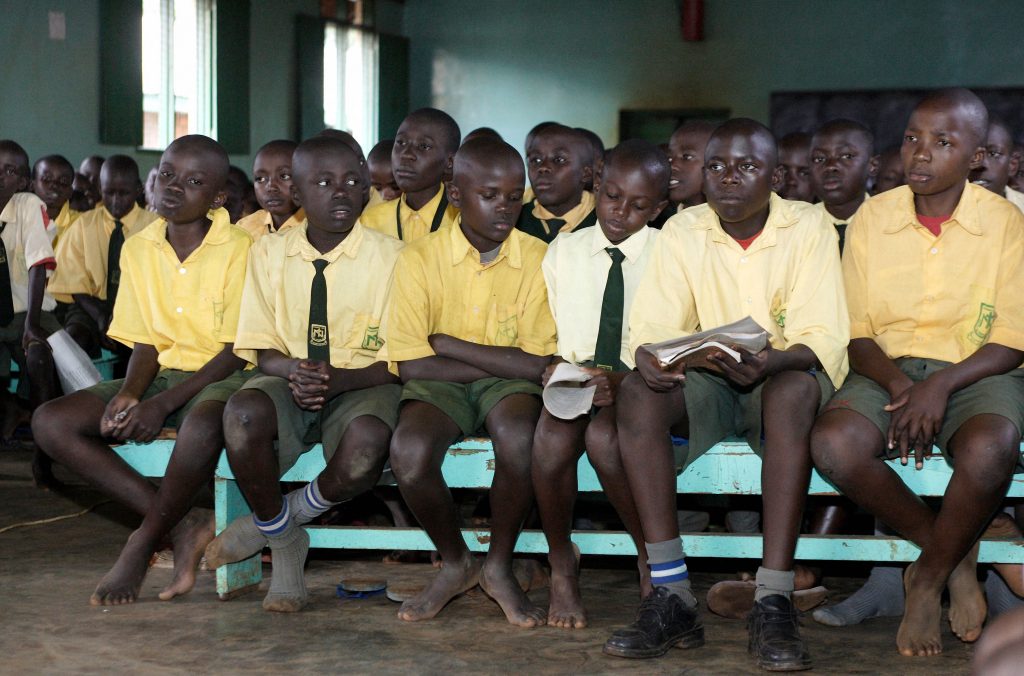
Cardinal Sarah warns Europe against ‘ideological colonisation’ of Africa
Cardinal Robert Sarah has warned that Europe is using aid, trade and diplomacy to export ideological values to Africa, arguing that ambiguous language on issues such as abortion and gender is being used to influence sovereign nations Cardinal Robert Sarah has warned that Europe risks using its economic and diplomatic influence to impose heterodox ideological values on African nations through what he described as “ideological colonization”. Speaking at a conference in the European Parliament in Brussels examining relations between Europe and Africa, Cardinal Sarah centred his address on what he called a growing “crisis of language” in international diplomacy, contending that key political concepts have become so ambiguous that they can be used to advance ideological objectives without transparent public debate. The conference, organised by the European Conservatives and Reformists (ECR) Group in collaboration with Pro Vita & Famiglia at the initiative of MEPs Paolo Inselvini and Nicolas Bay, brought together politicians, diplomats and representatives of civil society. It opened with remarks from the organisers before institutional greetings from Antonella Sberna, Vice-President of the European Parliament, and Archbishop Bernardito Cleopas Auza, the Apostolic Nuncio to the European Union. The meeting also saw the presentation of a Pro Vita & Famiglia dossier entitled Conditional Aid: The European Union and Africa: Financial, Legal, and Commercial Instruments on Abortion, the LGBTQ+ Agenda, and Sexuality Education . The report uses official documents covering the period from 2000 to 2026 to examine international treaties, parliamentary resolutions, funding mechanisms and African governmental responses relating to European engagement with the continent. Building on themes raised in that report, Cardinal Sarah questioned whether Europe and Africa still understood the language that increasingly shapes international negotiations. “Can we still understand each other?” he asked. “Do the words we use – human rights, dignity, development, freedom, health, gender, family – still mean the same thing to those who pronounce them in Brussels, Strasbourg, Kampala, or Conakry?” The cardinal argued that expressions frequently used in international agreements no longer possess universally accepted meanings. Referring specifically to the phrase “sexual and reproductive health”, Cardinal Sarah maintained that the expression is often understood as including abortion, while the language of “gender equality” may be interpreted as promoting “the deconstruction of the sexual difference between man and woman inscribed in the human body”. According to Cardinal Sarah, such ambiguity allows politically contentious policies to become embedded within international cooperation frameworks without governments or citizens fully recognising their wider implications. “A treaty, a resolution, or an action plan that uses imprecise and ambiguous vocabulary is not an instrument of cooperation, but an instrument of perversion and silent power,” Cardinal Sarah said. The Guinean cardinal argued that whoever controls the meaning of political language ultimately determines the direction of negotiations themselves, describing the process as “a form of cultural and economic neocolonialism”. Much of the address focused on the European Union’s cooperation agreements with African states, particularly the Samoa Agreement signed in 2023, alongside wider EU financial programmes supporting development across the continent. Referring to those frameworks, Cardinal Sarah stated: “Here appears in a verifiable way the ideological colonization: the use of trade and finance to intervene in the criminal and family legislation of a sovereign state, directly violating the principle of self-determination of peoples.” Summarising his appeal, Cardinal Sarah declared: “No to ideological colonization of Africa, but genuine subsidiarity.” Throughout the address, the cardinal referenced papal teaching. He cited Pope Leo XIV’s encyclical Magnifica Humanitas , particularly passages warning against manipulative language capable of reducing human beings to statistics. Cardinal Sarah also referred to Pope Leo’s address to the diplomatic corps earlier this year, recalling the pontiff’s appeal that “we need words to once again express certain realities unequivocally. Only in this way can authentic dialogue, free from misunderstandings, resume.” The cardinal also drew upon the teaching of Pope Benedict XVI, questioning whether European legislation presented as neutral in fact advances a particular vision of the human person. “Isn’t European legislation that claims to be neutral toward every anthropological vision but imposes a specific and contestable vision of humanity slipping into the irrationality against which Pope Benedict warned us?” Cardinal Sarah asked. The address likewise echoed Pope Francis’s repeated criticism of what the late pontiff termed “ideological colonization”. Cardinal Sarah recalled Pope Francis’s warning: “Let us be wary of new ideological colonizations that seek to destroy the family.” Developing that argument, Cardinal Sarah criticised funding arrangements and international assistance which he said are increasingly linked to policies concerning abortion and gender ideology. Referring to the Pro Vita & Famiglia report presented during the conference, Cardinal Sarah argued that development partnerships should respect the sovereignty of African nations rather than seek to reshape their domestic legislation through financial incentives. The cardinal also challenged what he described as changing definitions surrounding abortion and sexuality within international discourse. “The lack of access to abortion is defined as ‘violence’,” Cardinal Sarah said, “while the unborn child—the weakest, the most innocent among us—is deprived of any voice, any representation, any rights.” Similarly, Cardinal Sarah argued that programmes promoting sexual education without consultation in receiving countries could themselves constitute a form of external interference rather than genuine international cooperation. As examples of African constitutional traditions, Cardinal Sarah referred to Kenya and Uganda. Kenya’s constitution, he noted, provides that “a person’s life begins at conception”, while Uganda’s constitution states that “no person has the right to end the life of an unborn child, except as authorized by law”. Rather than viewing such constitutional provisions as outdated, Cardinal Sarah described them as “a fragment of legal wisdom… that the West would do well to reconsider rather than correct”. Returning to the broader relationship between Europe and Africa, Cardinal Sarah argued that African societies possess religious and cultural traditions deserving of respect rather than reinterpretation through external political frameworks. “We need respect for Africa’s religious and cultural history, which is not an obstacle to development, as is sometimes insinuated in the corridors of Brussels, but is a fundamental requirement,” Cardinal Sarah said. “A people has the right to live, preserve, and transmit its own religious and family culture, just as every individual has the right to profess their faith.” He concluded by urging Europe to reassess the foundations of its engagement with African nations. “Europe must examine its conscience, listen to Africa, and respect its cultural sovereignty, offering free cooperation unconstrained by ideologies. Africa itself can offer the testimony of a living faith and a sense of family that can help Europe rediscover its own logos .” Speaking afterwards to members of the foreign press on the sidelines of the conference, Cardinal Sarah returned to the principle of self-determination that had underpinned his address. “We must respect the centrality of man, because he is the image of God, just as we must respect peoples in their self-determination,” Cardinal Sarah said. “No one should be forced to accept a law that goes against their nature, against their religious convictions, or against their human convictions. And so we can live together in peace.”
Jul. 16, 2026
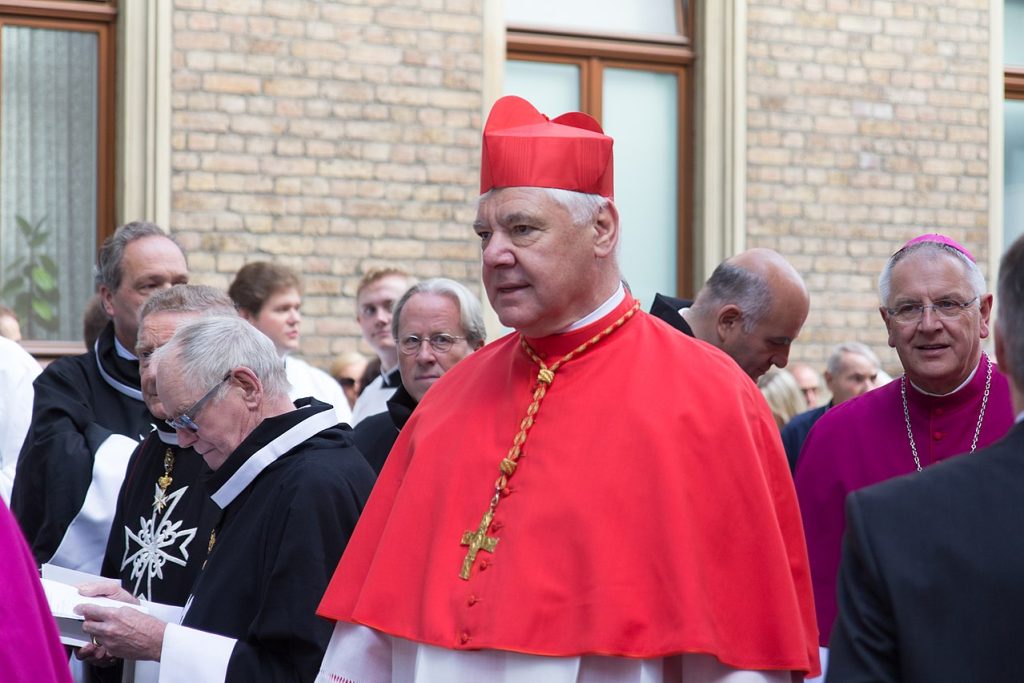
Cardinal Müller’s warning to Europe: recover your Christian roots or face decline
Cardinal Gerhard Müller used a Rome conference organised by I RadicaTi dal diritto naturale alla legge to deliver a warning about the EU and the future of Europe Cardinal Gerhard Müller has warned that Europe risks losing its identity and even its future unless it rediscovers the Christian foundations upon which it was built. The former Prefect of the Congregation for the Doctrine of the Faith was the principal speaker at a conference in Rome on 17 June entitled “Eurogender Diktat: Christian Roots, Religious & Educational Freedom at Risk in the EU”, organised by the newly established Catholic association I RadicaTi dal diritto naturale alla legge and hosted at the Chamber of Deputies by Massimo Milani, a member of the governing Brothers of Italy party. The event offered a sweeping critique of secularism, gender ideology, globalism and the growing ideological conformity within the European Union. The conference took place less than 24 hours after the death of Cardinal Camillo Ruini, the influential former president of the Italian bishops’ conference. His passing cast a shadow over the proceedings and was referenced repeatedly by speakers, who presented his legacy as an example of Catholic engagement in public life. Opening the conference, the association’s president, Luigi Trisolino, recalled Cardinal Ruini’s call for Catholics to remain active in politics despite their increasingly minority status in Europe. “Ruini told Catholics: even if you are now a minority in Europe, at least be a creative minority,” he said. “And that is what we will try to do together this evening.” The conference was convened to discuss the implications of recent European legislation and broader cultural developments within the EU. Speakers argued that contemporary interpretations of anti-discrimination measures risk undermining religious liberty and freedom of expression. Trisolino claimed that European institutions had increasingly embraced gender ideology, describing it as hostile to Christianity and traditional understandings of the family and human identity. He argued that recent European measures created an unequal system of protection based on identity categories and warned that criticism of progressive social policies could increasingly be treated as a form of discrimination. “Sacred religious and educational freedoms are put at risk by this illiberal EU measure,” he said, adding that those who defended Europe’s Christian roots were frequently portrayed as opponents of progress. Massimo Milani, the host of the event, whose party forms part of Prime Minister Giorgia Meloni’s governing coalition, likewise argued that many of the liberties celebrated by modern European societies were rooted in Christianity. “If today we in Europe and in the West in general can talk about human rights, of personal liberties, we must remember that if this is possible it is because we live in a society, in a free culture that owes this freedom precisely to the religious principles that have informed our culture for centuries,” he said. The strongest intervention of the evening, however, came from Cardinal Müller, who delivered an extensive address examining Europe’s religious, cultural and political trajectory since the Second World War. Drawing on the thought of figures including Konrad Adenauer, Alcide De Gasperi, Robert Schuman, Joseph Ratzinger and Benedetto Croce, he argued that Europe’s future could not be separated from its Christian inheritance. The German cardinal argued that the architects of European integration envisaged a Europe deeply conscious of its Christian foundations. Christianity, he said, had not merely influenced European culture but had provided the moral basis upon which concepts such as human dignity, conscience, freedom and equality had developed. Europe, he argued, was not simply a political or geographical project but a civilisation shaped by Christianity. Referring to the continent’s gradual Christianisation and the formation of a common Christian culture, he said Europe had become a historical unity through a shared understanding of the human person rooted in the Gospel. “On this foundation stands today the EU,” he said, warning that without the Gospel Europe would “suicidally give itself over to its downfall”. The cardinal repeatedly returned to the theme of Christian identity, arguing that Europe’s present crisis stemmed from a deliberate attempt to sever the continent from its religious roots. Among his sharpest criticisms was the state of the family. Cardinal Müller said Europe was experiencing “the dissolution of marriage and the family and of personal identity”, presenting this as one of the defining features of the continent’s cultural crisis. He also criticised gender ideology and attempts to redefine human nature itself. Warning against transhumanist and post-human philosophies, he criticised what he called a “Jacobin-like gender transformation contra to the natural family and personal identity”. He also accused European institutions and some national governments of promoting what he termed a “gender-totalitarianism”, warning that democratic societies risked drifting towards what the nineteenth-century French thinker Alexis de Tocqueville described as a “soft despotism”. Rather than relying on overt repression, Cardinal Müller argued, such systems sought to shape public behaviour through bureaucracy, regulation and cultural pressure. He claimed this process could already be seen in parts of Europe through policies promoting gender ideology and restricting dissent from progressive orthodoxies. His Eminence’s criticism of the European Union became increasingly direct as the address progressed. He singled out the Digital Services Act and broader regulatory structures as examples of excessive bureaucratic intervention. Referring to what he called the “Orwellian fantasy” of surveillance and content regulation, he warned against allowing political institutions to assume responsibility for determining truth and falsehood in public discourse. Governments, he argued, should pursue the common good rather than claim authority over truth itself. The cardinal’s criticisms extended beyond the EU and governments to international organisations and networks that he associated with globalist thinking. Cardinal Müller referred to the “globalists of the New World Order” and criticised the influence of organisations such as the World Economic Forum and the Club of Rome. The Prefect Emeritus argued that such elites were advancing an ideological programme that marginalised Christianity while promoting secular and technocratic approaches to society. He claimed Europe was increasingly being transformed into “an experimental field for atheistic woke ideology”, in which religious belief was gradually pushed from public life and reduced to a private matter. The cardinal further expressed concern about migration, arguing that Europe faced significant cultural and demographic challenges. He claimed that large-scale immigration had been encouraged by political leaders without adequate consideration of integration or social cohesion. Throughout the address, Cardinal Müller drew heavily on the Catholic intellectual tradition, citing figures including Benedict XVI, Joseph Ratzinger, Marcello Pera, Benedetto Croce and Reinhold Niebuhr. He argued that faith and reason must work together if societies were to address the ethical challenges posed by technological developments, including artificial intelligence. Cardinal Müller also pointed to Pope Leo XIV’s encyclical Magnifica Humanitas and Benedict XVI’s Regensburg Lecture as guides for addressing the moral questions raised by emerging technologies. Echoing themes found in both texts, he warned that technological progress must remain subject to moral truth and the dignity of the human person. “We must not become dogs to the masters of AI,” he said, arguing that faith and reason together offered the only adequate framework for ensuring that humanity remained master of its inventions rather than their servant. Quoting Benedict XVI’s reflections on reason and faith, Cardinal Müller maintained that Europe needed a broader understanding of reason capable of engaging questions of morality, truth and human dignity rather than reducing human knowledge solely to what could be scientifically verified. He concluded by urging Europeans to recover confidence in their Christian heritage rather than abandon it. The continent’s future, he argued, depended upon recognition of natural moral law and universal human rights rooted in the dignity of every person.
Jun. 18, 2026
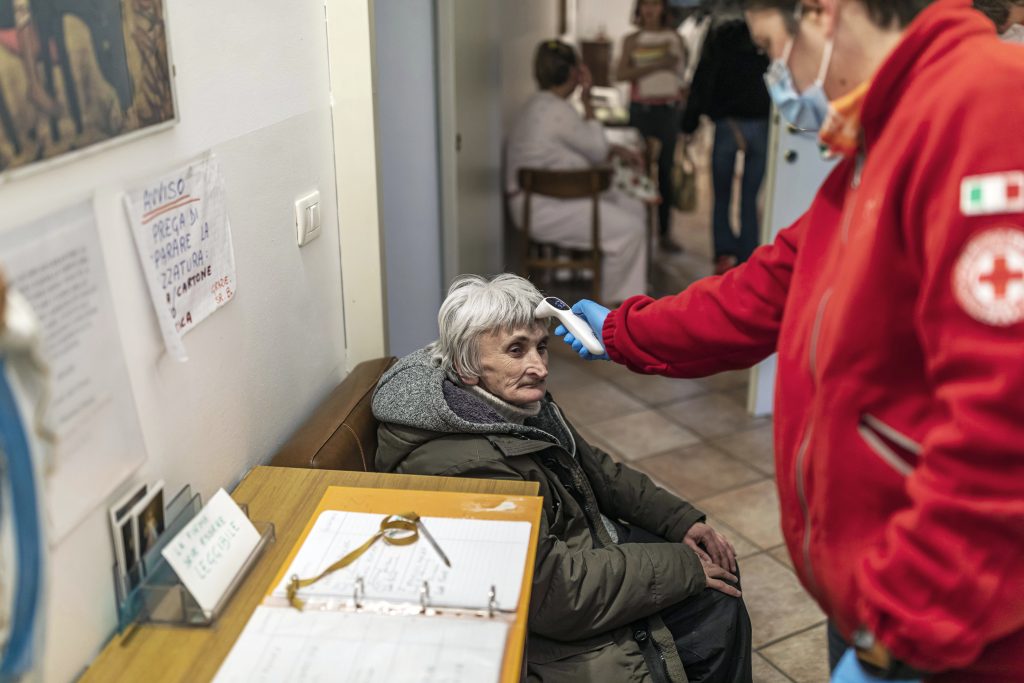
Pope Leo XIV warns Europe faces ‘drastic sterility’ after abandoning Christianity and embracing abortion
Pope Leo XIV has warned that Europe’s demographic crisis has been driven by the abandonment of the Christian principles that shaped the post-war European project, telling lawmakers in Rome that the continent faces a “time of drastic sterility” marked by abortion. The Pope made the remarks on Monday morning during an audience with members of […] Pope Leo XIV has warned that Europe’s demographic crisis has been driven by the abandonment of the Christian principles that shaped the post-war European project, telling lawmakers in Rome that the continent faces a “time of drastic sterility” marked by abortion. The Pope made the remarks on Monday morning during an audience with members of the European Parliament’s Demography Intergroup in the Clementine Hall of the Apostolic Palace. The meeting brought together MEPs alongside senior European and Italian officials attending a conference on family and demographics, including the European Commissioner for the Mediterranean, the Italian Minister for Family, Natality and Equal Opportunities, and the OSCE Special Representative on Demographic Change and Security. Addressing delegates, the Pontiff described Europe’s falling birth rates and ageing populations as an “urgent challenge with practical implications for millions of people and their families” across the continent. Referring to remarks frequently made by Pope Francis, Pope Leo said Europe was becoming the “‘old continent’ – no longer because of its glorious history, but because of its advancing age”. Official figures for 2024 show that the EU’s total fertility rate fell to a record low of 1.34 live births per woman, with just 3.55 million babies born across the bloc. No European country currently reaches the replacement level of around 2.1 children per woman required to maintain a stable population without imigration. The Pope said the crisis extended far beyond economics and population statistics, warning that it pointed to a deeper collapse in intergenerational solidarity and cultural confidence. “Demographic data are not merely statistics, but speak of fatherhood, motherhood and children,” His Holiness said. “And children are the future.” Pope Leo said Europe had failed to equip younger generations with both the material stability and cultural inheritance necessary to build families and face the future confidently. “Over recent decades, we can see that a rejection of the Christian inspiration of the founding fathers of the EU institutions has led to a time of drastic sterility,” the Pope said, adding that this had occurred “not only because too many have been deprived of the right to be born, but also because there has been a failure to pass on the material and cultural tools that young people need to face the future”. Across Europe, the abortion rate stands at approximately 29 per 1,000 women aged 15–44. In several countries, hundreds of thousands of abortions continue to be performed each year, even as birth rates remain at historic lows. Unsurprisingly, there has also been a rejection of traditional social norms. The EU crude marriage rate has fallen by more than half since the mid-1960s, standing at 3.9 marriages per 1,000 people in 2024. Regrettably, the fall reduction in Catholic marriages has been even greater. The Pontiff criticised what he described as contradictory social policies, which publicly claim to support families while simultaneously undermining motherhood and promoting abortion. He said Europe was increasingly confronted by “purportedly family-friendly policies” that “promote discrimination against motherhood, exalt abortion as a right, and undermine the very foundation of the desire to start a family”. The Pope also linked demographic decline to what he called the “pandemic of loneliness”, describing it as one of the many social consequences flowing from shrinking and ageing populations. He told lawmakers that Europe’s demographic problems demanded coordinated action from political institutions, governments, academics and wider civil society, saying the issue represented “a crucial juncture for the anthropological, social and economic future of Europe”. Pope Leo urged European leaders to place the family at the centre of policymaking and reaffirmed the Church’s teaching that the family is rooted in marriage between a man and a woman. Citing Pope St John Paul II’s apostolic exhortation Familiaris Consortio, he said the family remained “the first and irreplaceable school of social life” and described it as “founded on marriage between a man and a woman, a reality that unites the personal and public dimensions”. The Pontiff said lawmakers had a responsibility to encourage the “shared responsibility and active role of families in social, political and cultural life”, while also safeguarding the principle of subsidiarity. “For only by respecting and promoting this central place of the family, and applying the principle of subsidiarity, is it possible to avoid the two extremes of excessive State intervention and individualism,” His Holiness said. Throughout the address, Pope Leo framed demographic decline not simply as a policy challenge but as a question touching the future identity and stability of Europe itself. He called for cooperation between European institutions and Christian organisations, pointing to the work of the Federation of Catholic Family Associations in Europe and the Commission of the Bishops’ Conferences of the European Union as examples of how civil society groups could contribute to political debate and practical reform. “This is the impetus Christians are bringing to the European project,” he said, “so that policies look to human persons in their entirety and always promote the dignity of human beings.” The Pope insisted the Church was not proposing a return to older political or social arrangements, but rather the recovery of enduring principles capable of guiding modern societies through cultural and demographic decline. “This approach is not a matter of returning to social models of the past,” he said, but of offering “unchanging principles” capable of answering fundamental questions about “the meaning and value of human life”, authentic human society and the kind of world future generations will inherit. The Pope concluded by calling for what he described as “a fresh springtide for the family” to reverse “the winter chill of our ageing populations”. Pope St John Paul II made opposition to abortion and the defence of the family defining themes of his pontificate, particularly in Evangelium Vitae, his 1995 encyclical condemning abortion and euthanasia. Pope Leo’s address continues that emphasis while placing demographic decline at the centre of wider debates over Europe’s future direction. “What kind of world do we want to hand on to future generations?” the Pope asked delegates gathered in the Apostolic Palace. The question hung over the audience as European lawmakers departed the Vatican. In his comments, the Pontiff added his voice to some of the existential questions facing the continent, which can at present only accurately be described as being in a state of decline.
May 26, 2026