

Elpapaenmadrid
A week later: what Pope Leo’s Spain trip tells us
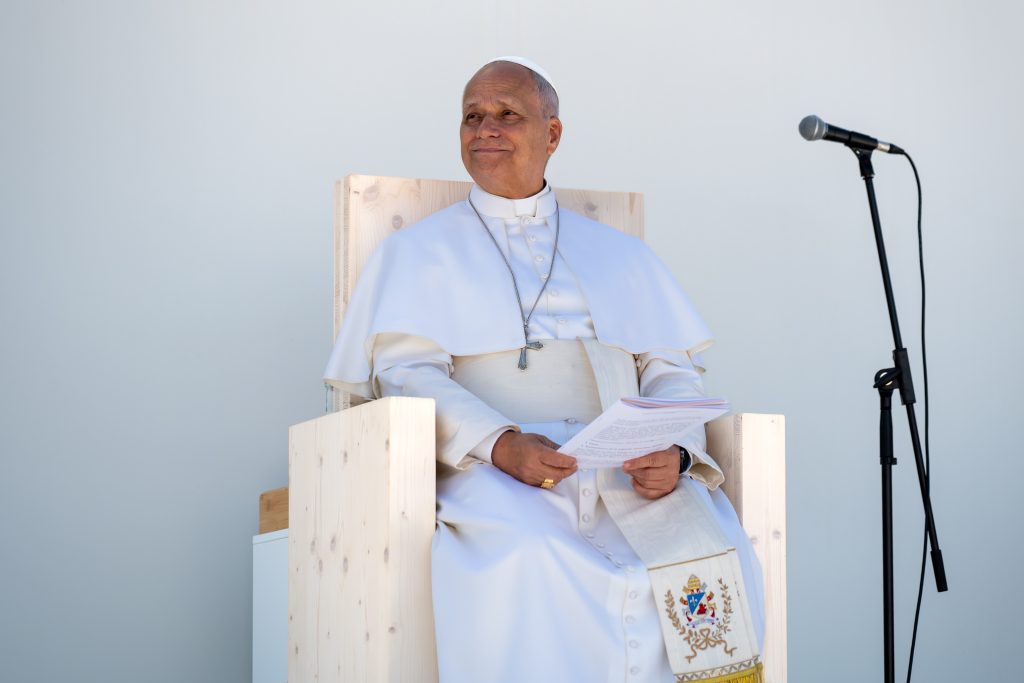
More than 1.5 million people attended Pope Leo XIV’s Corpus Christi Mass in Madrid. Yet the lasting significance of the trip may lie in what it revealed about Spain’s culture, politics and religious identity A week on from the first apostolic visit to Spain in more than a decade, a great deal has happened in the life of the Church. Cardinal Camillo Ruini, one of the most respected churchmen of his generation, has died. The Holy Father has addressed the situation with the Society of Saint Pius X in off-the-cuff remarks. Details of the June consistory have been leaked. But despite the unusually busy week, the aftermath of the trip can still be felt. The Holy Father used his Wednesday General Audience to reflect on the “warmth” of the reception he received, and the themes he brought to Spain are still being discussed across the country. The trip, and the reaction that followed, offered several insights into both Pope Leo’s pontificate and the state of the Church in Spain. The first is that Pope Leo has the ability to speak with clarity on matters of faith and morals without sitting comfortably in any political camp. Spain is currently under a particularly strong strain of progressivism, with Pedro Sánchez’s socialist government aggressively separating the country from its Catholic past and attacking the sanctity of life, notably through the introduction of assisted suicide. Pope Leo appeared entirely at ease using his speech to the Spanish Parliament, the first by a pontiff, to address politicians’ treatment of the vulnerable. He asked: “Can a community that casts into the shadows the unborn child, the elderly, the sick, those who suffer in silence, or those who depend entirely on the care of others be called fully just?” In case the point was not clear enough, the pontiff also told the politicians that “every human life must be recognised and safeguarded from conception to its natural end, in every circumstance of its existence.” It made for uncomfortable listening in a country which, less than a month earlier, had been scandalised that the government’s commitment to assisted suicide had resulted in the death of Noelia Castillo, a 25 year old disabled survivor of sexual abuse. When the pontiff turned to migration, he adopted a tone that neither the PP and Vox on the right nor Sánchez’s Spanish Socialist Workers’ Party could fully embrace. The Pope called for compassion towards those who have experienced the “tragic drama of migration”, which “challenges the conscience of nations and the ethical foundation of the international order today”. He also stated that wherever there is discrimination based on “national, ethnic, religious or linguistic origin”, human dignity is “seriously violated”. Such sentiments stand in contrast to Vox’s calls for mass deportations and restrictions on citizenship and residence permits for those from what it describes as an “Islamic culture”. At the same time, the Pope was equally keen to defend the right of people to remain in their homelands, a point rarely addressed in contemporary European debates on migration. He said that the matter “goes beyond any purely demographic or economic analysis”, a point which seemed to point to Sánchez’s disproportionate emphasis on the supposed economic benefits of migration. He also stated that the situation “goes beyond the mere management of migration flows”, words that seemed particularly pertinent given the Spanish government’s recent decision to regularise hundreds of thousands of illegal immigrants. Another lesson is that the pain caused by clerical sexual abuse is far from over. As the Pope himself told journalists during the outbound flight to Madrid, sexual abuse remains an “open wound”. He told Spain’s bishops that “one of the most painful encounters is with those who have been wounded precisely by those who were supposed to care for them”. He urged the ecclesial community to respond through “listening, truth, justice, reparations and an even more determined commitment to prevention and a culture of care”. Spain has been comparatively slow in confronting the legacy of clerical sexual abuse, and it was only this year that the country’s bishops’ conference reached an agreement with the government to establish a process for support and reparations for survivors. The theme followed the Holy Father as he left Madrid and travelled to Barcelona. On the second day of the Catalan leg of the trip, he visited the Benedictine Abbey of Montserrat, a symbol of Catalan identity. Yet the abbey has also made headlines in recent years because of revelations concerning abuse committed by former monks. In 2019, it emerged that Andreu Soler, a monk who died in 2008, had abused at least twelve minors over several decades at the institution. During the same year, another monk abused a 17 year old. Jaume Soler Villegas, known as Brother Gabriel, was sentenced to two years in prison, while the monastery was ordered to pay €20,000 in compensation. Miguel Hurtado, the first person to report abuse at Montserrat, sent a letter to the Apostolic Nunciature in Madrid requesting that the papal visit to the Abbey be cancelled. While thousands gathered outside to welcome the Pope, local and international media focused on the abuse scandals and questioned whether an abbey so recently associated with such cases should receive a papal visit. The third lesson, and perhaps the most significant, is that the Catholic character of Spain remains far stronger than many assume. Before the visit, establishing precisely what that meant was remarkably difficult. The Vatican’s pre-visit statistics painted an exceptionally positive picture, listing 45 million Catholics in a population of 49 million, suggesting that 93.25 per cent of Spaniards are Catholic. Based largely on baptismal records, the figures appeared impossibly high. Pew Research put the figure at around 70 per cent in 2020, while the Spanish Centre for Sociological Research (CIS) found that 54.3 per cent of Spaniards identify as Catholic today. At the same time, a poll conducted by Fundación SM found that 45 per cent of Spaniards aged between 15 and 29 identify as Catholic, compared with 31.6 per cent in 2020. The figures are inconsistent and difficult to interpret, but that ambiguity mirrors the reality of the Spanish Church itself. Millions attend Holy Week processions every year, and religious festivals remain a central feature of Spanish life. A man from Málaga once told me that, despite never having been baptised, he always visits his favourite statue of Christ during Holy Week. Six of Spain’s ten national public holidays are religious in origin, including the Assumption and the Immaculate Conception. Even many secular celebrations retain a religious dimension. Spain’s National Day falls on the feast of Our Lady of the Pillar, while New Year’s Day is, for many, the Solemnity of Mary, Mother of God. Alongside this visible Catholic culture, however, there is also widespread religious indifference. While the hermandades , or brotherhoods, continue to attract many young people, Sunday Mass in the average Spanish town will often have few under fifty. Spain has the largest number of monasteries in the world and more than 1,000 men preparing for the priesthood, yet almost 150 religious houses closed between 2012 and 2022. A history of anti-clericalism and the long association of the Church with Francoism have left the Church’s place in society less secure than in neighbouring Italy, where Catholic identity remains more closely intertwined with national identity, or in Malta, a former Spanish possession where legal protections for unborn children remained in place until very recently. Yet Pope Leo’s visit represented a major vote of confidence in the Church. Around 1.5 million people attended the Corpus Christi Mass celebrated by the Holy Father. By comparison, Madrid’s population is approximately 3.5 million, making the scale of attendance proportionally huge. It was one of the largest gatherings of Catholics in Europe outside World Youth Day and represented a 50 per cent increase on attendance during Pope Saint John Paul II’s visit to the city in 2003. Much of the press enjoyed pointing out that the Pope was competing with Bad Bunny, who was touring Spain at the same time. In reality, there was little competition. Despite the remarkable success of the Puerto Rican singer, whose residency broke records for ticket sales by a single artist in Spain, his three-week tour attracted fewer than a quarter of the people who attended events during the Holy Father’s one-week visit. The apostolic visit to Spain was always going to be a significant test. Spain is a religiously complex country, marked by both anti-clerical sentiment and intense religious devotion. In the end, it proved a remarkable personal success for the Holy Father and for the Church more broadly. Yet the pace of the modern papacy allows little time for reflection. Attention will soon turn to the next major challenge. If there is a country capable of matching Spain’s combination of deep Catholic roots and anti-clerical tradition, it is the Church’s eldest daughter, France, which Pope Leo is due to visit in September.
Jun. 20, 2026
In pictures: Pope Leo XIV’s third day in Madrid
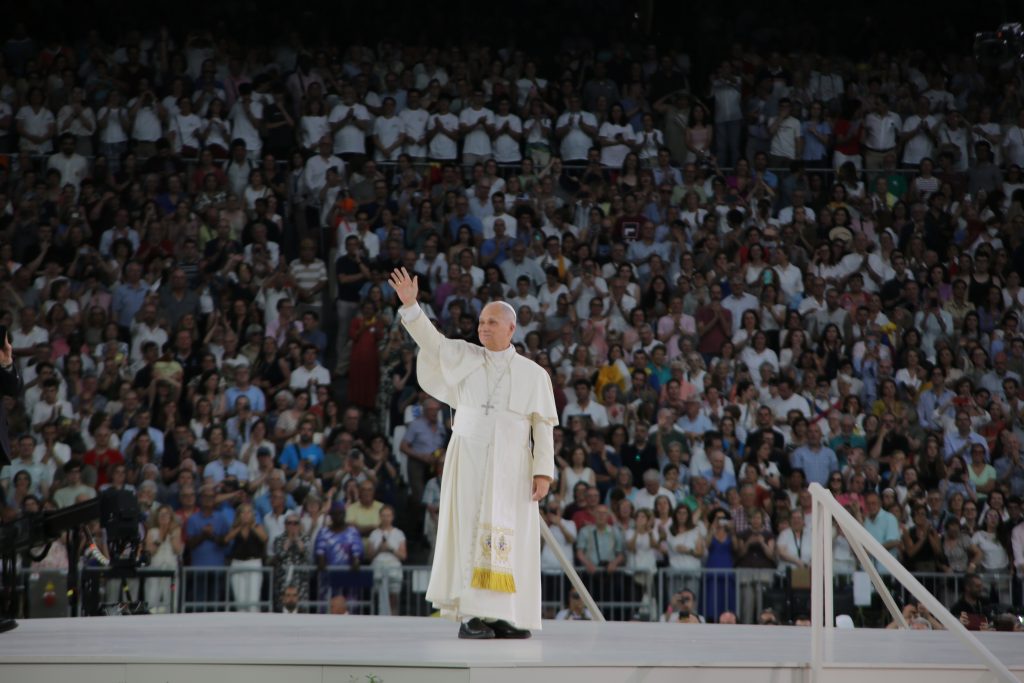
Pope Leo XIV’s third day in Madrid saw him address the Spanish Parliament, meet the country’s bishops, present the Golden Rose to Our Lady of Almudena and join more than 70,000 Catholics at Santiago Bernabéu Stadium. Here are the images from a day that combined politics, prayer, Marian devotion and a celebration of the Church in Spain The third day of Pope Leo’s apostolic visit to Spain began with a historic address to a joint session of the Spanish Parliament, the first ever delivered by a Pope, in which Leo XIV defended the dignity of every human person from conception to natural death, spoke about migration, religious freedom and artificial intelligence, and called on public life to be marked by dialogue and service. The Holy Father later met with Spain’s bishops at the headquarters of the Spanish Episcopal Conference, urging them to safeguard unity, heal divisions, accompany those entrusted to their care and continue the Church’s commitment to listening, justice, reparation and safeguarding. In the evening, he paid homage to Our Lady of Almudena, presenting the Golden Rose to Madrid’s patron saint and calling on the faithful to tear down the “walls” that divide people and societies. The day concluded with a vast diocesan celebration at Santiago Bernabéu Stadium, where more than 70,000 Catholics from Madrid, Alcalá de Henares and Getafe gathered to welcome the Pope. There, Leo XIV described the Church of Madrid as having “scored a truly memorable goal” and encouraged the faithful to live the joy of the Gospel with confidence and hope. Pope Leo XIV addresses a joint session of the Spanish Congress and Senate in Madrid on 8 June 2026, becoming the first Pope to speak before the Spanish Parliament. In his address, the Holy Father defended the dignity of every human person from conception to natural death, calling for protection of the unborn, support for the family, respect for religious freedom, and a renewed commitment to peace and social harmony. (Photo credit: Ballesteros/EFE) Attendees listen to Pope Leo XIV’s address. Pictured are Basque nationalist politician Mertxe Aizpurua (third from left, front row), Catalan pro-independence politician Gabriel Rufián (centre, front row), Senate spokesperson Alicia García Rodríguez (far right, back row) and former Deputy Prime Minister Cristina Narbona (centre, back row). (Photo credit: Ballesteros/EFE) Former Spanish Prime Minister José María Aznar (left) speaks with Catalan regional president Salvador Illa following Pope Leo XIV’s historic address. (Photo credit: Ballesteros/EFE) Francina Armengol, President of the Congress of Deputies, addresses the chamber. (Photo credit: Ballesteros/EFE) Pope Leo XIV Pope Leo XIV meets members of the Spanish Episcopal Conference at its headquarters in Madrid on 10 June 2026. Addressing the bishops during the 60th anniversary year of the conference, the Holy Father urged them to safeguard unity, promote dialogue, heal divisions and accompany the people entrusted to their care, while calling for continued commitment to truth, justice, reparation and prevention in response to abuse. (Photo credit: J.J. Guillén/EFE) Crowds gather outside the Royal Palace of Madrid as Pope Leo XIV passes in the popemobile during his visit to the Spanish capital on 8 June 2026. (Photo: Á. Pérez Meca/Europa Press) Pope Leo XIV celebrates a prayer service in Madrid’s Almudena Cathedral on 8 June 2026. During the gathering, the Holy Father paid homage to Our Lady of Almudena, presented the Golden Rose to the patron saint of Madrid, and called on the faithful to “tear down the walls” that divide people and societies in order to build communion, fraternal love and concord. (Photo: Á. Pérez Meca/Europa Press) A statue of Our Lady of Almudena is presented before more than 70,000 pilgrims gathered at Madrid’s Santiago Bernabéu Stadium during a diocesan celebration with Pope Leo XIV on 8 June 2026. The event brought together Catholics from the dioceses of Madrid, Alcalá de Henares and Getafe in a celebration of faith, family and ecclesial communion. (Photo credit: Gabriel Gonzalez-Andrío) Pope Leo XIV greets the faithful as he arrives at Madrid’s Santiago Bernabéu Stadium, later telling the crowd that “the Church of Madrid has scored a truly memorable goal.” (Photo credit: Gabriel Gonzalez-Andrío) Pope Leo XIV addresses pilgrims. In his remarks, the Holy Father described joy as a defining mark of Christian life and encouraged the faithful to become “an open Bible” for others, so that the Word of God might be visible in their faces and daily lives. (Photo credit: Gabriel Gonzalez-Andrío)
Jun. 9, 2026
Day two of Pope Leo XIV’s visit to Spain sees one of Europe’s largest Catholic gatherings outside World Youth Day
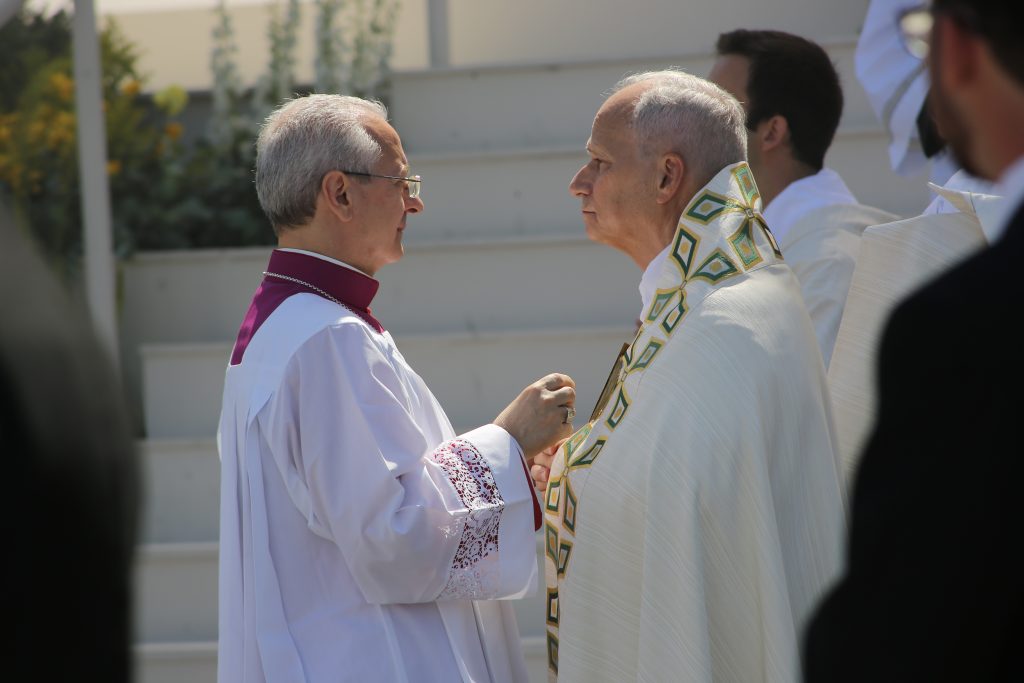
An estimated 1.5 million people gathered in Madrid for Pope Leo XIV’s Corpus Christi Mass and procession on the second day of his apostolic visit to Spain. The crowd surpassed that of Saint John Paul II’s 2003 visit to Madrid and ranks among the largest Catholic gatherings in Europe outside World Youth Day Pope Leo’s second day of his apostolic visit to Spain began with Holy Mass for the feast of Corpus Christi. This year, Corpus Christi fell on Thursday 4 June. However, Spain, like many other countries, now transfers the solemnity to the following Sunday. Mass was celebrated in Plaza de Cibeles in central Madrid, with an estimated 1.5 million people in attendance. Earlier estimates had placed the number at 1.2 million, but as the day progressed a clearer picture emerged and the figures rose. The number is staggering. Indeed, excluding Saint John Paul II’s dramatic returns to Kraków during the Communist era, it might have been the largest European gatherings of Catholics outside a World Youth Day. By comparison, Pope John Paul II’s Mass in Ireland on 29 September 1979 attracted an estimated 1.25 million people. When he celebrated Mass in Madrid in 2003, around one million attended. Even accounting for Spain’s population growth since 2003, the figure represents a substantially larger proportion of the Spanish public coming out to see the Pope. The increase is in line with an apparent resurgence in Catholic identity in the country. A recent survey found that 45 per cent of Spaniards aged 15 to 29 identify as Catholic today, compared with 31.6 per cent in 2020. Spaniards often speak of there being “two Spains”. One is the conservative, Catholic Spain that takes pride in its saints, traditions and culture. The other seeks to sever those connections in the name of progressivism. It appears that, despite being governed by a socialist administration, the former remains vibrant. Panis Angelicus, music from the Taizé Community and the Tantum Ergo, Pange Lingua and Salve Regina all featured in a varied but traditionally inclined programme of liturgical music. Perhaps most notable for those looking for signs of tradition was the choir’s rendition of Verbum Supernum Prodiens, written by Saint Thomas Aquinas for the feast of Corpus Christi. Among the faithful were hundreds of children who had made their First Holy Communion this year and who, after Mass, took part in the Corpus Christi Eucharistic procession. There were also more than 150 bishops and some 1,600 priests in attendance. Their Majesties King Felipe VI and Queen Letizia of Spain, accompanied by Princess Leonor and Infanta Sofía, also attended the Mass. During his homily, Pope Leo XIV urged Spain’s Catholics not to allow their faith to become “a museum of the past”, but to remain a living source of charity, service and evangelisation. Reflecting on the Eucharist and Spain’s Catholic heritage, the Holy Father called on the faithful to become “builders of a new world” and to carry Christ’s presence into society, particularly through care for the poor, the suffering and those who have lost hope. For the Corpus Christi procession, a Galician artistic tradition was brought to Madrid, with more than 30,000 carnations transforming the city centre. This was made possible by the Asociación de Alfombristas del Corpus Christi de Ponteareas (Association of Corpus Christi Carpet Makers of Ponteareas). The decorations, known as floral carpets, covered more than 500 metres of Calle de Alcalá, one of Madrid’s longest streets. After the procession, the Holy Father took a short break from what has already been an exceptionally busy visit and held a private meeting with members of the Augustinian Order at the Apostolic Nunciature. As an Augustinian himself, Pope Leo has long been accustomed to community life and makes a point of visiting his religious brothers during his travels. Spain has historically had one of the largest Augustinian communities in the world, and Spanish Augustinians played a major role in the evangelisation of the Philippines, Latin America and parts of Africa. At 6pm, the Pope met representatives from the worlds of art, culture, business, labour and academia at Madrid’s Movistar Arena. The event, entitled “Weaving Networks with the Worlds of Culture, Art, the Economy and Sport”, aimed to encourage institutions and individuals to work together in taking responsibility for the human person amid rapid technological change. The gathering also highlighted Spain’s rich cultural heritage, with flamenco and classical guitar performances. Among those in attendance was the actor Antonio Banderas, who told the Pope he was “a victim of God’s spell” and described Jesus Christ as “the main protagonist of the movie of life”. Much like other events during the papal visit, the gathering placed considerable emphasis on Spain’s cultural heritage and its Catholic roots, bringing those traditions into public life. This theme was echoed in the words of the Holy Father, who asked those present: “What is it that we are sowing today, what exactly is flourishing and what is silently withering in our society; what values are we preserving and which are we allowing to die?” At the end of his second day, the papal visit appears to have so far been an outstanding success. Alongside the record attendance, another notable feature has been the absence of significant counter-protests. When Pope Benedict XVI visited Madrid for World Youth Day in 2011, there were loud and at times violent street protests demanding that his visit should not be funded by the state. Their absence is another indication that Catholicism in Spain is currently experiencing a period of renewed confidence.
Jun. 8, 2026