

College Of Cardinals
The leading contenders for Pope Leo XIV’s first cardinals
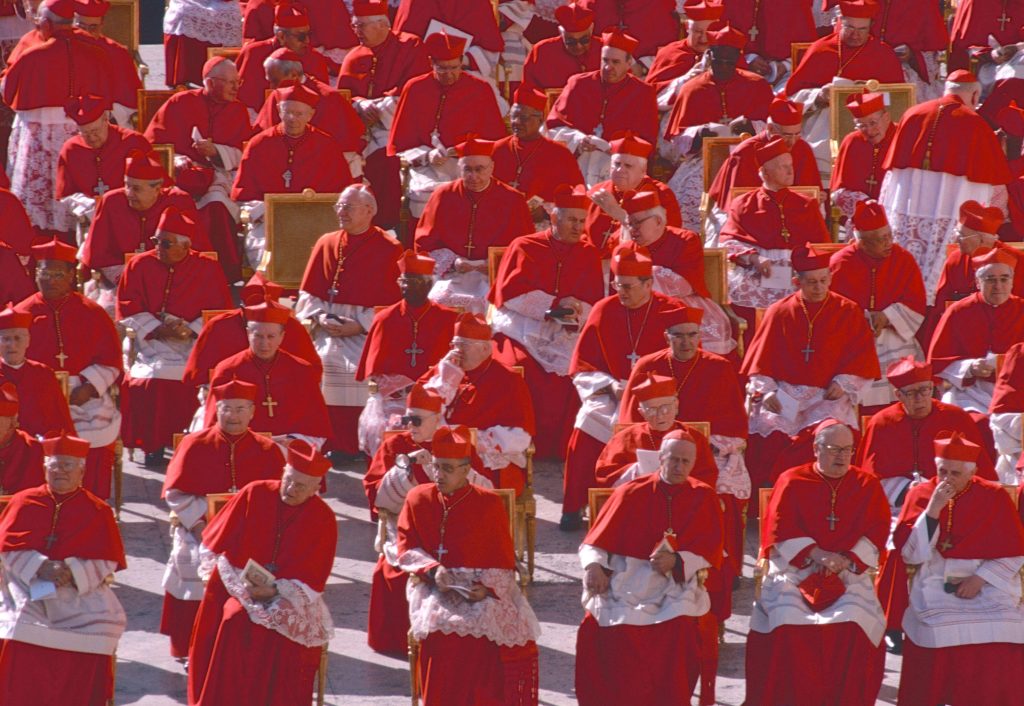
With the number of voting cardinals continuing to fall, rumours of a consistory are gathering pace. Who is most likely to receive the red hat? Niwa Limbu assesses the strongest candidates Cardinal Michael Czerny, the former Prefect of the Dicastery for Promoting Integral Human Development, turned 80 on Saturday 18 July, celebrating his birthday in Africa. With that milestone, he is no longer a cardinal elector, reducing the number of voting cardinals to 116. At the time of the 2025 conclave, there were 136 cardinal electors, of whom 133 cast votes. The number of cardinal electors is set out in Paul VI’s Romano Pontifici Eligendo (1975). The apostolic constitution states that the number of cardinal electors “must not exceed 120”, and Pope John Paul II retained this provision in Universi Dominici Gregis (1996). In practice, however, Popes John Paul II, Benedict XVI and Francis all exceeded the stipulated number, allowing the number of voting cardinals to rise above 120. With the reduced number of cardinal electors, recent weeks have seen a steady stream of rumours that a consistory for the creation of new cardinals will be held later this year. Additional speculation suggests that such a consistory could be announced after the Pope’s summer stay at Castel Gandolfo, which is due to end on Monday 27 July, or scheduled between a papal visit to either France or South America. If Pope Leo chooses to create new cardinals simply to replace those reaching retirement age over the coming year, the consistory would most likely be a relatively small one, perhaps involving fewer than ten new cardinals. If, however, his intention is to shape the College of Cardinals well into the future, the consistory could be considerably larger. By comparison, at his final consistory in December 2024, Pope Francis created 21 new cardinals. But if a consistory does take place this year, who is most likely to receive the red hat? The easiest place to start is the Curia. Archbishop Filippo Iannone, currently serving as Prefect of the Dicastery for Bishops, is expected to receive a red hat. After being passed over by Pope Francis when appointed Prefect of the Dicastery for Legislative Texts, the prefecture of the Dicastery for Bishops has traditionally been accompanied by the cardinalate. Pope Leo himself served as prefect from January 2023 until his election to the papacy and was created a cardinal in September of the same year. Archbishop Luis Marín de San Martín, the papal almoner and head of the Dicastery for the Service of Charity, is another name frequently mentioned. Although the office of papal almoner is not automatically tied to the cardinalate, his long-standing Augustinian friendship with Pope Leo XIV makes the prospect realistic. The two worked closely in Rome while the future pope was Prior General of the Order of Saint Augustine and have known one another for three decades. There is also a parallel with the elevation of the previous almoner, Cardinal Konrad Krajewski, who was closely associated with Pope Francis. Several senior curial posts are occupied by prefects already past the usual retirement age, among them Cardinal Kurt Koch, Cardinal Arthur Roche and Cardinal Marcello Semeraro. This raises the possibility that Pope Leo could appoint a new prefect to one of these dicasteries before announcing his first group of cardinals, with the newly appointed official then appearing on the consistory list. Cardinal Koch’s successor as Prefect of the Dicastery for Promoting Christian Unity is the subject of particular interest. Vatican sources have indicated to AdVaticanum that Bishop Erik Varden, Bishop of Trondheim in Norway and former Abbot of Mount St Bernard Abbey in the United Kingdom, stands a strong chance of being chosen. He made a notable impression when he preached the annual Lenten Spiritual Exercises for Pope Leo XIV and the Roman Curia. Bishop Varden also has considerable experience in the field of Christian unity, particularly with the Oriental Churches, making him a natural fit for the dicastery’s mission. Turning to the more realistic, yet harder-to-predict, category are the traditional cardinalatial sees. It is worth noting that when a cardinal retires from a diocesan see but remains of voting age, his successor is not customarily created a cardinal until the predecessor turns eighty. In the English speaking world, Archbishop Charles Philip Richard Moth, Archbishop of Westminster, appointed in December 2025 and installed in February 2026, is likely to recieve the red hat. There is, however, one important caveat. Cardinal Vincent Nichols, who held the see from 2009 until 2025, turned eighty in November 2025 and is now an emeritus, non-voting cardinal. Every Archbishop of Westminster since the restoration of the hierarchy has been created a cardinal. Basil Hume, appointed on 9 February 1976, received the red hat from Paul VI on 24 May 1976, roughly three and a half months later, at the very next consistory. Similarly, Cardinal Cormac Murphy-O’Connor, appointed on 15 February 2000 and installed the following month, was elevated by John Paul II on 21 February 2001, almost exactly a year after his appointment and at the first consistory held after he took office. Cardinal Vincent Nichols himself, however, waited nearly five years. Appointed in April 2009, he was passed over in Benedict XVI’s consistories of 2010 and 2012 before Pope Francis created him a cardinal in February 2014. In short, Hume was elevated almost immediately, Murphy-O’Connor at the next available consistory, and Nichols only after a noticeably longer interval that spanned two intervening consistories. Whether Nichols’ delay reflected a particular circumstance or a temporary shift in attitude towards the see is unclear. What history does show is that the Archbishop of Westminster has, without exception since the restoration of the hierarchy, eventually been made a cardinal, with the traditional pattern being elevation at the first or second consistory following appointment. Whether Archbishop Moth follows that quicker timetable is, of course, entirely for Pope Leo to decide. The historical record simply suggests that the next consistory is the point at which such an elevation would normally be expected. The next name is likely to surprise many readers and represents something of a curveball. Yet, as the Church continues to grow and its centre of gravity shifts towards Asia, the case for Archbishop Peter Chung Soon-taick, OCD, becomes increasingly persuasive. He succeeded Cardinal Andrew Yeom Soo-jung as Archbishop of Seoul in 2021 but was passed over at the 2024 consistory. The archbishop is already well connected in Rome, having previously served as Definitor General of the Order of Discalced Carmelites. More decisive still are his personal ties to the Holy Father and the fact that he is the principal organiser of World Youth Day 2027 in Seoul. He has been heavily involved in preparations for the event, which will effectively be “his” World Youth Day. With South Korea once again hosting a major international gathering, it would be natural for the Pope to restore Seoul to the College of Cardinals and see its archbishop wearing red. Another straightforward candidate is Archbishop Josef Grünwidl, who succeeded Cardinal Christoph Schönborn as Archbishop of Vienna. He presents another classic example of a traditional European cardinalatial see awaiting its next red hat. Appointed by Pope Leo XIV on 17 October 2025 and installed on 24 January 2026, Grünwidl had already been leading the archdiocese as apostolic administrator since Schönborn’s retirement in January 2025. A product of the Viennese Church, he was ordained by Cardinal Franz König, served as Schönborn’s personal secretary in the mid-1990s, later held several important pastoral posts, chaired the priests’ council and became episcopal vicar for the southern vicariate. What makes his candidacy particularly interesting is the combination of deep local roots and a deliberately understated style. Grünwidl repeatedly hesitated before accepting the appointment, explaining that he believed God desired availability rather than perfection. Whether he receives the red hat at the next consistory will depend on how strongly Pope Leo wishes to reaffirm Vienna’s place in the College of Cardinals. Historically, the archbishops of Vienna have been elevated relatively quickly after their appointment. Many therefore regard him as one of the more straightforward European names likely to appear on an early list of new cardinals. One significant factor, however, is the number of Italian cardinal electors, which fell sharply during Francis’s pontificate. Twenty-eight Italians entered the conclave that elected him in 2013, representing almost a quarter of the entire electorate. Even after that rebalancing, however, Italy remains the country with the largest number of cardinal electors. Two Italian sees that have traditionally carried the red hat are currently unrepresented in the College of Cardinals: Genoa, where Archbishop Marco Tasca, OFM Conv., succeeded Cardinal Angelo Bagnasco, and Florence, where Archbishop Gherardo Gambelli succeeded Cardinal Giuseppe Betori. Another intriguing possibility is Archbishop Mario Delpini of Milan. Born in 1951, he reached the retirement age of seventy-five on 29 July this year. He has confirmed to the Italian press, however, that Pope Leo has indicated he will not immediately accept his resignation, and Delpini therefore expects to remain in office for at least the coming pastoral year. Creating him a cardinal would be a clear gesture of goodwill towards one of Italy’s most important sees. In that scenario, conventionally, his successor would not be appointed until Delpini eventually lost his voting rights at the age of eighty. Whether one, two or even three of these Italians appear on an early consistory list will depend on how far Pope Leo intends to depart from the internationalising pattern established by his predecessor. With the number of cardinal electors already standing at 116, and many other cardinalatial sees pressing their claims, it seems unlikely that every major Italian vacancy will be filled immediately. As a modest sign of continuity and unity with the Italian Church, however, the creation of at least one new Italian cardinal elector would not be surprising. All that being said, the custom of waiting until a retired cardinal reaches the age of eighty before elevating his successor is not an absolute rule and has been set aside before. Pope John Paul II created Archbishop Péter Erdő a cardinal on 21 October 2003 even though his immediate predecessor as Archbishop of Esztergom-Budapest, Cardinal László Paskai, OFM, had retired only the previous year and was still just seventy-six, meaning he remained a cardinal elector. Paskai retained voting rights until May 2007, and both men participated in the 2005 conclave. This was, however, a clear exception to the usual practice of avoiding two voting-age cardinals associated with the same residential see. For now, an ordinary consistory where Cardinals are created remains speculative. However, as the number of voting Cardinals continues to drop, the likelihood of one increases. Whilst Pope Francis was somewhat unpredictable in his choice of Cardinal’s, Pope Leo has generally been more conventional in his papal decisions thus far, indicting that his choice of Cardinals may in turn be more calculable.
Jul. 22, 2026
Report from Day 1 of the Consistory: The opening session
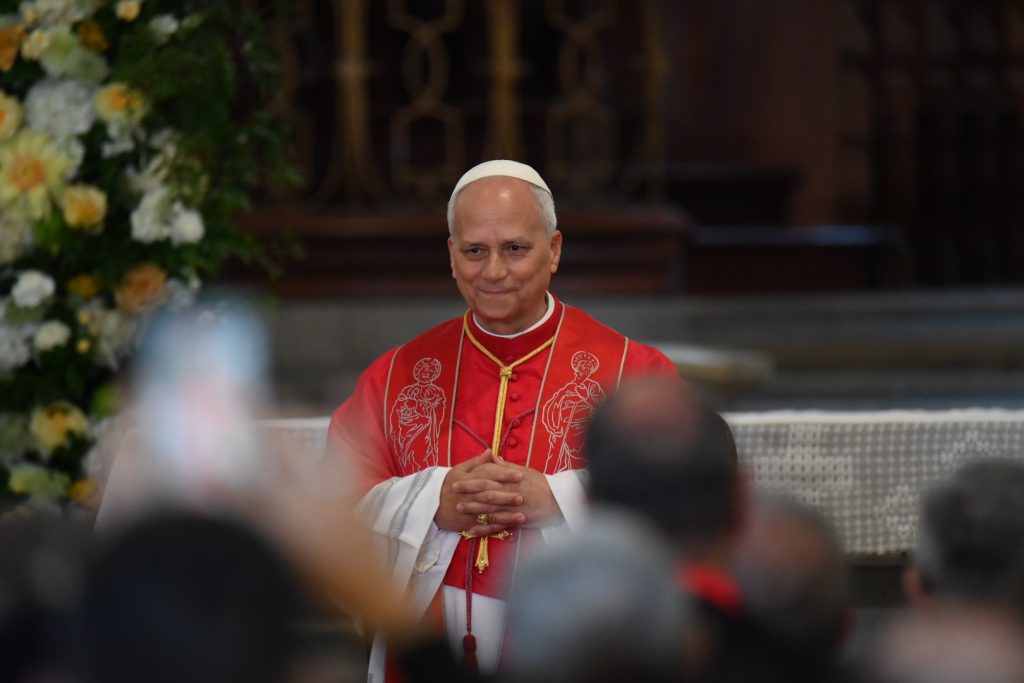
Report from Day 1 of the Consistory: During the opening session, Pope Leo XIV and the College of Cardinals examined the wounds of today’s world The College of Cardinals opened the Extraordinary Consistory by reflecting on the wounds of the modern world, with Pope Leo XIV urging the Church’s senior prelates to discern how to proclaim the Gospel at a time marked by war, loneliness, secularisation and growing social fragmentation. Following Mass in St Peter’s Basilica on the morning of 26 June, 178 cardinals gathered in the Paul VI Hall for the first working session of the two-day meeting. After the singing of the Veni Creator , Cardinal Luis José Rueda Aparicio opened proceedings before Cardinal Giovanni Battista Re, Dean of the College of Cardinals, welcomed the assembly. Pope Leo XIV then delivered an introductory address before Cardinal Rueda Aparicio introduced the day’s theme, “In What World Are We Called to Proclaim the Gospel?”, reminding the cardinals of the Holy Father’s request for their assistance and assuring him of “their support, with faith, joy, and availability”. The principal reflection was delivered by Cardinal Grzegorz Ryś of Łódź, who framed the discussions around Christ’s parable of the Good Samaritan. Rather than approaching the modern world through political or sociological analysis, the Polish cardinal argued that the Church should begin with the individual person. “The old story of the Samaritan,” he said, recalling St Paul VI’s closing address to the Second Vatican Council, should remain the Church’s exemplum atque norma , its “model” and “paradigm”, for understanding the contemporary world. “The old story of the Samaritan does not speak about ‘the world’; its subject is a single person – ‘a certain man’,” Cardinal Ryś said. “Instead of talking about an abstract and sociological concept of ‘the world’, let us think about concrete MAN and WOMAN,” because each person is both a “co-creator of the world” and “a primary and fundamental way for the Church”. Reflecting on the wounded traveller, Cardinal Ryś said modern humanity increasingly resembles the victim left on the roadside. “Violence has nearly become a name of today’s world,” he observed, pointing to “32 wars” currently taking place while noting that children and young people frequently encounter “drastic violence at school”. Such violence, he warned, “starts with aggressive language, and it ends with murder and suicide”. The traveller’s robbery, he continued, was also symbolic of modern society. Having been stripped of everything, the man is deprived not only of his possessions but also of his dignity. Nakedness, the cardinal noted, was a biblical sign of slavery, adding that contemporary forms of slavery range from the exploitation of migrants to addictions “caused by drugs, pornography, all kinds of addictions, and even modern technologies”. He described today’s men and women as increasingly “beaten and injured”, explaining that humanity is now in need of “a field hospital”. While some wounds are visible, he said, others remain “deeply hidden and never exposed, yet determine a person’s behaviour and actions”, leaving countless people scarred physically, psychologically and spiritually. Cardinal Ryś devoted particular attention to loneliness, describing the Gospel’s image of the traveller abandoned by passers-by as one of the defining characteristics of contemporary life. The wounded man, he said, is “left behind”, forced to face his suffering alone while others deliberately pass him by. “This is another sort of violence that today’s men and women face: indifference,” he said, recalling Cardinal Timothy Radcliffe’s description of modern society as suffering a “tsunami of loneliness”. Despite possessing “the best, most sophisticated means of communication”, modern men and women remain relictus – abandoned. The cardinal also reflected on the traveller being “half-dead”, asking, “How many people today live on such an edge or margin of life?” He suggested the root of many contemporary problems lies in humanity’s movement away from God, observing that the wounded traveller was descending “from Jerusalem to Jericho”, away from the Temple. That image, he argued, reflects societies that have become “secularised, seeking greatness in freedom from religion”, or which misuse religion “to promote ideas and actions absolutely foreign to it”. Turning to the Samaritan himself, Cardinal Ryś argued that Christians should not only seek to teach the modern world but also be willing to learn from it. Although regarded as “a foreigner, an alien, even an enemy”, the Samaritan becomes Christ’s example of authentic charity. “What does today’s Samaritan teach?” the cardinal asked. His first answer was simple: “compassion.” Referring to the Latin phrase misericordia motus , he said mercy should not become the object of rivalry between the Church and the world. “There are so many charitable activities and works in the world we can admire and follow, or simply take part in,” he said. “Instead of stupid jealousy and pretence, it is much better to learn and to encounter. Mercy and charity may be a meeting place of the Church and the world, the place of true dialogue and healing unity.” Following a prolonged period of silent prayer, the cardinals divided into working groups before returning to the Paul VI Hall for reports from the secretaries of the various groups. According to the Holy See Press Office, the discussions displayed remarkable agreement across the College of Cardinals. Summarising the discussions, the Press Office said: “All groups emphasised in deeply conscious terms the suffering experienced by men and women in this time of profound social transformation.” Among the principal concerns raised were “growing polarisation within societies and communities”, which the cardinals said generates “political tensions and violence” while being fuelled by “social divisions, the use of false information, and widespread communication that fails to foster understanding”. The reports warned that such polarisation “hinders governance and coexistence” and contributes to increasing violence at every level of society. Several groups also raised “a lack of respect for religious and ethnic minorities” that “undermines religious freedom and leads to hostility, or even violence, particularly against the Church”. Some also referred specifically to “the rise of anti-Semitism”. The cardinals repeatedly returned to the weakening of family life and growing individualism. According to the Press Office summary, many linked “the crisis of the family, especially loneliness, among both the elderly and the young” to “the rise in suicides and drug use”. Discussions also focused extensively on young people facing economic uncertainty, unemployment and financial instability. Other reports highlighted “a general sense of distrust, fatalism, and impotence towards institutions, democracy, and the future”, together with declining birth rates, criminal gangs, juvenile delinquency and drug trafficking. Several groups also pointed to “the role of secularism, the loss of transcendent and spiritual values, and the meaning of life”, warning that “the spreading sense of weariness and the absence of a perspective of truth mark the inability to recognise otherness and to build relationships”. Migration likewise featured prominently. The cardinals agreed on “the need to address the phenomenon of migration in a humane and Christian manner”, recognising that migration “is changing the face of peoples, societies, and communities”, while making “effective integration policies” increasingly urgent. Despite the sombre diagnosis, the reports also identified numerous signs of hope. According to the Holy See, every group stressed “the need for the Church to show herself as a mother, a welcoming place”, even if this requires “restructuring parishes”, while remaining capable of “acknowledging her own mistakes and making suffering a moment of growth”. The summary added that “a strong awareness of the responsibility entrusted to the Church in the current historical moment also emerged”. While “many institutions are experiencing a crisis of credibility”, the cardinals believed “the Church feels called to speak with authority for the dignity of the person, for peace, reconciliation, and the common good”. Pope Leo returned for the closing plenary session before thanking the cardinals for their participation. Recalling Cardinal Ryś’s meditation, the Holy Father reflected on “the image of the victim, almost dead”, adding: “If we are not blind, it is true that there is so much suffering.” Loneliness and suffering, he said, are products of contemporary society, and the Church’s response is to invite people into communion “not only by opening churches and celebrating the sacraments, but by creating opportunities and experiences of encounter”. The format of the Extraordinary Consistory itself reflects the increasingly synodal style that has become established in Vatican consultation. As in January’s consistory, the cardinals were divided into small working groups led by presidents and secretaries before moving through three stages consisting of personal interventions, shared listening, and the drafting of a common report. Those reports were then presented to the wider assembly before participants were invited to make brief interventions or submit written observations. The methodology mirrors the process employed during the Synod on Synodality and indicates that the consultative approach developed under the previous pontificate continues to shape the work of the College of Cardinals under Pope Leo XIV. Photo credit: Eros R. Santana/ACFI/EUROPA PRESS
Jun. 27, 2026