

Church Of San Carlo Al Lazzaretto
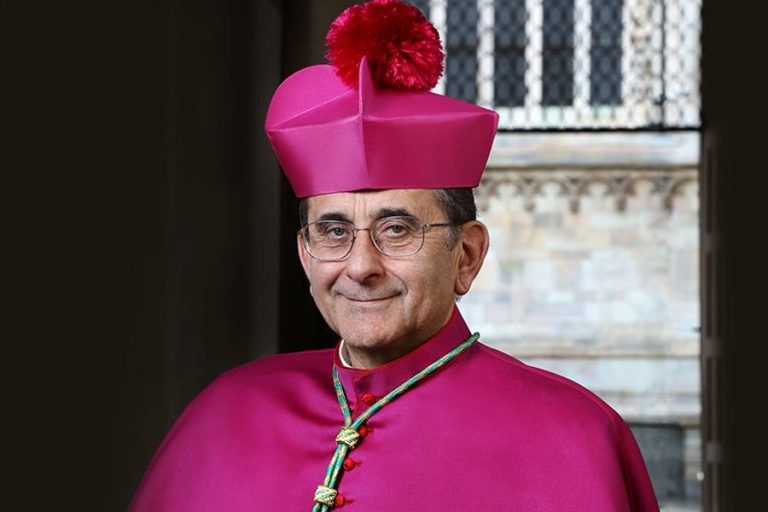
Archbishop of Milan criticised after LGBT Mass attendee receives Communion in ‘Ah Men’ T-shirt
A Mass celebrated by the Archbishop of Milan for an LGBT Catholic group has attracted criticism after images emerged of a participant wearing a rainbow-themed “Ah Men” T-shirt, a play on the word “Amen”, and later claiming he repeated the phrase while receiving Holy Communion The Archbishop of Milan has faced criticism after celebrating a Mass for an LGBT Catholic group on the Solemnity of the Sacred Heart of Jesus. Archbishop Mario Delpini presided at the Mass on 27 June at the Church of San Carlo al Lazzaretto in Milan, a church that has hosted gatherings of Catholics who experience same-sex attraction for several years. The event took place a week after the archbishop cancelled the annual Corpus Christi celebration, stating that “overtourism” and “heavy traffic” had made the prayerful nature of the event impossible. The liturgy was organised by Gruppo del Guado, an association founded in the 1980s for homosexual Catholics. Promotional material for the event featured a church rendered in rainbow colours and highlighted the participation of the Archbishop of Milan. According to reports in the Italian Catholic press, the Mass took place during Milan’s Pride celebrations and attracted around 50 participants. Local media reported that those present expressed appreciation for the archbishop’s attendance. During his homily for the feast of the Sacred Heart, Archbishop Delpini reflected on God’s love and election of His people. Quoting Scripture, he told those gathered: “The Lord has bound himself to you and chosen you not because you are the most numerous people; you are the smallest, but because he loves you.” The archbishop’s presence at the celebration quickly became the subject of criticism in parts of the Italian Catholic media, where questions were raised about the timing of the event and its association with a group dedicated to ministry among Catholics who identify as homosexual. The controversy intensified after images circulated on social media showing a participant wearing a T-shirt featuring a rainbow-coloured image of Jesus and the phrase “Ah Men”, a play on the liturgical response “Amen” and a reference to attraction between men. The individual later stated on Instagram that he had repeated the phrase while receiving Holy Communion from Archbishop Delpini. The incident drew particular criticism because it occurred during the Eucharistic celebration and on the Solemnity of the Sacred Heart of Jesus, one of the principal feasts of the Church’s liturgical year. The Church of San Carlo al Lazzaretto, where the Mass was celebrated, is situated in the Porta Venezia district of Milan, an area known for its association with the city’s LGBT community. The church has become a regular meeting place for Catholics with same-sex attraction, who gather there for prayer and Mass throughout the year. The latest controversy is not the first time Archbishop Delpini and the Archdiocese of Milan have faced scrutiny over questions relating to homosexuality and pastoral outreach. In a pastoral proposal for 2023–24, the archbishop called for particular attention to be given to “accompanying and understanding the experience of love and the different nuances of attraction, both to people of different genders and to people of the same gender”. The document stressed the importance of accompaniment and listening, while encouraging the Christian community to “assume responsibility for teaching about love” in all its dimensions. The guidance was criticised by some Catholic commentators, who argued that the language risked creating confusion about the Church’s teaching on homosexuality. Riccardo Cascioli, editor of the Italian Catholic newspaper La Nuova Bussola Quotidiana, wrote at the time that the Archdiocese of Milan had “fully embraced the line drawn by the gay lobby that has now taken command of the Catholic Church”. Referring to the pastoral emphasis on accompaniment, he questioned where such accompaniment was intended to lead. “Certainly, everyone must discover ‘his or her own vocation of love’, but this love is such a vague concept that anything can be put into it,” he wrote. The Archdiocese of Milan also attracted criticism in 2023 after a prayer vigil against “homo-transphobia” was held in one of its churches during Pride events in the city. Antonio Brandi, president of the pro-life organisation Pro Vita & Famiglia, questioned the decision and accused the event of promoting ideas contrary to Catholic teaching. “How can a Catholic church host an event that, while understandably praying against all discrimination, endorses theories that the Church rejects and that have no scientific basis?” he asked. Brandi also criticised material distributed during the vigil and objected to the inclusion of incidents that organisers cited as examples of “homo-transphobia”. The archdiocese defended its approach and rejected accusations that it had departed from Catholic teaching. Archbishop Delpini has also recently defended initiatives aimed at fostering dialogue with people of other faiths. Earlier this year, he responded to criticism after Muslim children attending summer activities at a parish oratory were given an opportunity to pray. The archbishop said the aim had been “to pay attention to non-Christian children” and ensure they were not present “only to play”, but were also able to pray. “There are also those who would like to teach me how to be a bishop,” he said. Appointed Archbishop of Milan by Pope Francis in 2017, Delpini leads the largest diocese in Italy and one of the largest in Europe. The see has historically been among the most prominent in the Catholic Church and was once occupied by Giovanni Battista Montini before his election as Pope Paul VI. The Archdiocese of Milan, which follows the distinctive Ambrosian Rite, has long been regarded as one of the most influential dioceses in the Catholic world. Its archbishops have frequently played a leading role in the life of the Church in both Italy and internationally. The archdiocese has not issued a public statement addressing the controversy.
Jun. 18, 2026