

Cardinal M Ller
Cardinal Müller’s warning to Europe: recover your Christian roots or face decline
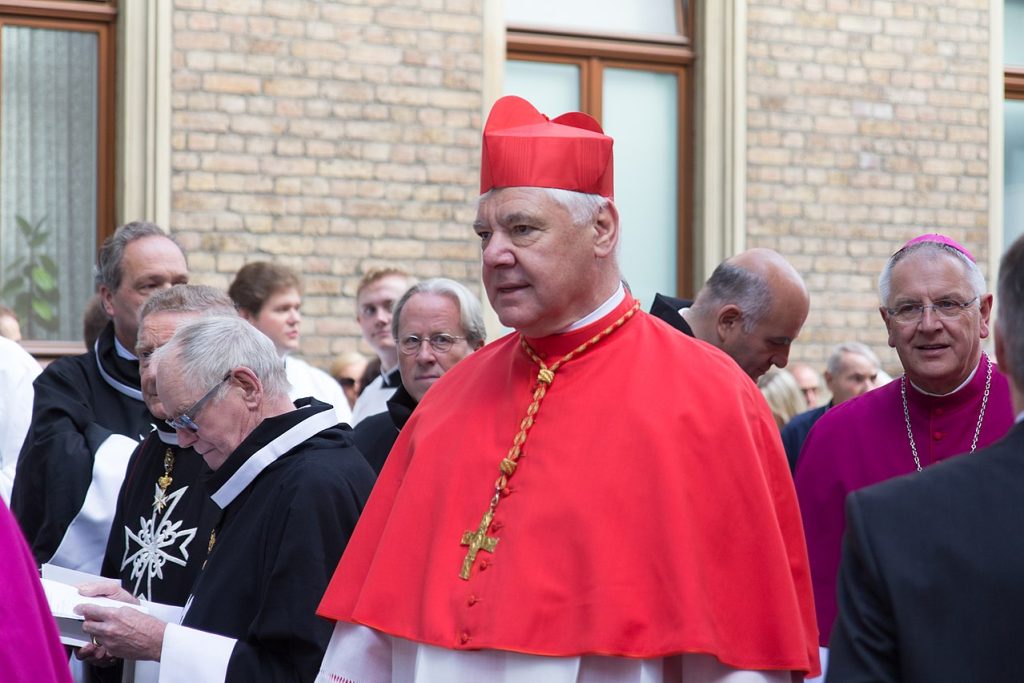
Cardinal Gerhard Müller used a Rome conference organised by I RadicaTi dal diritto naturale alla legge to deliver a warning about the EU and the future of Europe Cardinal Gerhard Müller has warned that Europe risks losing its identity and even its future unless it rediscovers the Christian foundations upon which it was built. The former Prefect of the Congregation for the Doctrine of the Faith was the principal speaker at a conference in Rome on 17 June entitled “Eurogender Diktat: Christian Roots, Religious & Educational Freedom at Risk in the EU”, organised by the newly established Catholic association I RadicaTi dal diritto naturale alla legge and hosted at the Chamber of Deputies by Massimo Milani, a member of the governing Brothers of Italy party. The event offered a sweeping critique of secularism, gender ideology, globalism and the growing ideological conformity within the European Union. The conference took place less than 24 hours after the death of Cardinal Camillo Ruini, the influential former president of the Italian bishops’ conference. His passing cast a shadow over the proceedings and was referenced repeatedly by speakers, who presented his legacy as an example of Catholic engagement in public life. Opening the conference, the association’s president, Luigi Trisolino, recalled Cardinal Ruini’s call for Catholics to remain active in politics despite their increasingly minority status in Europe. “Ruini told Catholics: even if you are now a minority in Europe, at least be a creative minority,” he said. “And that is what we will try to do together this evening.” The conference was convened to discuss the implications of recent European legislation and broader cultural developments within the EU. Speakers argued that contemporary interpretations of anti-discrimination measures risk undermining religious liberty and freedom of expression. Trisolino claimed that European institutions had increasingly embraced gender ideology, describing it as hostile to Christianity and traditional understandings of the family and human identity. He argued that recent European measures created an unequal system of protection based on identity categories and warned that criticism of progressive social policies could increasingly be treated as a form of discrimination. “Sacred religious and educational freedoms are put at risk by this illiberal EU measure,” he said, adding that those who defended Europe’s Christian roots were frequently portrayed as opponents of progress. Massimo Milani, the host of the event, whose party forms part of Prime Minister Giorgia Meloni’s governing coalition, likewise argued that many of the liberties celebrated by modern European societies were rooted in Christianity. “If today we in Europe and in the West in general can talk about human rights, of personal liberties, we must remember that if this is possible it is because we live in a society, in a free culture that owes this freedom precisely to the religious principles that have informed our culture for centuries,” he said. The strongest intervention of the evening, however, came from Cardinal Müller, who delivered an extensive address examining Europe’s religious, cultural and political trajectory since the Second World War. Drawing on the thought of figures including Konrad Adenauer, Alcide De Gasperi, Robert Schuman, Joseph Ratzinger and Benedetto Croce, he argued that Europe’s future could not be separated from its Christian inheritance. The German cardinal argued that the architects of European integration envisaged a Europe deeply conscious of its Christian foundations. Christianity, he said, had not merely influenced European culture but had provided the moral basis upon which concepts such as human dignity, conscience, freedom and equality had developed. Europe, he argued, was not simply a political or geographical project but a civilisation shaped by Christianity. Referring to the continent’s gradual Christianisation and the formation of a common Christian culture, he said Europe had become a historical unity through a shared understanding of the human person rooted in the Gospel. “On this foundation stands today the EU,” he said, warning that without the Gospel Europe would “suicidally give itself over to its downfall”. The cardinal repeatedly returned to the theme of Christian identity, arguing that Europe’s present crisis stemmed from a deliberate attempt to sever the continent from its religious roots. Among his sharpest criticisms was the state of the family. Cardinal Müller said Europe was experiencing “the dissolution of marriage and the family and of personal identity”, presenting this as one of the defining features of the continent’s cultural crisis. He also criticised gender ideology and attempts to redefine human nature itself. Warning against transhumanist and post-human philosophies, he criticised what he called a “Jacobin-like gender transformation contra to the natural family and personal identity”. He also accused European institutions and some national governments of promoting what he termed a “gender-totalitarianism”, warning that democratic societies risked drifting towards what the nineteenth-century French thinker Alexis de Tocqueville described as a “soft despotism”. Rather than relying on overt repression, Cardinal Müller argued, such systems sought to shape public behaviour through bureaucracy, regulation and cultural pressure. He claimed this process could already be seen in parts of Europe through policies promoting gender ideology and restricting dissent from progressive orthodoxies. His Eminence’s criticism of the European Union became increasingly direct as the address progressed. He singled out the Digital Services Act and broader regulatory structures as examples of excessive bureaucratic intervention. Referring to what he called the “Orwellian fantasy” of surveillance and content regulation, he warned against allowing political institutions to assume responsibility for determining truth and falsehood in public discourse. Governments, he argued, should pursue the common good rather than claim authority over truth itself. The cardinal’s criticisms extended beyond the EU and governments to international organisations and networks that he associated with globalist thinking. Cardinal Müller referred to the “globalists of the New World Order” and criticised the influence of organisations such as the World Economic Forum and the Club of Rome. The Prefect Emeritus argued that such elites were advancing an ideological programme that marginalised Christianity while promoting secular and technocratic approaches to society. He claimed Europe was increasingly being transformed into “an experimental field for atheistic woke ideology”, in which religious belief was gradually pushed from public life and reduced to a private matter. The cardinal further expressed concern about migration, arguing that Europe faced significant cultural and demographic challenges. He claimed that large-scale immigration had been encouraged by political leaders without adequate consideration of integration or social cohesion. Throughout the address, Cardinal Müller drew heavily on the Catholic intellectual tradition, citing figures including Benedict XVI, Joseph Ratzinger, Marcello Pera, Benedetto Croce and Reinhold Niebuhr. He argued that faith and reason must work together if societies were to address the ethical challenges posed by technological developments, including artificial intelligence. Cardinal Müller also pointed to Pope Leo XIV’s encyclical Magnifica Humanitas and Benedict XVI’s Regensburg Lecture as guides for addressing the moral questions raised by emerging technologies. Echoing themes found in both texts, he warned that technological progress must remain subject to moral truth and the dignity of the human person. “We must not become dogs to the masters of AI,” he said, arguing that faith and reason together offered the only adequate framework for ensuring that humanity remained master of its inventions rather than their servant. Quoting Benedict XVI’s reflections on reason and faith, Cardinal Müller maintained that Europe needed a broader understanding of reason capable of engaging questions of morality, truth and human dignity rather than reducing human knowledge solely to what could be scientifically verified. He concluded by urging Europeans to recover confidence in their Christian heritage rather than abandon it. The continent’s future, he argued, depended upon recognition of natural moral law and universal human rights rooted in the dignity of every person.
Jun. 18, 2026
Phoenix auxiliary bishop attacks anti-synodality book backed by Cardinal Müller
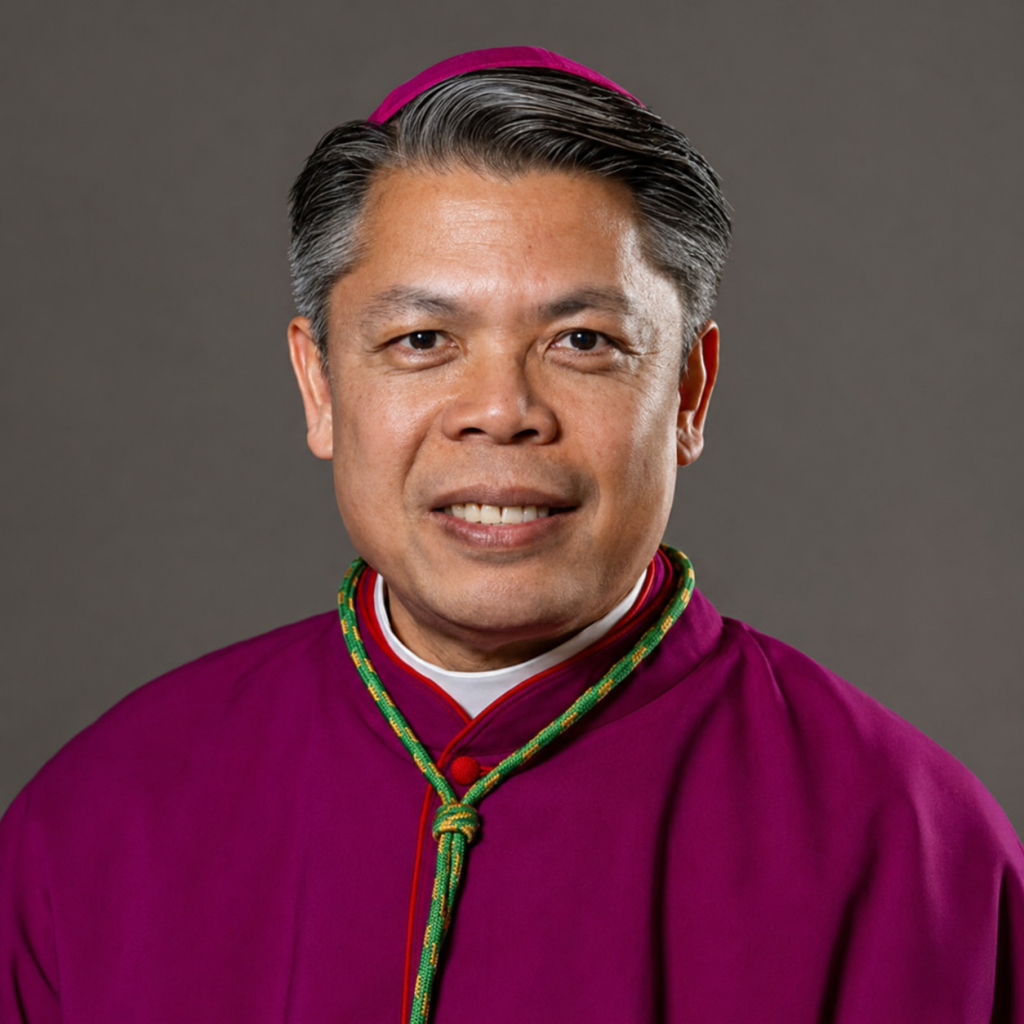
Bishop Peter Dai Bui of Phoenix has sharply criticised The Trojan Horse in the Catholic Church, a book backed by Cardinal Gerhard Müller which argues that the Synod on Synodality seeks to undermine the Church’s hierarchical structure Bishop Peter Dai Bui, auxiliary bishop of the Diocese of Phoenix, has written a scathing criticism of the book The Trojan Horse in the Catholic Church , published by the lay group Catholics for Catholics (CforC). The Trojan Horse in the Catholic Church is written under the pseudonym “Father Enoch” by a priest-author, with Cardinal Gerhard Müller writing the foreword. The book, written in the form of a two-part essay entitled “Replacing the Hierarchical Structure of the Church” and “Overturning the Moral Order”, seeks to explain how the Synod on Synodality is intended to undermine the governing hierarchy of the Church. In the book, Fr Enoch writes that “the first goal of the Synod is to invert the hierarchical structure of the Church as instituted by her Founder and our Saviour, Jesus Christ” because it “undercuts the authority or sacred power with which He endowed the Apostles and their successors in office, the bishops: to teach, to govern, and to sanctify”. Fr Enoch argues that this attempt to overturn the hierarchy of the Church found its roots in the pontificate of Pope Francis. He writes that during the Francis era it appeared that “nothing had changed in the Vatican”, while in fact “a quiet revolution had been taking place”. Fr Enoch argues that this revolution originated in the 2014 Synod on the Family and the subsequent 2016 Apostolic Exhortation Amoris Laetitia , reaching a crescendo in the 2023 Synod on Synodality. Fr Enoch takes issue with the term “synodality”, quoting Cardinal Burke saying that it has “no history in the doctrine of the Church and for which there is no reasonable definition”. He also argues that “the hierarchical structure of the early Church [was] deeply embedded already in the early second century”, making its removal contrary to Christianity. The second part of the book focuses on the “homosexual agenda”, particularly Amoris Laetitia , Fiducia Supplicans and various actions taken by the German Synodal Way. The essay is a damning assessment of the pontificate of Pope Francis, portraying much of it as a “push for the homosexualist agenda”. In his response, Bishop Peter Dai Bui argues that synodality is “as old as Emmaus, as old as the Council of Jerusalem, where the apostles and the whole community gathered to discern together and wrote”. He specifically uses the example of Emmaus as an illustration of synodality, where the two disciples were “trying to make sense of a catastrophe they could not yet name”. Bishop Dai Bui defends synodality as not being a challenge to the deposit of faith, which “cannot be subject to revision by any synod, any council, or any pope”, but rather as the Church asking itself how to “walk with human beings whose lives are complicated, wounded and often far from the fullness of what the Church proclaims?” On Catholics for Catholics specifically, the article claims that it is “not a theological institute and it holds no magisterial standing”. It also argues that Cardinal Müller’s reflections are “contested by others who were present in the same room”. Responding to the criticism, Catholics for Catholics pointed to what it described as the contradiction of a bishop criticising the opinions of a lay group while defending synodality as an exercise in listening to the laity. John Yep, president of Catholics for Catholics, stated: “Why is the bishop reprimanding us as lay Catholics trying to defend the Faith?” He also pointed out that while Catholics for Catholics is not a theological institute, “the former head of the Doctrine of the Faith, Cardinal Gerhard Müller, as well as its very accomplished author, would most definitely qualify as theologians who carry weight.” Referencing the bishop’s use of the story of Emmaus, Yep commented: “If Jesus Christ would have received that ‘Synod Report’ [the final report of Study Group 9, which addressed homosexual behaviour] on the road to Emmaus, he would have said the same thing – or worse – than what he told the two disciples when they erred in their understanding. ‘O Stulti!’, Christ said, which literally means ‘O stupid or foolish ones.’ I wonder if Christ would say the same thing today to any bishop promoting this new ‘synodal Church.’” Catholics for Catholics, with the assistance of its supporters, has been able to send a copy of The Trojan Horse in the Catholic Church to every bishop in the United States and to more than a quarter of the country’s priestly population. Yep argued that Bishop Bui’s attempt to discredit the book had resulted in greater support, adding: “For that, we are grateful.” Bishop Peter Dai Bui was appointed auxiliary bishop of Phoenix by Pope Leo XIV in December 2025 and received episcopal consecration the following February. A native of Vietnam, his family fled the country after the war and arrived in the United States when he was a child. He was ordained a priest in 2003 and was initially a member of the Legionaries of Christ. He later left the congregation and was incardinated into the Diocese of Phoenix in 2009.
May 14, 2026
Cardinal Müller rejects claims Vatican finances influenced election of Pope Leo XIV
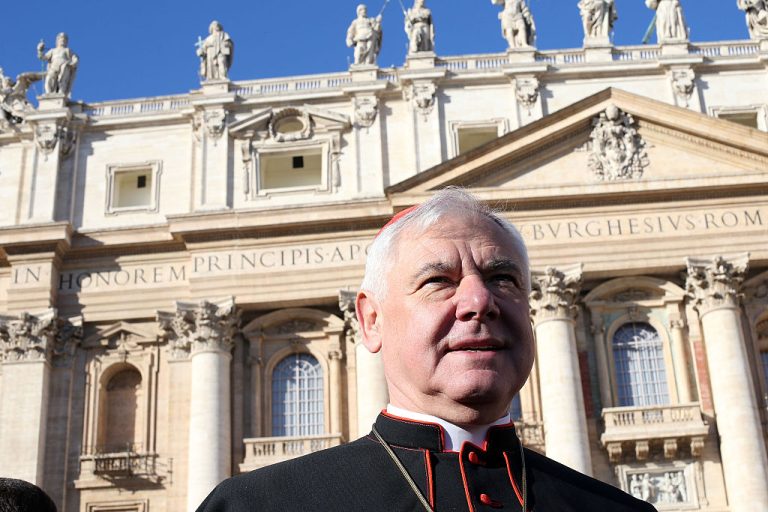
Cardinal Müller has dismissed speculation that financial concerns shaped the election of Pope Leo XIV Cardinal Gerhard Ludwig Müller has rejected claims that the Vatican’s financial situation influenced the election of Pope Leo XIV. The German cardinal made his remarks in Rome during the presentation of the new book Papi, Dollari e Guerre by the renowned Italian Vaticanista Massimo Franco, which examines the historical relationship between the United States and the Holy See. Speaking at the event, Cardinal Müller addressed speculation that concerns over Vatican finances may have played a decisive role in the election of the first American pope. “Although Cardinal Reinhard Marx dedicated a full day to discussing the Holy See’s finances in the pre-conclave, this did not influence the final decision,” Cardinal Müller said. His Eminence added that the choice of a pope “is based on different criteria.” The intervention comes one year after the conclave that elected Pope Leo XIV, a historic event given the longstanding assumption that a pontiff from the United States was unlikely. Cardinal Marx, who has been closely associated with Vatican economic reform and oversight, reportedly led a full day of discussions on financial issues during the general congregations preceding the conclave. These meetings, which take place before the formal voting begins, allow cardinals to exchange views on the challenges facing the Church. Despite the prominence of those discussions, Cardinal Müller insisted that they did not shape the final outcome. His remarks appeared to counter interpretations that the election reflected a strategic response to financial pressures or a desire to strengthen ties with American Catholic institutions. Franco’s book, presented at the same event, sets out the historical context of relations between the Vatican and the United States, including financial links that have developed over more than a century. According to the publisher’s summary, the work traces the role of American Catholic influence from the early twentieth century to the present day, using archival material and previously unpublished testimonies. The book refers to financial contributions from American benefactors during the pontificates of Pius XI and Pius XII, as well as support provided during and after the Second World War. It also examines the role of institutions such as the Papal Foundation, established during the pontificate of John Paul II, and the continuing presence of major Catholic organisations in the United States. The summary further notes that the most recent conclave marked “the end of Eurocentrism in an impoverished and divided Vatican”, while suggesting that the election of Pope Leo XIV should be understood within a broader historical and geopolitical framework. It also points to the significance of the Pontifical North American College in Rome, where it is claimed discussions among American cardinals took place prior to the conclave. Among those present at the book presentation were several figures from ecclesiastical, political and journalistic circles, including Archbishop Antonio Mennini and the former Italian prime minister Romano Prodi. Massimo Franco, the author, is a political journalist and commentator for Corriere della Sera . He has previously written on Italian and Vatican politics and has contributed to a range of international publications. His latest work continues that focus, examining the intersection of religion, diplomacy and finance.
May 1, 2026