

Cardinal Burke
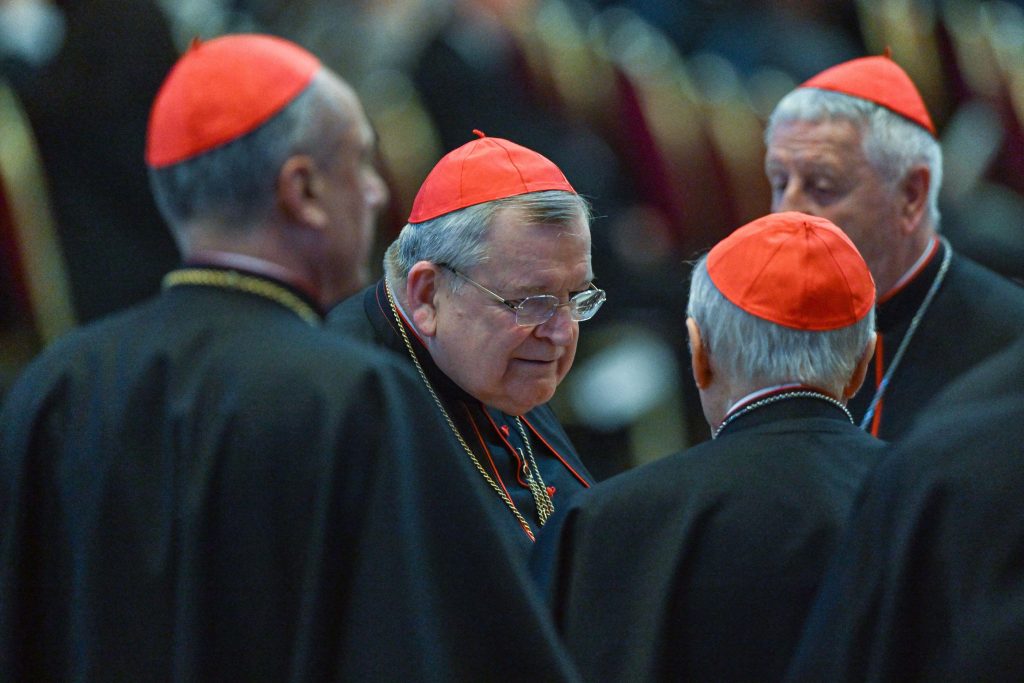
“The process has to be stopped” Cardinal Burke on synodality
In an interview with The College of Cardinals Report, Cardinal Raymond Burke calls for the Synod on Synodality to be stopped and completely reoriented. He also comments on Study Group 9, the SSPX and the future of the Traditional Latin Mass Cardinal Raymond Burke has called for synodality to be stopped. Speaking in an interview with The College of Cardinals Report on 28 June, the day after the close of the Extraordinary Consistory, the 78-year-old Cardinal said that there “is no history of synodality” in the Church. He further insisted that “this whole synodality business be stopped” and that “a very serious study be done on the whole matter” because “we are talking about the salvation of souls.” When asked about a Cardinal who had spoken out against synodality, Cardinal Burke said there was “more than one”. He said the crux of the criticism was that “in all the documents that come out, there is no definition of synodality”. In response to these criticisms, Cardinal Burke said that one Cardinal at the consistory remarked, “You know it by doing it”, which he described as “irrational” and “not the Catholic Faith”. He also warned that synodality carried the danger of “conforming to the world”. He said that those arguing in favour of the approach consistently spoke of a “change in paradigm”, to which the Cardinal responded that the Church does not undergo paradigm shifts because it is “one, holy, Catholic and apostolic”. He acknowledged that, whilst synodality may have good motives in its desire to address the problems of the world, “it is fundamentally flawed” because it neglects the Church’s tradition by failing to give proper emphasis to how “the Church in the past has addressed the world and the situation of the world”. When asked about his own participation at the consistory, Cardinal Burke said he had used his intervention to address the controversy surrounding Synod Study Group 9, one of the ten study groups established by Pope Francis in March 2024 as part of the implementation phase of the Synod on Synodality. The group was tasked with listening to controversial doctrinal, pastoral and ethical questions, but was criticised for appearing to air views that deviated from Church teaching, particularly through testimonies criticising Courage International, an apostolate for Catholics who experience same-sex attraction and seek to live chaste lives. Cardinal Burke said the group had “calumniated Courage, this great apostolate founded by Cardinal Cooke”. He continued: “I’ve known Courage since the 1980s,” adding that the report “accuses Courage of something that I know is false”. He further defended the apostolate, saying: “Courage is a… wonderful apostolate that helps people who suffer from these attractions to live a chaste life.” He described the decision to send Study Group 9’s report to dioceses as “iniquitous”. Recalling his intervention at the consistory, he said he had told the Cardinals that the “process must be stopped” and “completely reoriented”. Cardinal Burke also addressed Cardinal Mario Grech’s use of the final session of the consistory to tell Cardinals that the implementation of synodality represents “a new stage in the reception of the Second Vatican Council”. He said that whilst “some spoke enthusiastically about what he was saying”, others raised “very serious questions”. His Eminence also questioned the omission of the Sacred Liturgy from the agenda of the consistory when “we had this whole crisis brewing” with the Society of Saint Pius X. Referring to the Pontifical Commission Ecclesia Dei , founded in the wake of the 1988 Écône consecrations, he said there was a need for a modern-day equivalent to help those “who do not want to be associated with a schismatic act” to be received into full communion with the Church while continuing to attend the older form of the Roman Rite. He said such a commission would assure the faithful that this form of worship is “guaranteed” to them. Cardinal Burke’s comments are not unexpected, as he is one of the most forthright conservative voices within the Church. What is perhaps surprising, however, is the directness and openness with which they are expressed. The American prelate has openly called for a process that has received a great deal of the Vatican’s time and energy in recent years to be halted. He has also called for a pragmatic approach to the question of the Society of Saint Pius X and suggested a way forward linked to the Traditional Latin Mass. This pithy and realistic manifesto for traditionalist aspirations stands in contrast to the more open-ended proposals of the liberal wing. That approach often speaks in broad terms about listening and adapting or, as in the case of the German Synodal Way, seeks to advance policies that the Church could never promulgate without risking large-scale schism. Whether Cardinal Burke’s comments will result in concrete action remains to be seen, but they provide an erudite and clear explanation of the changes the conservative wing of the Church would like to see.
Jul. 16, 2026
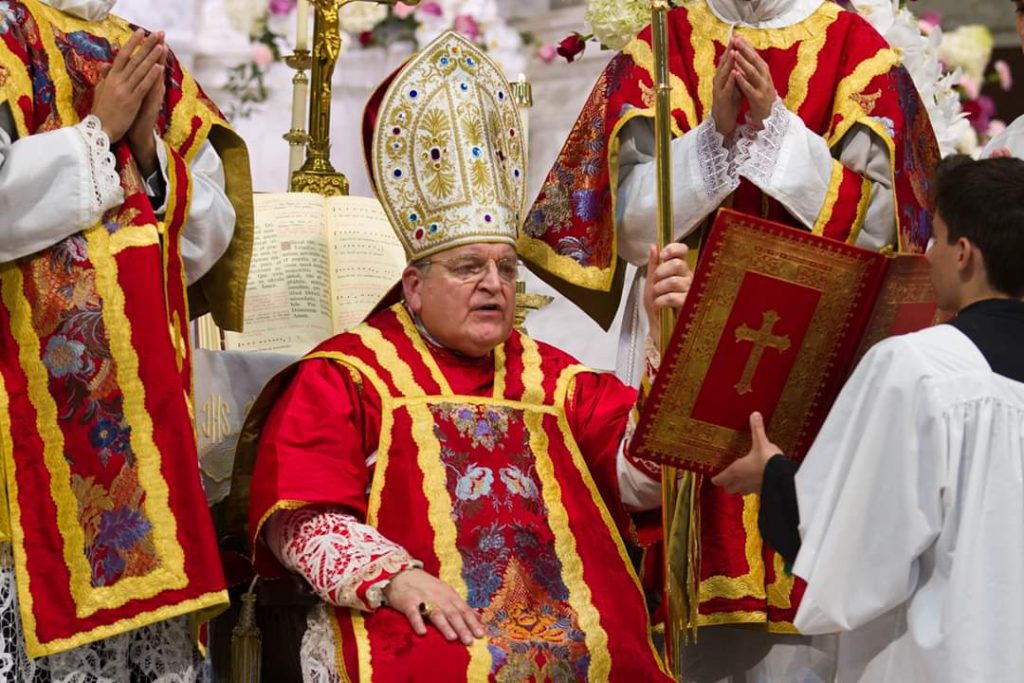
Cardinal Burke to celebrate closing Pontifical High Mass of Chartres pilgrimage
Cardinal Raymond Burke will celebrate the closing Pontifical High Mass of this year’s Chartres pilgrimage as more than 20,000 pilgrims prepare to walk from Paris to Chartres Cardinal Raymond Burke has been confirmed as the celebrant for the Pontifical High Mass at the concluding celebration of the Chartres pilgrimage this year. The American cardinal will celebrate Mass inside Chartres Cathedral on Pentecost Monday for pilgrims arriving on foot from Paris. More than 20,000 pilgrims are registered to take part in the 44th Pèlerinage de Chrétienté , the highest number yet. The theme of this year’s pilgrimage is “You will be my witnesses to the ends of the earth”, with a particular focus on mission, inspired by the resurgence of interest in Christianity across France and other parts of western Europe. More than 13,000 adults were baptised into the Church in France this Easter, a 20 per cent increase on the previous record high in 2025 and a 220 per cent increase on 2016. The largest cohort is made up of 18 to 26-year-olds, who account for 42 per cent of the total, while 82 per cent are aged 40 or under. When teenagers are included, the total rises to more than 20,000. Across the United Kingdom, significant increases were also reported, with Westminster Diocese in London receiving double the number of adults into the Church compared with just two years ago. Explaining the rationale, the Association of Notre-Dame de Chrétienté, which organises the pilgrimage, said the event stands “at the heart of this spiritual awakening in France, for which prayers have been offered for 44 years”, and encouraged Catholics to “show boldness and renew their approach to mission”. Founded in 1983 in response to what its organisers describe as the doctrinal and liturgical crisis of the post-conciliar Church, the Pèlerinage de Chrétienté sees participants walk the 100km journey from Paris to Chartres. In doing so, they revive a medieval tradition and follow in the footsteps of Charles Péguy, the French essayist who helped popularise the pilgrimage at the beginning of the 20th century. Pilgrims are scheduled to meet at Saint-Sulpice, Paris’s second-largest church, at 6.50am on Saturday, May 23 for Mass, before beginning a 35km walk to Choisel, where Mass will be celebrated at 7.30pm. On Pentecost Sunday, a Pontifical Mass will be celebrated at Les Courlis at midday, after which pilgrims will continue walking to Gas, where there will be Benediction of the Blessed Sacrament and all-night adoration. Alongside Cardinal Burke, other celebrants and preachers are scheduled to include Mgr Patrick Chauvet, former rector-archpriest of Notre-Dame Cathedral in Paris, Fr Antonius Maria Mamsery, Superior General of the Missionaries of the Holy Cross, and the Dominican Fr Serge-Thomas Bonino. Also in attendance will be Fr Fabrice Loiseau, a former seminarian of the Society of St Pius X who left before the 1988 episcopal consecrations to join the Fraternity of St Peter at its foundation. Fr Loiseau later founded the Society of Missionaries of Divine Mercy with the support of the then bishop of Fréjus-Toulon, Dominique Rey. The community, whose charism is to live by mercy through the Eucharist and proclaim it to the world, celebrates Mass exclusively according to the Tridentine rite. Cardinal Burke, a long-time advocate of the Traditional Latin Mass, also celebrated the closing Mass for the pilgrimage in 2017. Other notable prelates who have celebrated Mass during the pilgrimage include Bishop Athanasius Schneider, Cardinal Gerhard Müller and Cardinal Robert Sarah. Imagre credit: Di Abraxham03 – Opera propria, CC BY-SA 4.0, https://commons.wikimedia.org/w/index.php?curid=81254560
May 13, 2026