

Canary Islands
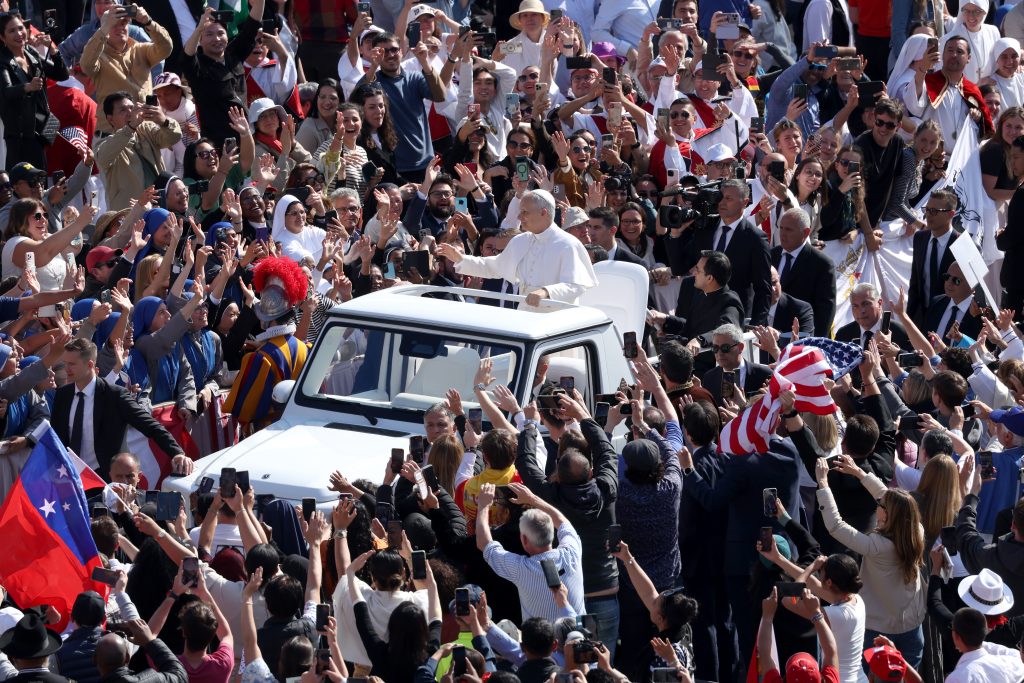
Inside the popemobiles for Pope Leo XIV’s apostolic journey to Spain
As Pope Leo XIV begins his apostolic journey to Spain, AdVaticanum can reveal details of the vehicles that will accompany him across Madrid, Barcelona and the Canary Islands during the six-day visit. The Pope will travel in two popemobiles brought from Rome and three specially adapted electric vehicles designed to allow closer contact with the […] As Pope Leo XIV begins his apostolic journey to Spain, AdVaticanum can reveal details of the vehicles that will accompany him across Madrid, Barcelona and the Canary Islands during the six-day visit. The Pope will travel in two popemobiles brought from Rome and three specially adapted electric vehicles designed to allow closer contact with the faithful during a packed programme of public events. The arrangements form part of a major logistical operation involving the Vatican, Spanish Church authorities and the Spanish Armed Forces. The two popemobiles arrived in Spain aboard Spanish Air Force transport aircraft, first stopping to deposit one of the cars in Barcelona before the other was taken to Madrid. Both carry the Vatican registration SCV 1. The first vehicle, a Mercedes-Benz 500, will serve during the Madrid portion of the journey before being flown to Gran Canaria. Iconic in design, Mercedes-Benz popemobiles have been the backbone of the Vatican’s fleet for decades. The Mercedes-Benz 500 which will be used during the Madrid and Gran Canaria legs of the journey The Barcelona popemobile has been made by the Japanese automobile maker Isuzu and is labelled as the D-MAX. Isuzu popemobiles came to prominence during the 2015 papal trip to the Philippines, and during this papal trip the vehicle will be used for the Pope’s engagements in the Catalan capital before it is transferred to Tenerife to meet the Pope upon his arrival on the largest of Spain’s Canary Islands. The Isuzu D-MAX which will be used for Barcelona and Tenerife Alongside the popemobiles, Leo XIV will also use three electric buggy-style vehicles specially designed for indoor settings and to facilitate close encounters with pilgrims. Two of the electric vehicles are being prepared in Spain, with one built in Madrid and another adapted in the Canary Islands, while a third has been transported from Rome. The papal visit, which runs from 6 to 12 June, will take Leo XIV to Madrid, Barcelona, Gran Canaria and Tenerife. It is the first papal visit to Spain since Pope Benedict XVI travelled to Madrid for World Youth Day in 2011. Pope Francis never visited the country, and Pope Leo’s decision to visit the historically Catholic country so early in his pontificate is generally seen as an acknowledgement that Spain is due a papal appearance. Historically, popes moved amongst crowds using the sedia gestatoria , a portable ceremonial throne consisting of an armchair upholstered in fine silk, mounted on a raised platform and carried on the shoulders of twelve attendants in uniform. It was last used during the very brief 1978 pontificate of John Paul I. Pius XII using the sedia gestatoria The first instance of a pope owning a car came when Pius X was given a 20/30 Itala by the Archbishop of New York, John Farley, in 1909. Pius reportedly refused to use the car, preferring his horse-drawn carriage. Pope Pius XI is known to have used a car, though his car use would have been limited to short trips in the Rome area. Having adopted the title “prisoner of the Vatican”, his movements were restricted. Even after the 1929 Lateran Treaty went a significant way towards regularising relations between the Italian state and the papacy, Pius XI’s travel did not extend much beyond the short drive to Castel Gandolfo, the papal summer residence. In 1930, Mercedes-Benz gave Pius XI a Nürburg 460, which is often described as the first popemobile, though the term had not yet been coined. It was not until Paul VI that the papacy began significant international travel, with Paul visiting 20 countries across six continents during his reign. Paul VI used specially adapted vehicles during these journeys, but the famous popemobiles seen today, with their raised papal seat, became common during the pontificate of John Paul II, who visited 129 countries during his 26-year pontificate. For John Paul II’s 1979 papal trip to the United States, Ford specially designed a 1979 Bronco for the visit, which is believed to be the first vehicle commonly called a “popemobile”. Since then, the name has stuck with each pontificate. There have been variants of the car to match the wishes of each pope, but they have retained their iconic design and become a feature of the papacy.
Jun. 5, 2026
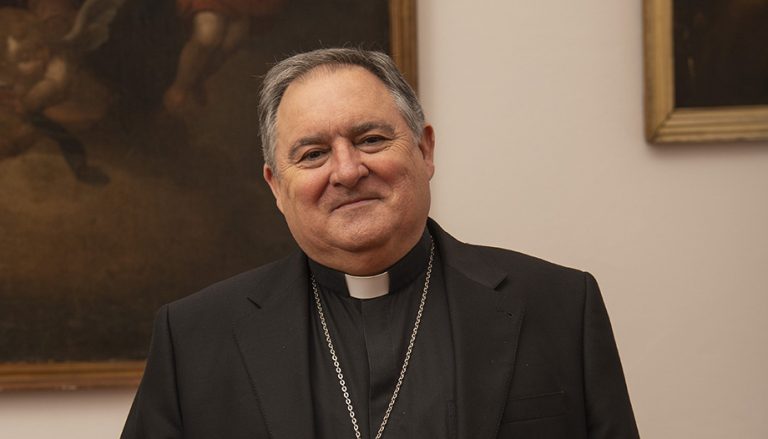
Canary Islands bishop says politicians must stop using migration “to win votes” ahead of papal visit
Bishop José Mazuelos Pérez of the Canary Islands has urged Spain’s political leaders to stop “playing politics” with immigration ahead of Pope Leo XIV’s expected visit to the country. The bishop warned against ideological polarisation, criticised the handling of migrant policy and said the Pope would call for unity and “the most humane solutions possible” The Bishop of the Canary Islands has appealed for Spain’s political class to stop using immigration as a weapon of ideological warfare ahead of the forthcoming visit of Pope Leo XIV. In an interview with the Spanish outlet The Objective , given as preparations continue for the Pope’s visit to Spain, Bishop José Mazuelos Pérez insisted that the migration crisis affecting the Canary Islands could not be reduced to electoral calculations or partisan rhetoric. “Immigration cannot be used for political polarisation,” the bishop said. “It’s not a matter of polarising the issue and using it for an ideology to win votes, but rather of finding the most humane solutions possible.” The Canary Islands have become one of the principal entry points into Europe for migrants crossing from West Africa, with local authorities struggling to cope with growing numbers of arrivals, especially unaccompanied minors. At the same time, debate over immigration has intensified sharply within Spanish politics, where both Left and Right accuse one another of exploiting the issue for political advantage. Bishop Mazuelos criticised what he described as attempts by all sides to instrumentalise migration for electoral purposes. “Politicians have to stop playing politics with immigration and find a solution together,” the bishop said. “Enough is enough; it seems the common good has been lost.” Over recent years, bishops, Catholic charities and ecclesiastical organisations have repeatedly backed measures designed to regularise migrants already living in Spain, while pressing for greater humanitarian protections and expanded reception policies. That stance has generated criticism that the Spanish hierarchy has aligned itself too closely with the assumptions of progressive migration policy while failing to address concerns surrounding integration, crime, pressure on housing and public services, and the wider social consequences of large-scale irregular migration. Bishop Mazuelos acknowledged that the Church had supported the regularisation of migrants for more than a year. “The Church has been asking for it for over a year and a half,” he said, arguing that Spain depended heavily upon migrant labour, particularly in caring professions and among workers supporting the country’s ageing population. At the same time, however, he openly criticised the political handling of the issue by the government of Spanish President Pedro Sánchez, suggesting that recent moves towards regularisation had been driven less by humanitarian concerns than by domestic political calculations. Referring to the timing of the proposals, the bishop said: “It was more because of the elections in Aragon than the Pope’s visit, because it suited their purposes.” Bishop Mazuelos repeatedly invoked the need for a return to “the spirit of the Transition”, referring to the broad political consensus that accompanied Spain’s move from Francoist dictatorship to parliamentary democracy in the late 1970s. “A large majority of Spaniards miss that spirit of the Transition,” the bishop said, expressing hope that Pope Leo XIV’s visit to the Spanish parliament might encourage politicians to rediscover a sense of national unity. Pope Leo XIV is expected to visit Madrid, Barcelona and the Canary Islands during what will be his first visit to Spain as Pope and the first papal visit since Benedict XVI attended World Youth Day in 2011. The Canary Islands, now synonymous across Europe with the migration crisis in the Atlantic, make any papal appearance there impossible to separate entirely from politics. Bishop Mazuelos insisted that the visit should not be interpreted as a political intervention. “The Pope’s visit to the Canary Islands is not political; he’s not coming to scold anyone or tell anyone what to do,” he said. Instead, he argued, the Pope wished to highlight “charity” and the wider mission of evangelisation. Still, the bishop also made clear that Leo XIV would likely speak forcefully about the need for unity and human dignity in the face of political division. “Pope Leo XIV is going to make that call for unity,” he said. “Let’s not use immigration for votes.” Bishop Mazuelos also addressed growing concerns over the treatment of unaccompanied migrant minors arriving in the Canary Islands, many of whom face uncertain futures upon reaching adulthood. “When they turn 18, they’re sent out onto the street,” he said, warning that many subsequently become vulnerable to criminal exploitation, prostitution and homelessness. He praised the work of Caritas and Catholic organisations operating in the islands, arguing that Church agencies were frequently stepping in where the state had failed. “Ultimately, it’s Caritas that’s feeding them,” he said. “Helping them so often where the State falls short.” The bishop nevertheless rejected accusations that the Church supported uncontrolled or irregular migration. “The Church is not in favour of irregular immigration,” he said. “But rather the most humane immigration possible.”
May 12, 2026