

Bishop Strickland
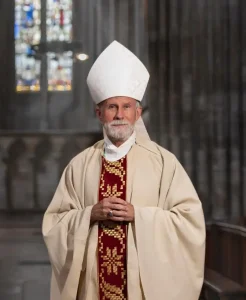
Bishop Strickland gives another reflection on the SSPX
In a new reflection on the Society of St. Pius X, Bishop Joseph Strickland examines the legacy of Archbishop Marcel Lefebvre In the wake of the July 1 consecration of new bishops for the Society of Saint Pius X, Bishop Joseph Strickland has given his view on the SSPX at large. Writing on his website, Pillars of Faith , the former Bishop of Tyler encouraged readers to, as discussions continue regarding the Society of St. Pius X, ask themselves: “What has moved these priests and faithful throughout the past fifty years?” The 67-year-old bishop did not wade into the consecrations themselves, but instead took a step back and examined the life of Archbishop Marcel Lefebvre, the Society’s founder, whose desire to preserve what he believed to be the authentic faith of the Church led to conflict with Rome and ultimately to his excommunication, a penalty he carried until his death in 1991. The bishop said that Archbishop Lefebvre “did not embark upon this path because it was easy, nor because it brought him honor or peace”, but because “he believed that precious treasures entrusted by Christ to His Church – the Holy Sacrifice of the Mass, the reverent celebration of the sacred mysteries, the formation of holy priests, and the perennial teachings of the Catholic Faith – were in danger of being diminished.” Bishop Strickland suggested that this had been a consistent theme throughout the Society’s history, stating that “looking honestly at their history, one sees men and women who have sacrificed greatly because they believed they were preserving the treasures entrusted to the Church by Christ Himself.” Acknowledging that many Catholics would disagree with the Society’s decision not to submit to Rome at various points in its history, the bishop wrote that “whether every decision made along the way was prudent is a question that reasonable Catholics may discuss”, but reaffirmed that its motivation was “to remain close to Our Lord and faithful to the deposit of faith.” Reflecting on the present state of the Church, Bishop Strickland said that “across the world, many public challenges to Catholic doctrine and morality have caused great confusion among the faithful” and asked: “Why do those who openly reject settled teachings of the Church often appear to face little correction, while those whose deepest desire is to preserve the Church’s sacred inheritance are viewed with the gravest penalties?” Entrusting the matter to Divine Providence, he further asked that every Catholic “pray – not only for the faithful of the Society of St. Pius X, but also for the Holy Father, for the bishops, and for all those entrusted with the grave responsibility of shepherding Christ’s flock.” The bishop’s reflection follows a similar pattern to that of a number of Church figures in recent years who have been reluctant to criticise the intentions of Archbishop Lefebvre and the Society itself, but have instead sought to heal the divide between the Society and Rome. His reference to those “who openly reject settled teachings of the Church” and “face little correction”, while there has been talk of the wholesale excommunication of members of the Society, is a point that many have commented upon. Bishop Strickland was likely referring to the German Synodal Way and other Catholic groups that have issued proposals seeking changes to Catholic moral teaching. Many have pointed to what they see as an inconsistency in comparison with the Society. While some might legitimately argue that the Society deviates from Catholic doctrine by questioning the Second Vatican Council and aspects of its teaching, the German Synodal Way has openly and repeatedly questioned Catholic teaching on sexuality and the liturgy, in a way that many believe goes considerably further in the opposite direction than the SSPX. Bishop Strickland himself is no stranger to public disagreement with Church authorities. Particularly critical of Pope Francis’ pontificate, the Diocese of Tyler was subjected to an apostolic visitation in 2023 during his leadership. The visitation ultimately led to his removal from office later that year. While he did express concern over Pope Leo’s election in 2025, telling commentator Glenn Beck, “He was involved in naming bishops that I find very troubling”, he has generally been significantly less critical of the current pontificate. Bishop Strickland’s previous commentary on the Society has followed a similar line. Writing in February this year, he said that “when those who openly contradict the Church’s teaching are tolerated, while those who seek continuity are treated as suspect, something has been inverted.”
Jun. 26, 2026