

Bishop Stefan Oster
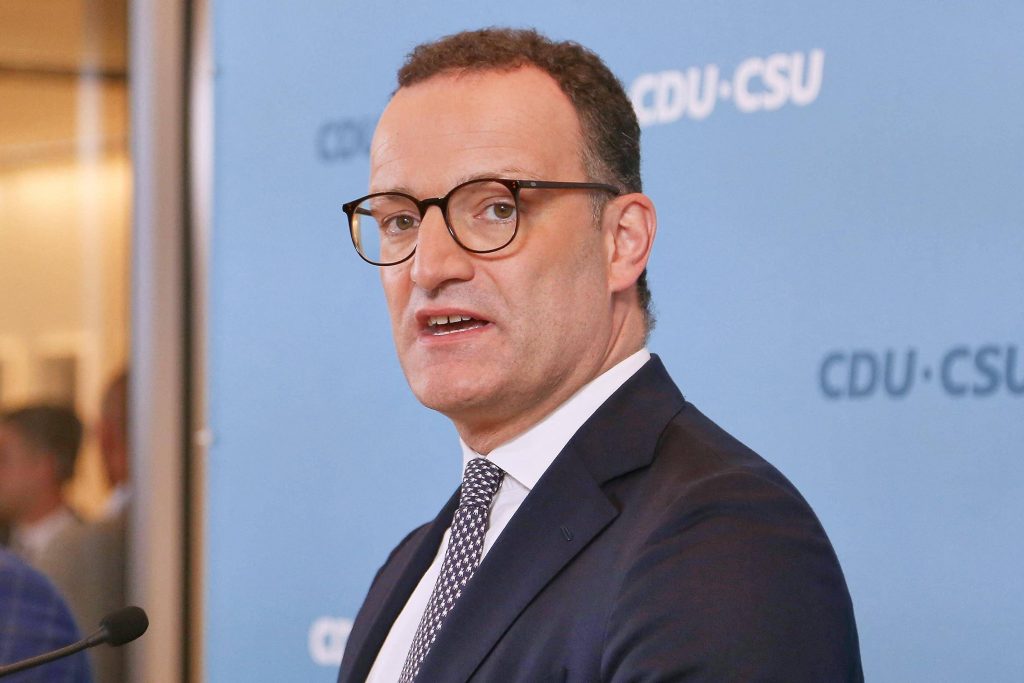
German bishop defends Church teaching after Jens Spahn’s USA surrogacy
Bishop Stefan Oster of Passau has defended the Church’s teaching on surrogacy after German politician Jens Spahn announced he had become a father through a surrogate mother in the United States, arguing that the practice violates human dignity and places the desires of adults above the rights of children Bishop Stefan Oster of Passau has issued a defence of the Church’s teaching on surrogacy after Christian Democrat politician Jens Spahn, who is openly homosexual, announced he had become a parent through a surrogate mother in the United States. The bishop argued in a video statement that surrogacy fundamentally violates human dignity and places the desires of adults above the rights of children. Without questioning the dignity of the child, Bishop Oster said the means by which the child had come into the world represented a serious moral and anthropological problem which Catholics could not accept. “There are good reasons why surrogacy is prohibited in our country,” the bishop said. “In my view, the most fundamental reason is that it violates human dignity.” Bishop Oster argued that the birth of a child should always be received as a gift rather than something obtained through a commercial arrangement. “As Christians, we believe that children are a gift from God and that their dignity as persons comes from God,” the bishop of Passau said. “But people also see it as a gift because children generally arise from the loving relationship between their parents, and because the experience of love itself is a gift that I cannot buy.” Contrasting the Christian understanding of love with commercial surrogacy arrangements, the Bishop of Passau continued, “So-called ‘love for sale’ is therefore the exact opposite of love – namely, a business transaction.” A significant part of the bishop’s intervention focused on the relationship between a mother and her unborn child. He argued that the bond formed during pregnancy is irreplaceable and forms the foundation of a child’s earliest human development. “Every person is unique and develops through unique relationships,” Bishop Oster said. “A child’s development begins in the womb. The unique relationship between mother and child has a profound impact on the child and also lays the foundation for the life ahead.” The bishop added that an unborn child experiences the mother’s voice, emotions and care even before birth, gradually encountering the world through the woman carrying the child. Drawing on Catholic teaching about marriage and family life, Bishop Oster described the union of husband and wife as “a uterus spiritualis, a kind of spiritual womb,” through which a child naturally comes to know both mother and father. “It is the unique child of this very mother and this very father,” Bishop Oster said. “By nature, it has a unique, irreplaceable, and irretrievable role in the new family structure.” Referring directly to the child acquired through surrogacy by Spahn and his partner, Daniel Funke, Bishop Oster expressed concern over the publicity surrounding the case. “This child of Jens Spahn and Daniel Funke is named Georg, and he is already a public figure – and, as such, is essentially a commodity,” the bishop said. “What a burden this will one day be for him to bear, even though he has no idea of it yet.” The bishop argued that every child possesses a prior claim to be raised, where possible, by his or her natural parents. “I am completely convinced, my dear friends, that above all other rights, every child has a right to its natural parents – and this right far outweighs any right potential parents might have to acquire a child, have one created, or even buy one.” Also, while acknowledging that some children are born into circumstances where alternative care becomes necessary, Bishop Oster maintained that such exceptional situations should not be confused with intentionally separating a child from his or her biological parents from the outset. He said that “a child’s natural circumstances can be so terrible that any other solution for their upbringing might be better than the ones they were originally given,” but argued that “under normal circumstances, the circumstances originally provided by nature are, by their very nature, the best possible.” Furthermore, the bishop reserved his strongest criticism for Spahn’s decision to use surrogacy while publicly identifying as a Catholic and belonging to a political party which officially opposes the practice. “So when a prominent CDU politician, to fulfil his own desires, uses surrogacy, deliberately violates the laws of his own country and the fundamental principles of his own party on this issue – which is so crucial to our view of humanity – and, on top of that, actively advocates for surrogacy, I consider that a genuine scandal,” Bishop Oster said. The bishop ended by saying, “This is especially true given that this politician has publicly professed his affiliation with the Catholic Church. In my view, he has thereby taken a step that we, as a faith community, will never be able to follow, even in the future.” The intervention came after Spahn announced last week that he had become a father through a surrogacy arrangement in the United States. The announcement led to criticism in Germany, not only because both commercial and altruistic surrogacy remains prohibited under German law, but also because Spahn has previously opposed efforts to legalise the practice. The Christian Democratic Union continues to maintain official opposition to surrogacy. The controversy rapidly developed into a political crisis for the former federal health minister. Spahn subsequently resigned as leader of the CDU/CSU parliamentary group in the Bundestag after facing growing pressure, including calls within his own party for him to step aside. He remains a member of both the Bundestag and the CDU. The bishop of Passau has long been one of the country’s most prominent critics of the German Synodal Way and has consistently argued that proposed reforms concerning sexual morality, ordained ministry and ecclesial governance depart from Catholic teaching. Alongside Cardinal Rainer Maria Woelki of Cologne, Bishop Rudolf Voderholzer of Regensburg and Bishop Gregor Maria Hanke of Eichstätt, Bishop Oster has stood among the small group of German diocesan bishops who declined to participate in the Synodal Committee and related permanent structures, arguing that they are incompatible with the Church’s sacramental constitution and fail to heed repeated warnings from the Vatican. Following the sixth and final assembly of the Synodal Way in Stuttgart earlier this year, Bishop Oster wrote that he remained convinced “that the problematic ramifications of the Synodal Way for the Church in Germany and worldwide clearly outweigh its positive aspects.” Reflecting on the process, he argued that many of its reform proposals touched “a very central core of the Church” and warned that implementing them would lead “very fundamentally” towards “a different kind of Church.” Bishop Oster has also criticised what he sees as increasing polarisation within German Catholicism, warning that implementation of many Synodal Way proposals would widen divisions between those advocating doctrinal change and those seeking to preserve the Church’s existing teaching. Although he has indicated a willingness to participate in future synodal structures conducted in agreement with the universal Church, he has consistently maintained that fidelity to Catholic doctrine and communion with Rome remain essential conditions for authentic reform. Surrogacy is prohibited in much of Europe. Although the European Union has no single law banning commercial surrogacy in every member state, Article 3 of the Charter of Fundamental Rights of the European Union prohibits “making the human body and its parts as such a source of financial gain”. Individual countries, including Germany, France, Italy and Spain, prohibit or severely restrict surrogacy. In the United States, there is no federal law governing surrogacy. Instead, each state sets its own rules, with states such as California, Nevada, Illinois, Colorado, Connecticut, Maine, New Hampshire, Rhode Island, Vermont, Washington and Oregon expressly permitting and regulating gestational surrogacy. A German resident can therefore travel to a US state where surrogacy is permitted and enter into an arrangement there. German law does not generally criminalise intended parents merely for pursuing surrogacy abroad, but considerable legal difficulties can arise when they attempt to bring the child home. Under German law, the woman who gives birth is ordinarily regarded as the legal mother, and a US birth certificate or parentage order may not automatically be recognised. The child may also face difficulties obtaining German citizenship or a passport, particularly where neither intended parent is legally or biologically recognised as a parent. Spahn is not the biological father of the child in question, his partner is. His decision to use surrogacy after previously being critical of the practice has been received badly across the political spectrum. His decision to resign as leader of the CDU/CSU parliamentary group in the BundestagGerman was described by Chancellor Friedrich Merz “the right one” and “unavoidable.” Spahn intensifies as a Catholic, but has said that he questions parts of the Church’s teaching on sexual morality.
Jul. 22, 2026