

Barcelona
Inside the popemobiles for Pope Leo XIV’s apostolic journey to Spain
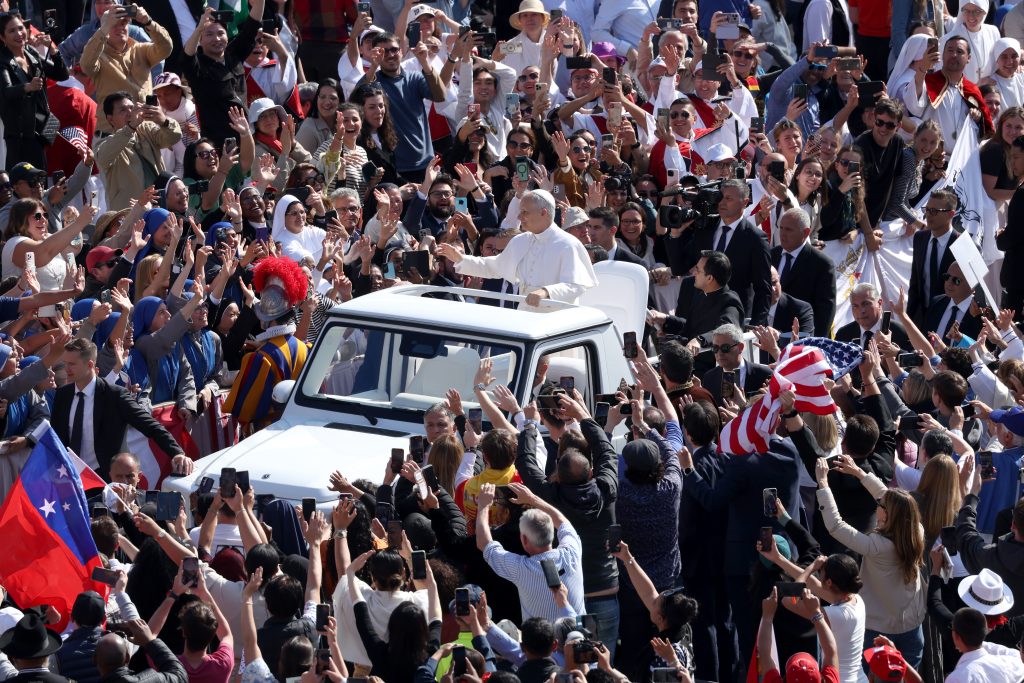
As Pope Leo XIV begins his apostolic journey to Spain, AdVaticanum can reveal details of the vehicles that will accompany him across Madrid, Barcelona and the Canary Islands during the six-day visit. The Pope will travel in two popemobiles brought from Rome and three specially adapted electric vehicles designed to allow closer contact with the […] As Pope Leo XIV begins his apostolic journey to Spain, AdVaticanum can reveal details of the vehicles that will accompany him across Madrid, Barcelona and the Canary Islands during the six-day visit. The Pope will travel in two popemobiles brought from Rome and three specially adapted electric vehicles designed to allow closer contact with the faithful during a packed programme of public events. The arrangements form part of a major logistical operation involving the Vatican, Spanish Church authorities and the Spanish Armed Forces. The two popemobiles arrived in Spain aboard Spanish Air Force transport aircraft, first stopping to deposit one of the cars in Barcelona before the other was taken to Madrid. Both carry the Vatican registration SCV 1. The first vehicle, a Mercedes-Benz 500, will serve during the Madrid portion of the journey before being flown to Gran Canaria. Iconic in design, Mercedes-Benz popemobiles have been the backbone of the Vatican’s fleet for decades. The Mercedes-Benz 500 which will be used during the Madrid and Gran Canaria legs of the journey The Barcelona popemobile has been made by the Japanese automobile maker Isuzu and is labelled as the D-MAX. Isuzu popemobiles came to prominence during the 2015 papal trip to the Philippines, and during this papal trip the vehicle will be used for the Pope’s engagements in the Catalan capital before it is transferred to Tenerife to meet the Pope upon his arrival on the largest of Spain’s Canary Islands. The Isuzu D-MAX which will be used for Barcelona and Tenerife Alongside the popemobiles, Leo XIV will also use three electric buggy-style vehicles specially designed for indoor settings and to facilitate close encounters with pilgrims. Two of the electric vehicles are being prepared in Spain, with one built in Madrid and another adapted in the Canary Islands, while a third has been transported from Rome. The papal visit, which runs from 6 to 12 June, will take Leo XIV to Madrid, Barcelona, Gran Canaria and Tenerife. It is the first papal visit to Spain since Pope Benedict XVI travelled to Madrid for World Youth Day in 2011. Pope Francis never visited the country, and Pope Leo’s decision to visit the historically Catholic country so early in his pontificate is generally seen as an acknowledgement that Spain is due a papal appearance. Historically, popes moved amongst crowds using the sedia gestatoria , a portable ceremonial throne consisting of an armchair upholstered in fine silk, mounted on a raised platform and carried on the shoulders of twelve attendants in uniform. It was last used during the very brief 1978 pontificate of John Paul I. Pius XII using the sedia gestatoria The first instance of a pope owning a car came when Pius X was given a 20/30 Itala by the Archbishop of New York, John Farley, in 1909. Pius reportedly refused to use the car, preferring his horse-drawn carriage. Pope Pius XI is known to have used a car, though his car use would have been limited to short trips in the Rome area. Having adopted the title “prisoner of the Vatican”, his movements were restricted. Even after the 1929 Lateran Treaty went a significant way towards regularising relations between the Italian state and the papacy, Pius XI’s travel did not extend much beyond the short drive to Castel Gandolfo, the papal summer residence. In 1930, Mercedes-Benz gave Pius XI a Nürburg 460, which is often described as the first popemobile, though the term had not yet been coined. It was not until Paul VI that the papacy began significant international travel, with Paul visiting 20 countries across six continents during his reign. Paul VI used specially adapted vehicles during these journeys, but the famous popemobiles seen today, with their raised papal seat, became common during the pontificate of John Paul II, who visited 129 countries during his 26-year pontificate. For John Paul II’s 1979 papal trip to the United States, Ford specially designed a 1979 Bronco for the visit, which is believed to be the first vehicle commonly called a “popemobile”. Since then, the name has stuck with each pontificate. There have been variants of the car to match the wishes of each pope, but they have retained their iconic design and become a feature of the papacy.
Jun. 5, 2026
Pope Leo’s Spain itinerary released ahead of June visit
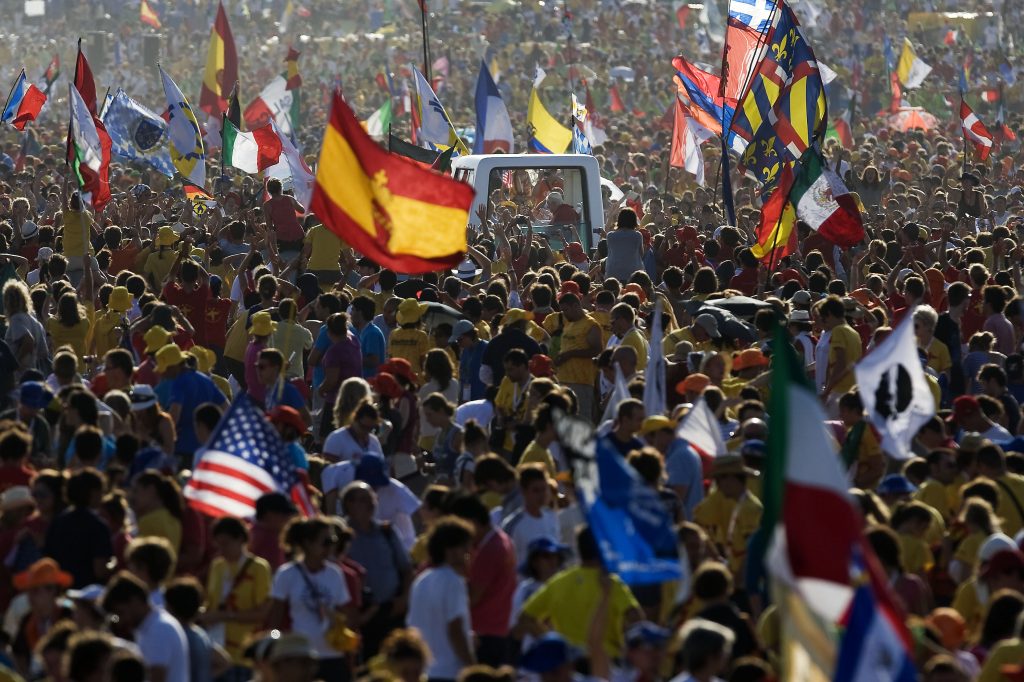
The Vatican has released the full itinerary for Pope Leo XIV’s apostolic journey to Spain from June 6 to June 12. The visit will include stops in Madrid, Barcelona, Gran Canaria and Tenerife The Holy See Press Office has released the itinerary for the anticipated apostolic journey of Pope Leo XIV to Spain, scheduled to take place from June 6 to June 12. According to the programme, the Pope will depart Rome on the morning of June 6 and arrive in Madrid at 10.30 local time, where he will be received at Adolfo Suárez Madrid-Barajas Airport before attending a welcome ceremony at the Royal Palace. He will then make a “courtesy visit to Their Majesties the King and Queen of Spain” and take part in a “meeting with authorities, civil society and the diplomatic corps”, during which he is due to deliver an address. In the evening, he is scheduled to visit the operators and those assisted by the social project “CEDIA 24 hours” before presiding at a “prayer vigil with young people in Plaza de Lima”. On June 7, the Pope will celebrate Mass in Plaza de Cibeles, followed by a Corpus Christi procession. Later that afternoon, he will meet privately with members of the Order of Saint Augustine at the Apostolic Nunciature. The day will continue with a gathering titled “Building Networks with the World of Culture, Art, Economy and Sport” at the Movistar Arena, where he is expected to speak, before concluding with a private dinner at the residence of the cardinal archbishop of Madrid. The programme for June 8 centres on meetings with political and ecclesial authorities. The Pope will meet the Prime Minister at the Apostolic Nunciature before travelling to the Congress of Deputies for a “meeting with members of the Spanish Parliament”, at which he will give an address. He will then meet the bishops of Spain at the headquarters of the Episcopal Conference. In the evening, he will take part in a “prayer and homage to the Virgin of Almudena in the Cathedral of Santa María de la Almudena”, before attending a “meeting with the diocesan community at Real Madrid FC’s Santiago Bernabéu Stadium”. On June 9, the Pope will meet the volunteers who have made the trip possible at IFEMA Madrid before departing for Barcelona. Upon arrival, he will pray the midday office at the Cathedral of the Holy Cross and Saint Eulalia and later preside at a prayer vigil at the Lluís Companys Olympic Stadium. The following day includes a visit to the “Brians 1” penitentiary centre, which, when combined with “Brians 2” on the same site, is the largest prison in Catalonia, where he will greet inmates and staff. He will then travel to Montserrat for the “prayer of the Holy Rosary at the Abbey of Our Lady of Montserrat”, an abbey which saw many of its monks murdered in the Spanish Civil War and subsequently became a symbol of Catalan nationalism. The Holy Father will have a meal with the 70 or so Benedictine monks of the abbey, who have recently celebrated 1,000 years of the monastery. Returning to Barcelona, he will meet representatives of diocesan charity and assistance organisations before celebrating Mass at the Basilica of the Holy Family, which will include the inauguration of the Tower of Jesus Christ. On June 11, the Pope will travel to Las Palmas de Gran Canaria, where he will meet organisations involved in receiving migrants at the port of Arguineguín. The Canary Islands are one of the main entry points for migrants trying to enter the EU, as the Spanish archipelago sits just off the coast of northwestern Africa and is considerably easier to access for African migrants than other parts of Europe. Later on the 11th day, the Pope will address bishops, priests, deacons, Religious and pastoral workers at the Cathedral of Saint Anne before celebrating Mass at the Gran Canaria Stadium. The final day of the visit, June 12, will see the Pope travel to Santa Cruz de Tenerife. He is scheduled to meet migrants at the “Las Raíces” centre and take part in a gathering focused on “the realities of migrant integration in the Plaza del Cristo de La Laguna”. The visit will conclude with Mass in the port of Santa Cruz de Tenerife, followed by a farewell ceremony and departure for Rome in the afternoon, with arrival at Fiumicino expected at 20.10 local time. The six-day visit is the first papal trip to the country in almost a decade and a half. Pope Emeritus Benedict XVI visited in 2011 as part of the country’s World Youth Day celebrations. However, Pope Francis did not travel to Spain during his 13-year pontificate, creating a general sense that the Catholic country is overdue a papal presence. The Spanish Episcopal Conference is organising the visit, with financing partially sourced from private donations and a 10,000-person volunteer team coordinated by the Archdiocese of Madrid.
May 6, 2026