

Assisted Suicide
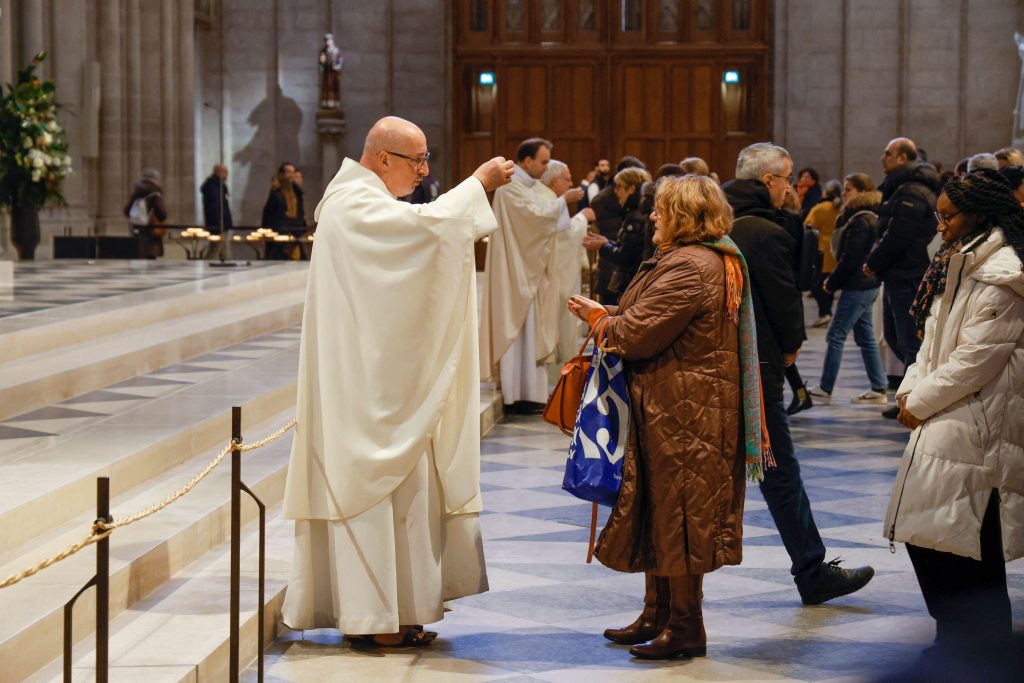
French bishop says Catholic MPs backing assisted suicide should not receive Communion
A French bishop has warned Catholic lawmakers who support assisted suicide legislation should not receive Holy Communion. The intervention was made by Bishop Marc Aillet of Bayonne just days before members of the French National Assembly are expected to vote on the government’s controversial end-of-life bill on 15 July. Speaking to France Catholique on 7 […] A French bishop has warned Catholic lawmakers who support assisted suicide legislation should not receive Holy Communion. The intervention was made by Bishop Marc Aillet of Bayonne just days before members of the French National Assembly are expected to vote on the government’s controversial end-of-life bill on 15 July. Speaking to France Catholique on 7 July, Bishop Aillet argued that support for euthanasia is not simply a matter of differing political judgement but concerns an objective moral principle rooted in both Christian doctrine and natural law. “When a member of parliament declares himself Catholic while supporting legislation that authorises taking a life, he objectively places himself in opposition to a constant teaching of the Church, but also to a fundamental principle of human reason,” Bishop Aillet said. The bishop used Samaritanus Bonus , the 2020 instruction issued by the Congregation for the Doctrine of the Faith, to justify his position. The letter states that it is “an intrinsically evil act, whatever the circumstances”. Referring to Catholic politicians serving in public office, Bishop Aillet said: “A Catholic engaged in public life cannot ignore this.” His comments go beyond a reiteration of Church teaching by directly addressing the sacramental implications for Catholic legislators. Asked whether supporting the legislation carried spiritual consequences, Bishop Aillet replied that it did because “the Christian faith engages one’s entire existence”. While stressing the need for every individual to examine his or her conscience, he argued that public support for legislation fundamentally opposed to Catholic moral teaching created “a real problem of ecclesial coherence”. “The Catholic parliamentarians who voted for this bill must weigh the consequences,” the bishop said. “If they are aware of this inconsistency, they will no longer be able to receive Communion.” Bishop Aillet added that “the Church is justified in reminding them of this, as some bishops have done in the United States”, before inviting Catholic lawmakers to undertake “a sincere examination of conscience”. Bishop Aillet also challenged one of the principal arguments advanced by supporters of the legislation: that euthanasia represents an act of compassion towards those enduring profound suffering. “We must distinguish true compassion from what John Paul II called ‘false mercy’,” the bishop said. “A truly fraternal society does not respond to distress by eliminating the suffering individual, but by developing palliative care, psychological, familial and spiritual support.” He further rejected the suggestion that the legislation represented an expansion of personal freedom. “Authentic freedom is ordered toward the good,” Bishop Aillet argued, warning that public understanding of the issue had become distorted by “the dominant discourse that seriously clouds consciences” and “the media onslaught influenced by powerful lobbies”. Bishop Aillet urged Catholics to educate themselves and to offer practical support to those who are sick, elderly or isolated. The bishop also addressed the pastoral challenges posed by requests for euthanasia. While reiterating that suicide remains “objectively contrary to the will of God”, Bishop Aillet emphasised that the Church continues to recognise the complex personal circumstances that may diminish an individual’s freedom, including suffering, loneliness, depression and social pressure. The bishop said priests should accompany those requesting euthanasia by helping them “rediscover hope, reconcile with God, and renounce their plan”, describing authentic pastoral care as encouraging patients “to choose life until its natural end, never condoning a lethal act”. Particular concern was also expressed for healthcare workers who could find themselves required to implement the law should it ultimately be enacted. Bishop Aillet warned that doctors, nurses and other medical professionals entered their vocation to care for patients rather than intentionally end their lives. “My first thought is the moral dilemmas this law risks creating,” Bishop Aillet said. “Healthcare professionals chose their profession to care for, relieve and support patients. Now they would be asked to participate in the killing of a patient.” For that reason, he insisted that “civil law cannot abolish the demands of moral conscience” and argued that robust legal protection for conscientious objection would be essential, regardless of whether healthcare workers were religious believers. Bishop Aillet also questioned whether France wished to force institutions founded upon respect for human life into closure or exile. “Do we want these establishments to close, when they manage tens of thousands of beds?” Bishop Aillet asked. “Do we want them to go into exile abroad, like the religious orders expelled from France at the beginning of the 20th century? Are we going to imprison the nuns who do not comply with this law?” He concluded that “we must defend the freedom of these institutions with determination.” The bishop also reflected on Pope Leo XIV’s forthcoming visit to France, whose chosen motto is “So that the world may have life”. Although acknowledging that the legislation could be approved before the Pope arrives, Bishop Aillet argued that the Church’s witness would remain unchanged regardless of the parliamentary outcome. “Even if a law is passed, it does not end the duty of Christians to bear witness,” he said. “I expect the Holy Father to forcefully reaffirm the inalienable dignity of all human life.” He also expressed the hope that Pope Leo would encourage families, caregivers, volunteers and all those accompanying the sick and elderly, insisting that “the ultimate issue is spiritual”. “A society weakens when it presents death as a solution,” he said, before concluding that Christ came “so that people may have life, and have it to the full”, a hope which “the Church will continue to proclaim, regardless of legislative developments.” This publication has previously reported that Pope Leo XIV is believed to have held a series of direct telephone conversations with President Emmanuel Macron devoted exclusively to the proposed euthanasia and assisted suicide legislation. The proposed legislation has been championed by President Emmanuel Macron’s government under the language of “aid in dying”, with ministers presenting the measure as a compassionate response for adults suffering from incurable illness accompanied by unbearable and untreatable suffering. Opposition has remained. The bill has already encountered significant resistance in the Senate, where a third vote rejected the legislation by a narrow margin before returning it to the National Assembly for what may become its decisive reading.
Jul. 14, 2026
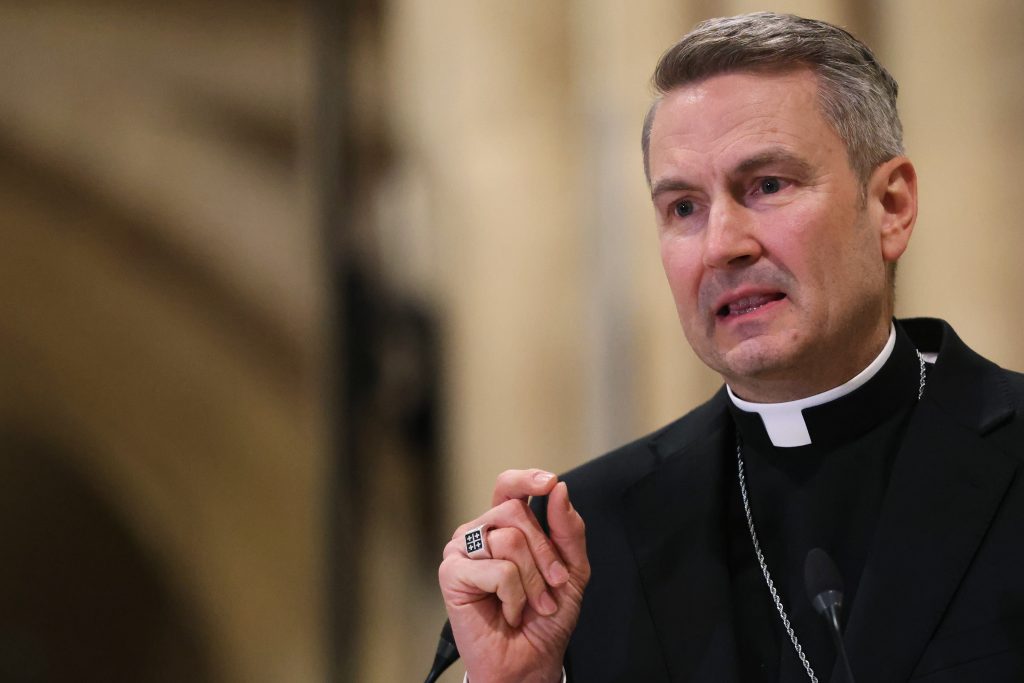
Archbishop Hicks warns New York assisted suicide law begins a “frightening era”
New York’s assisted suicide law will come into force on 5 August. Archbishop Ronald Hicks has warned it marks the beginning of a “new and frightening era” and questioned whether safeguards will remain in place over time The Archbishop of New York has warned that a “new and frightening era” will begin when the state’s assisted suicide law comes into force in August. Archbishop Ronald Hicks issued the warning as New York prepares to implement the Medical Aid in Dying Act on 5 August, allowing terminally ill adults who have been given six months or less to live to obtain life-ending drugs from a physician. Writing in First Things , Archbishop Hicks described the legislation as “the latest assault on human life” and questioned whether the measure would remain limited to the terminally ill. “When this law becomes effective, a new and frightening era begins in New York,” the archbishop wrote. “How long before this so-called ‘compassion’ for the terminally ill evolves from a ‘choice’ into an expectation to kill oneself for all sorts of vulnerable individuals, including those with disabilities, the elderly, and those in impoverished and medically underserved communities?” The law was passed by the New York legislature last year and signed by Governor Kathy Hochul in February. New York will become the latest American state to permit physician-assisted suicide, joining 11 states that have made provision for assisted suicide. The final version of the law includes a series of safeguards, including requirements that patients be assessed by two doctors, undergo a mental health evaluation, and observe a waiting period before receiving a prescription. However, these safeguards rarely work and are often later liberalised, with Vermont`s 2023 removal of in person consultations being a clear example. Opposition to New York’s legislation has been led by Catholic leaders and pro-life groups, who argue that legalising assisted suicide places pressure on vulnerable people and undermines respect for human life. Archbishop Hicks pointed to Canada as a warning of how such laws can expand beyond their original purpose. “In Canada, legislation that was allegedly intended only for the dying was quickly broadened to cover those with ‘chronic’ but not life-threatening illnesses, such as arthritis, who wish to seek a doctor’s help in killing themselves,” he wrote. The archbishop also criticised what he described as a contradiction between efforts to prevent suicide and the legalisation of physician-assisted death. “Admirably, New York State devotes tremendous resources to suicide prevention among our young people,” he wrote. “So too, many of our bridges and train crossings have signs reminding people that ‘life is worth living’, along with numbers to call for help. How at odds this is with the rush to help others end their lives.” Archbishop Hicks said there was a danger that assisted suicide could become influenced by outside pressures. “What begins as a personal choice could lead to situations where external forces, such as government agencies or insurance companies, begin to influence or even dictate end-of-life decisions,” he wrote. “This shift could undermine the respect and protection due to every human life.” The archbishop instead highlighted the role of palliative care and hospice services for those approaching death. He cited the example of Calvary Hospital and the Dominican Sisters of Hawthorne, which provide care for the terminally ill, and drew attention to guidance published by the New York State Catholic Conference on end-of-life decisions. Archbishop Hicks concluded by reaffirming Catholic teaching on the sanctity of life. “Our lives belong to God, and it is incumbent upon us to respect and protect our own lives, just as we rightly demand respect and protection for all human life, from conception until natural death,” he wrote. The Catholic Church has consistently opposed assisted suicide, teaching that the deliberate ending of human life is morally unacceptable and that the sick and dying should instead be accompanied through compassionate care.
Jun. 4, 2026