

Archdiocese Of Washington
Cardinal McElroy offers new explanation for removing Washington exorcist
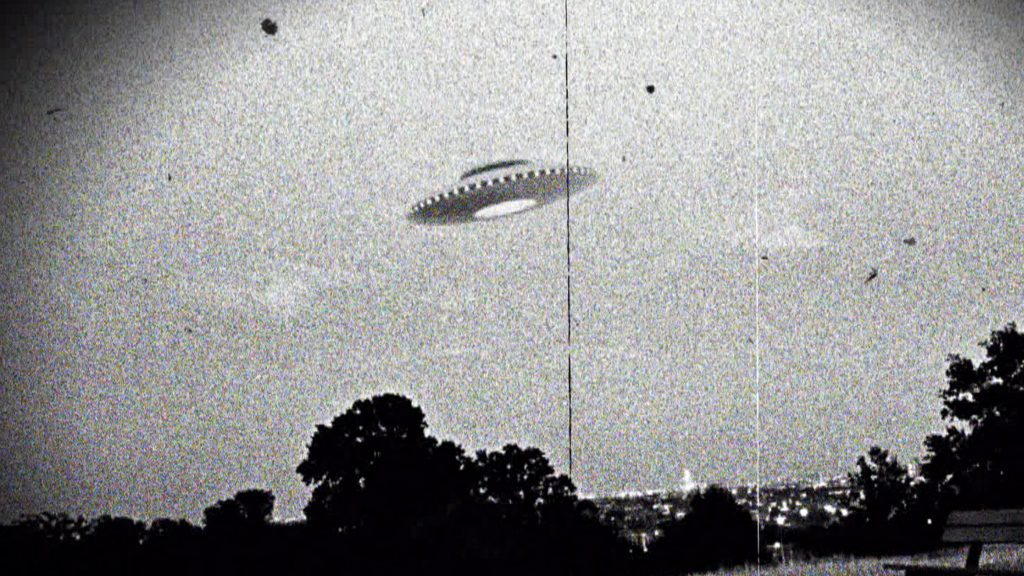
Cardinal Robert McElroy has offered a different explanation for his removal of Monsignor Stephen Rossetti as an exorcist for the Archdiocese of Washington, differing from the one given in the archdiocese’s original announcement Cardinal Robert McElroy has offered a new explanation for his decision to remove Monsignor Stephen Rossetti as an exorcist for the Archdiocese of Washington. Speaking to Catholic News Service in an interview conducted on 29 June and released on 8 July, Cardinal McElroy said his decision should not be interpreted as a judgment on unidentified flying objects or extraterrestrial life, but rather reflected his conviction that the ministry of exorcism ought to remain discreet and centred on pastoral care. “It wasn’t touching on the question of UFOs,” the cardinal said. “My major objection is that I think the traditional role of an exorcist is a very private one. It’s a sacred one.” “I think the more traditional approach of an exorcist is a private, within-the-life-of-the-Church ministry to help individuals who are in crisis and seem to be demonically possessed,” Cardinal McElroy told Catholic News Service. “It shouldn’t go beyond that for people who are doing exorcism.” The different explanations in the two statements call into question Cardinal McElroy’s explanation. While the original announcement directly linked the priest’s public comments about UFOs to the action taken against him, the cardinal’s subsequent interview instead focused on the nature of the office itself, arguing that an exorcist’s ministry should remain largely unseen. Msgr. Rossetti had become one of the most prominent Catholic exorcists in the United States through his work with the St. Michael Center for Spiritual Renewal and an extensive online presence. The centre’s YouTube channel has attracted more than 146,000 subscribers, while the priest has also built sizeable followings on other social media platforms by discussing exorcism, spiritual warfare and reports of demonic activity. The controversy intensified after a post published in May in which Msgr. Rossetti wrote that “probably many, if not most, UFO sightings are in fact demons”. When the Archdiocese announced his removal in early June, the statement explicitly cited both the comments linking UFOs with demonic activity and the St. Michael Center’s recent use of social media, saying they undermined the Church’s teaching on demons and exorcism. Cardinal McElroy’s later explanation has therefore shifted attention from the substance of Msgr. Rossetti’s claims to the way exorcism is exercised publicly. In his interview, he described exorcism as a ministry entrusted by a bishop in particularly serious cases and suggested that public commentary extending beyond that pastoral responsibility was inconsistent with its traditional character. The importance of discretion is reflected in existing Church practice. Guidance published by the United States Conference of Catholic Bishops notes that “the preservation of confidentiality is important” in the exercise of exorcism, underscoring the sensitive nature of the ministry and the vulnerability of those who seek its assistance. Following his removal, Msgr. Rossetti expressed sadness at the decision while reaffirming his obedience to the Church. He asked forgiveness “for any ways in which I have failed to remain fully obedient to the Magisterium of the Church” and confirmed that the St. Michael Center for Spiritual Renewal would continue its work independently of the Archdiocese of Washington.
Jul. 10, 2026
Cardinal McElroy reportedly gives verdict on altar rails in Washington
A reported directive from Cardinal Robert McElroy sets out policy on altar rails and kneelers in the Archdiocese of Washington Cardinal Robert McElroy of Washington has reportedly directed that altar rails are not to be installed or reinstalled in churches across the Archdiocese of Washington. The reported directive, first highlighted by journalist Christine Niles of Stella Maris Media, notes from a recent meeting with priests that discouraged the use of temporary kneelers for the reception of Holy Communion. According to Niles, concerns raised during the discussion included the potential disruption of Communion processions and the possibility that the use of kneelers could transform what Church law regards as an individual option into a more widespread practice. The Archdiocese of Washington has not publicly issued a statement on the reported policy, and no formal decree has yet appeared among official archdiocesan communications. The issue centres on the manner in which Catholics receive Holy Communion. In the United States, the norm approved by the bishops and confirmed by the Holy See is for communicants to receive standing after making a gesture of reverence. At the same time, universal Church law makes clear that Catholics who choose to kneel for Communion are not to be denied the sacrament on that account. The reported Washington policy comes after discussions in several American dioceses over altar rails, kneelers and other traditional liturgical furnishings. In recent months, the Diocese of Charlotte, North Carolina, became the focus of Vatican attention after Bishop Michael Martin ordered that altar rails, kneelers and prie-dieus were not to be used for the reception of Communion in public celebrations. The move caused more than 30 diocesan priests to submit formal dubia to the Vatican regarding the scope of episcopal authority over such practices. Bishop Martin wrote in a pastoral letter issued last December that the norms approved by the United States Conference of Catholic Bishops “do not envision the use of altar rails, kneelers, or prie-dieus for the reception of Communion”, arguing that their use contradicts the normative posture established by the conference. Supporters of altar rails and kneeling during Communion argue that such practices visibly express belief in the Real Presence of Christ in the Eucharist and foster a spirit of reverence. Among the most prominent advocates has been Bishop Athanasius Schneider, Auxiliary Bishop of Astana in Kazakhstan, who has repeatedly encouraged the faithful to receive Communion kneeling and on the tongue. In his book Dominus Est – It is the Lord! , Bishop Schneider wrote: “Would it not be more liturgically proper if, at the moment of Holy Communion … they would greet Him and receive Him on their knees?” He argued that kneeling before the Blessed Sacrament provides a visible witness to the Church’s faith in the Eucharistic mystery. Cardinal Raymond Burke has likewise spoken in favour of the practice, pointing to the example set by Pope Benedict XVI during his pontificate. Reflecting on Benedict’s decision to distribute Communion to kneeling communicants, Cardinal Burke said: “The Holy Father is giving a very clear lesson by his own insistence that the faithful receive Communion kneeling and on the tongue.” Similar views have been expressed by Cardinal Antonio Cañizares Llovera, the former prefect of the Congregation for Divine Worship and the Discipline of the Sacraments. He has urged Catholics to receive Communion on the tongue while kneeling, saying: “It is to simply know that we are before God himself and that He came to us and that we are undeserving.” Other bishops have emphasised the importance of maintaining the posture established by episcopal conferences for the sake of unity during the Communion procession. Cardinal Blase Cupich of Chicago has similarly stressed that the faithful process together as an expression of their identity as the Body of Christ and receive Holy Communion standing in accordance with the norm approved for the United States. He has described the practice as a “powerful symbolic expression” of ecclesial unity. The reported Washington directive has attracted particular attention because it concerns one of the largest and most influential dioceses in the United States. Cardinal McElroy, who was installed as Archbishop of Washington in March 2025 after serving for a decade as Bishop of San Diego, has become one of the most prominent voices among the American hierarchy. The controversy also follows another recent decision by the cardinal that generated headlines. Earlier this month, he removed Monsignor Stephen Rossetti as an exorcist of the Archdiocese of Washington and ended the archdiocese’s affiliation with the St Michael Center for Spiritual Renewal after comments linking UFO phenomena to demonic activity. Cardinal McElroy said the statements “gravely undermine the Church’s very precise teaching on the devil, demons and exorcism”.
Jun. 15, 2026
Cardinal McElroy removes Monsignor Rossetti as exorcist after UFO comments
Cardinal Robert McElroy has removed Monsignor Stephen Rossetti as an exorcist for the Archdiocese of Washington after the priest suggested that many reported UFO sightings could be demonic manifestations. The archdiocese also ended its affiliation with the Saint Michael Center for Spiritual Renewal Cardinal Robert McElroy has removed Monsignor Stephen Rossetti as an exorcist for the Archdiocese of Washington after the priest publicly suggested that many reported UFO sightings could be demonic manifestations. The Archdiocese of Washington announced that Cardinal McElroy had also ended all affiliation between the archdiocese and the Saint Michael Center for Spiritual Renewal in Washington, D.C., which is directed by Monsignor Rossetti. In a statement released by the archdiocese, Cardinal McElroy said that comments made by the priest linking unidentified flying objects to demonic activity, together with the centre’s recent use of social media, “gravely undermine the Church’s very precise teaching on the devil, demons and exorcism”. The move follows remarks made by Monsignor Rossetti during a YouTube video published on 29 May in which he discussed reports of unidentified aerial phenomena. “Probably many, if not most, UFO sightings are in fact demons,” Monsignor Rossetti said. The priest, who has long been associated with exorcism ministry in the United States, added that he personally does not believe intelligent life exists on other planets and argued that some reported UFO encounters resembled experiences he had witnessed during exorcisms. According to Monsignor Rossetti, demons ordinarily remain hidden but can sometimes manifest themselves in unusual ways. He pointed to reports of shadowy figures, unexplained lights and mysterious orbs, claiming that such phenomena often mirrored accounts heard during deliverance ministry. He also recounted a case involving a woman who identified a photograph of a UFO as depicting a demonic presence. Monsignor Rossetti, 74, is a priest of the Diocese of Syracuse in New York and has spent much of his ministry working in the fields of psychology, priestly formation and spiritual renewal. A graduate of the United States Air Force Academy, he served in Air Force intelligence before entering seminary and being ordained a priest in 1984. He later earned a doctorate in counselling psychology from Boston College and became one of the best-known American priests working at the intersection of psychology and Catholic pastoral ministry. From 1996 until 2009, he served as president and chief executive of Saint Luke Institute in Maryland, a treatment and education centre specialising in the psychological and spiritual wellbeing of clergy and religious. He subsequently joined the faculty of The Catholic University of America in Washington. The Archdiocese of Washington has not indicated whether a successor will be appointed to fulfil the role previously held by Monsignor Rossetti. The statement issued by Cardinal McElroy did not elaborate further on the decision beyond citing the priest’s remarks on UFOs and concerns about the centre’s social media activity. While Catholic teaching affirms the existence of the devil and permits the practice of exorcism under strict ecclesiastical regulation, the Church has generally urged caution regarding alleged supernatural phenomena and has not endorsed theories linking reports of UFOs to demonic manifestations.
Jun. 4, 2026