

Archdiocese Of Chieti
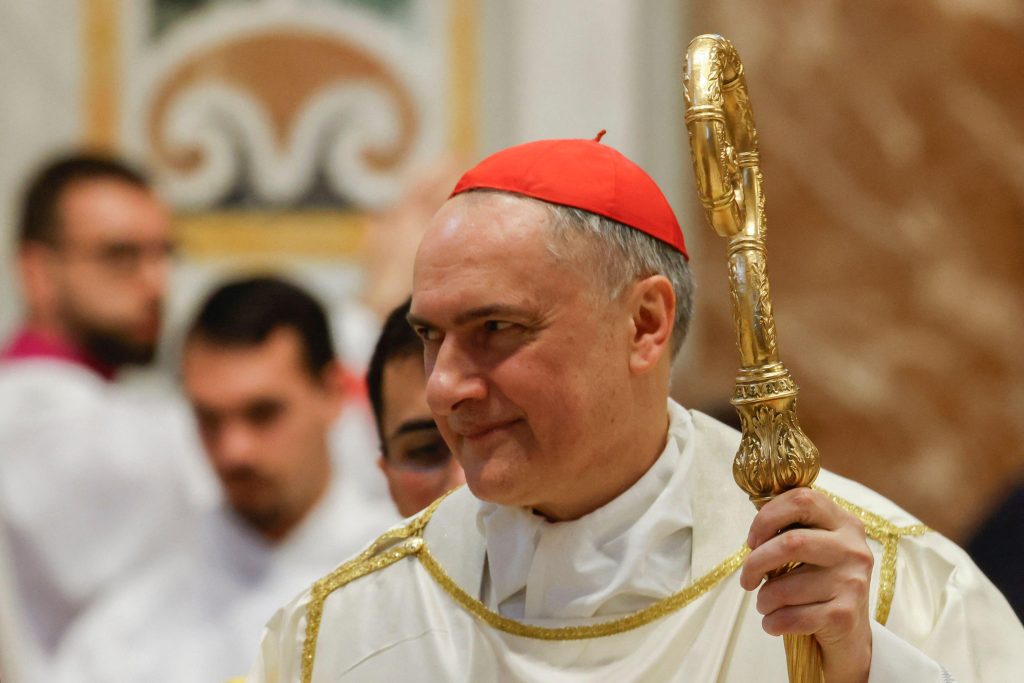
Exclusive: Why Cardinal Gambetti is expected to leave St Peter’s Basilica
EXCLUSIVE: AdVaticanum understands that Cardinal Mauro Gambetti is expected to leave St Peter’s Basilica later this summer. Our investigation examines the circumstances behind the expected move AdVaticanum can confirm that Cardinal Gambetti is expected to leave his position as Archpriest of St Peter’s Basilica later this summer. AdVaticanum sources in the Vatican have confirmed that he is expected to move to the Archdiocese of Chieti. While this will not come as a surprise to many Vatican watchers, as Archbishop Bruno Forte is already beyond the customary retirement age, the move is nonetheless notable. Although Chieti is a metropolitan archdiocese, it has not traditionally been a cardinalatial see and is relatively small. As such, the appointment could reasonably be interpreted as a demotion for Cardinal Gambetti. Sources close to Cardinal Gambetti say he feels burnt out after his time at St Peter’s and that a move away from Rome may suit him. They added: “He doesn’t like the spotlight.” AdVaticanum understands that when Pope Leo initially reconfirmed office holders, Gambetti’s appointment was extended for only six months. AdVaticanum also understands that Cardinal Gambetti’s standing within the Conventional Franciscan General Curia in Rome is no longer regarded as being as strong as it once was, a factor that could make a move away from the Vatican increasingly likely. However, there appears to be more to the story than meets the eye. It seems to be a classic case of Vatican politics, with three principal factors: a loss of confidence following the handling of St Peter’s Basilica, tensions with the canons of St Peter’s, and the initial confidence placed in Fr Enzo Fortunato. Since his appointment in 2021, Cardinal Mauro Gambetti has overseen St Peter’s Basilica during a series of high-profile security breaches and desecrations of its main altar, the Altar of the Confession beneath Bernini’s baldacchino above the tomb of St Peter. Several of these incidents attracted widespread attention and required penitential rites of reparation under canon law for serious profanations of sacred places. Cardinal Gambetti presided over these rites. On 1 June 2023, a Polish man approached the high altar near closing time, stripped naked except for socks and trainers, climbed onto the altar and displayed the words “Save children of Ukraine” written across his back. Security detained him without resistance before handing him over to the Italian authorities, who expelled him. Cardinal Gambetti led a penitential rite on 3 June involving prayers, the Creed, the blessing with holy water and the use of incense, describing the incident within the context of the “structure of sin” in the world. On 7 February 2025, a man, reported in some accounts to be Romanian and suffering from mental health problems, climbed onto the Altar of the Confession, threw six candelabra to the ground, damaging them, and began removing the altar cloth before security intervened. Reports differ as to whether a formal rite of reparation followed immediately. On 10 October 2025, another man climbed onto the Altar of the Confession in front of hundreds of tourists, undressed and either urinated on, or attempted to urinate on, the altar. Cardinal Gambetti presided over a penitential rite on 13 October, including a procession, the sprinkling of holy water, incense and prayers for forgiveness, attended by the Chapter of the Basilica. Additional concerns have included reported Eucharistic profanations, irreverence during Masses and other security failures, all of which have led to questions about oversight and vigilance among staff, including the Sampietrini. However, the issue that appears to have caused the greatest damage was the proposal to expand a small refreshment point on the basilica’s terrace into a larger bistro or catering area. The plans led to petitions signed by thousands of people and addressed to the Secretary of State. The petitions criticised what was regarded as the commercialisation of a sacred space and called for a canonical review of the basilica’s management. The Vatican maintained that the project was simply a modest expansion designed to serve pilgrims and tourists more effectively, offering pre-prepared food heated by microwave rather than a full restaurant, while also creating additional exhibition space on the terrace dedicated to the basilica’s history. Nevertheless, Cardinal Gambetti and the Fabric of St Peter came under sustained criticism in the Italian media over the project and his wider approach to managing the basilica. Ultimately, it was Cardinal Gambetti who bore the political cost. AdVaticanum also notes that questions were raised in some quarters about Cardinal Gambetti’s personal style and public image, which some believed fell short of the dignity expected of his office. A 2023 article published by MessainLatino questioned why Cardinal Gambetti would wear a “Jamaica shirt and vest” when, to quote MessainLatino , he should instead be “a man dressed in the sacred purple”. Beyond Cardinal Gambetti’s own leadership, his position was not helped by divisions within his own team, particularly with the canons of St Peter’s. To understand the present difficulties, it is necessary to understand the longstanding tensions between the two sides. Gambetti’s tenure has been marked by a programme of centralising reform. He brought several associates from his previous role as Custos of the Sacred Convent of Assisi into senior positions. These reforms included financial and operational changes affecting the Chapter of St Peter’s, the college of canons. The tensions appear to stem from structural reforms, including the transfer of financial oversight to the Fabric of St Peter, as well as differing visions for the role of the basilica. Cardinal Gambetti played a central role in reforming the Chapter of St Peter’s Basilica, the body responsible for the basilica’s liturgical life, pastoral ministry and certain historic administrative functions. These reforms, initiated under Pope Francis and later refined, sought to clarify responsibilities, reduce expenditure and improve efficiency. The Chapter of Canons dates back to at least the eleventh century, with origins traditionally traced to 1053 under Pope St Leo IX. Historically, it was responsible not only for prayer and liturgy but also for administering significant patrimony, including real estate and donations. Over time, these responsibilities increasingly overlapped with those of the Fabric of St Peter. The reforms began shortly after Gambetti’s appointment, when Pope Francis issued transitional norms on 28 August 2021, which came into force on 1 October that year while new statutes were being prepared. As Archpriest and President of the Fabric of St Peter, Gambetti oversaw their implementation. The definitive statutes and regulations were approved by Pope Francis through a chirograph dated 29 June 2024, the Solemnity of Saints Peter and Paul. Under the reforms, responsibility for the Treasury Museum and the sale of religious articles passed to the Fabric of St Peter. Employees previously working directly for the Chapter were also transferred to the Fabric. This centralised commercial and administrative responsibilities under Gambetti’s leadership. Canons and coadjutors now receive a single capitular stipend paid by the Fabric, broadly aligned with level VIII of the Roman Curia salary scale. This payment cannot be combined with salaries, pensions or commissions from other Vatican bodies. The reform reduced expenditure and addressed concerns over multiple sources of Vatican income. The Chapter nevertheless retained certain real estate and financial assets to continue its charitable work, including assisting priests and pilgrims in need. In 2025, Pope Leo XIV issued a motu proprio subjecting the Fabric of St Peter and related entities to the standard supervision of the Council for the Economy, abrogating certain previous provisions. This continued the trend towards greater transparency and accountability. The canons now focus principally on liturgical and pastoral ministry, while coadjutors assist in celebrations, pastoral work and duties assigned by the Archpriest and Chapter, with appointments made by the Pope. Existing canons and coadjutors who reach the age of 80 become honorary members. They are exempt from obligations and Chapter sessions, receive no capitular emolument, but retain their titles, vestments, participation in liturgical functions and the right to burial in the Chapter chapel. Those who remain inactive for more than a year, even if under the age of 80, may also be transferred to honorary status. Sources close to the canons told AdVaticanum that they believe the Chapter’s autonomy has been significantly reduced as Cardinal Gambetti has centralised authority, diminished the canons’ influence and funding, and prioritised what one source described as “liberal efficiency”. Some viewed the reforms as sidelining long-serving canons in favour of a more managerial style. While it cannot be denied that Cardinal Gambetti introduced significant changes to the Chapter of St Peter’s, reshaping long-established customs and altering the institution’s traditional character, one well-placed source’s observation that the cardinal had prioritised “liberal efficiency” over tradition encapsulates much of the disquiet that has emerged. Resistance to Cardinal Gambetti’s reforms has gradually coalesced within sections of the Chapter, with some canons becoming increasingly organised in their opposition. According to AdVaticanum’s sources, concerns have been raised with figures outside the Vatican over a series of issues, including matters that might otherwise have appeared relatively minor. One such matter, AdVaticanum can reveal, concerns the replacement of the Basilica’s long-standing metal chairs with transparent plastic chairs. According to sources familiar with the matter, several canons raised formal complaints, arguing that the traditional chairs formed part of the Basilica’s dignity and historic character. Cardinal Gambetti defended the decision to both the canons and the Fabbrica di San Pietro on practical grounds, maintaining that the previous chairs had contributed to damage to the basilica’s marble flooring and that the Fabric had been spending more than $1 million annually replacing worn marble slabs. Sources indicate that the replacement seating cost around $200,000. Nevertheless, the canons have maintained that the change came at the expense of an established aesthetic and liturgical tradition, viewing the original metal chairs as an integral part of the Basilica’s historic identity rather than simply functional furnishings. One defender of Cardinal Gambetti, who is a conservative and close to the matter, told AdVaticanum: “Some of the reality has been that the canons have really exaggerated things about Cardinal Gambetti. All of that mess, combined with the resentment of the canons, hasn’t done Gambetti any favours.” Another source said: “Cardinal Gambetti is more of an engineer than a politician, and he’s not good at managing the internal politics. Whereas all these canons are politicians.” Furthermore, AdVaticanum was told by multiple sources that Pope Francis did not like the bureaucracy of the Chapter of Canons and that his desire to sideline it served a deliberate purpose. Beyond these disputes, AdVaticanum understands that one of the principal sources of tension surrounding Cardinal Gambetti has been his early confidence in Fr Enzo Fortunato, whose prominence within the administration of St Peter’s Basilica proved unpopular with many of the canons and, according to sources, with a significant number within the Fabbrica di San Pietro. Formerly head of communications for the Basilica, Fr Fortunato has since relinquished that position and now serves as Special Project Manager for St Peter’s Basilica. Before moving to the Vatican, the Franciscan friar served at the Sacred Convent of Assisi during Cardinal Gambetti’s tenure as Custos, where the two developed a close working relationship. Sources told AdVaticanum that Cardinal Gambetti’s confidence in Fr Fortunato led to his appointment to a prominent role at St Peter’s. Many within St Peter’s questioned Fr Fortunato’s approach and his handling of major initiatives, including the organisation of World Children’s Day. While the Holy See has never attributed subsequent institutional changes to Fr Fortunato personally, Pope Leo XIV later dissolved the Pontifical Committee for World Children’s Day, transferring its responsibilities to the Dicastery for the Laity, Family and Life as part of a broader reorganisation. According to sources who spoke to AdVaticanum, “a substantial amount of money was wasted due to Fr Fortunato’s running of World Children’s Day.” The financial and organisational issues surrounding World Children’s Day (Giornata Mondiale dei Bambini) primarily concerned questions of fund management, transparency, partner organisations and administrative controls under the Pontifical Committee led by Fr Enzo Fortunato. Donations, sponsorships and funding for the event were reportedly channelled through external Italian associations, including Be Human, which was linked to partners such as the cooperative Auxilium, connected to figures including Angelo Chiorazzo. This arrangement raised questions about financial traceability and why funds for a Vatican initiative were channelled through non-Vatican entities. In one Report exchange, Fr Fortunato was asked about the arrangement and replied that it was the designated implementing body (“soggetto attuatore”), established earlier, with later adjustments including the creation of a dedicated account. One referenced balance from late 2025 reportedly showed approximately €1.2 million in income, around €580,000 in expenditure and approximately €650,000 in liquid assets remaining. After outstanding bills and suppliers had been paid, approximately €260,000 reportedly remained and was transferred into Vatican-managed accounts. As president of the committee, having been appointed by Pope Francis in late 2024, Fr Fortunato oversaw pastoral planning, organisation, invitations and accreditation. In interviews, he publicly deferred detailed accounting questions, saying: “This, ask accounting. I’m not good at it.” Beyond what is already publicly known, AdVaticanum understands that these issues contributed to a growing loss of confidence in Fr Enzo Fortunato. Sources told AdVaticanum that, as confidence in Cardinal Gambetti declined, Fr Fortunato sought to distance himself from the cardinal and, according to those sources, manoeuvred against him internally. Sources close to the situation also alleged that Fr Fortunato engaged in a number of activities that caused considerable frustration among Vatican staff. They said he frequently filmed within Vatican City, despite restrictions on such activity, including live-streaming Pope Francis during illness, and described him as frequently rude to employees. This proved significant because many of the canons closely associated Fr Fortunato with Cardinal Gambetti, further damaging the cardinal’s standing. It has not helped that Fr Fortunato has remained in a senior communications role connected with special projects at St Peter’s Basilica. AdVaticanum understands from multiple sources that Fr Fortunato is also expected to leave his post.
Jul. 19, 2026