

Altar Rails
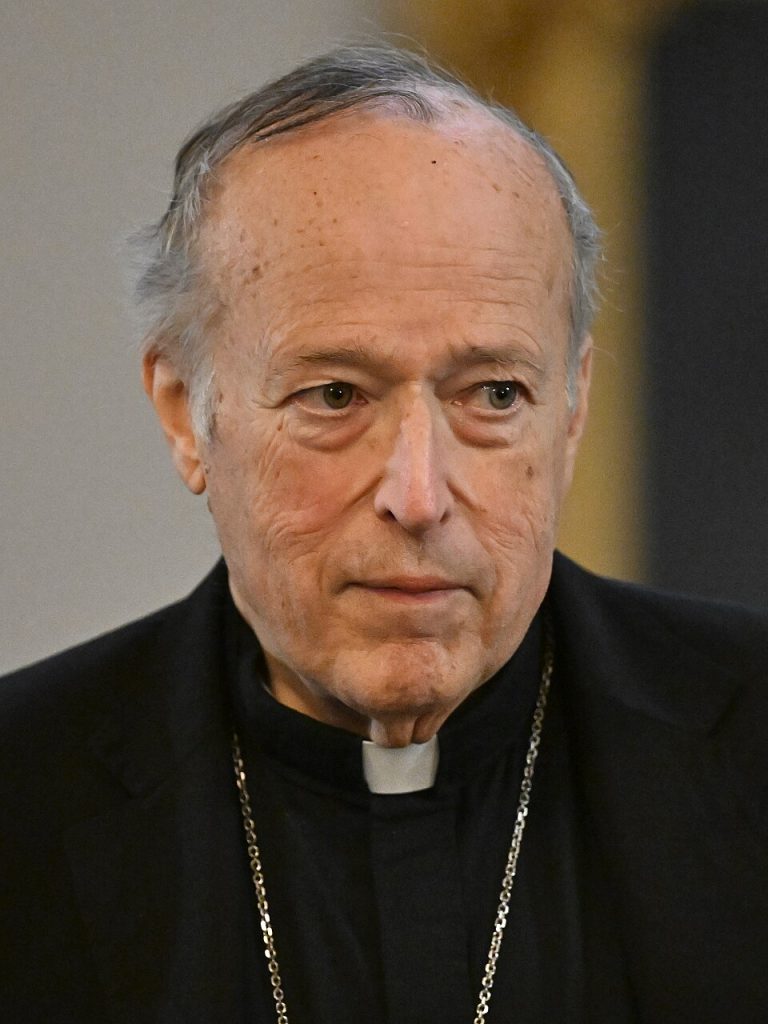
Cardinal McElroy reportedly gives verdict on altar rails in Washington
A reported directive from Cardinal Robert McElroy sets out policy on altar rails and kneelers in the Archdiocese of Washington Cardinal Robert McElroy of Washington has reportedly directed that altar rails are not to be installed or reinstalled in churches across the Archdiocese of Washington. The reported directive, first highlighted by journalist Christine Niles of Stella Maris Media, notes from a recent meeting with priests that discouraged the use of temporary kneelers for the reception of Holy Communion. According to Niles, concerns raised during the discussion included the potential disruption of Communion processions and the possibility that the use of kneelers could transform what Church law regards as an individual option into a more widespread practice. The Archdiocese of Washington has not publicly issued a statement on the reported policy, and no formal decree has yet appeared among official archdiocesan communications. The issue centres on the manner in which Catholics receive Holy Communion. In the United States, the norm approved by the bishops and confirmed by the Holy See is for communicants to receive standing after making a gesture of reverence. At the same time, universal Church law makes clear that Catholics who choose to kneel for Communion are not to be denied the sacrament on that account. The reported Washington policy comes after discussions in several American dioceses over altar rails, kneelers and other traditional liturgical furnishings. In recent months, the Diocese of Charlotte, North Carolina, became the focus of Vatican attention after Bishop Michael Martin ordered that altar rails, kneelers and prie-dieus were not to be used for the reception of Communion in public celebrations. The move caused more than 30 diocesan priests to submit formal dubia to the Vatican regarding the scope of episcopal authority over such practices. Bishop Martin wrote in a pastoral letter issued last December that the norms approved by the United States Conference of Catholic Bishops “do not envision the use of altar rails, kneelers, or prie-dieus for the reception of Communion”, arguing that their use contradicts the normative posture established by the conference. Supporters of altar rails and kneeling during Communion argue that such practices visibly express belief in the Real Presence of Christ in the Eucharist and foster a spirit of reverence. Among the most prominent advocates has been Bishop Athanasius Schneider, Auxiliary Bishop of Astana in Kazakhstan, who has repeatedly encouraged the faithful to receive Communion kneeling and on the tongue. In his book Dominus Est – It is the Lord! , Bishop Schneider wrote: “Would it not be more liturgically proper if, at the moment of Holy Communion … they would greet Him and receive Him on their knees?” He argued that kneeling before the Blessed Sacrament provides a visible witness to the Church’s faith in the Eucharistic mystery. Cardinal Raymond Burke has likewise spoken in favour of the practice, pointing to the example set by Pope Benedict XVI during his pontificate. Reflecting on Benedict’s decision to distribute Communion to kneeling communicants, Cardinal Burke said: “The Holy Father is giving a very clear lesson by his own insistence that the faithful receive Communion kneeling and on the tongue.” Similar views have been expressed by Cardinal Antonio Cañizares Llovera, the former prefect of the Congregation for Divine Worship and the Discipline of the Sacraments. He has urged Catholics to receive Communion on the tongue while kneeling, saying: “It is to simply know that we are before God himself and that He came to us and that we are undeserving.” Other bishops have emphasised the importance of maintaining the posture established by episcopal conferences for the sake of unity during the Communion procession. Cardinal Blase Cupich of Chicago has similarly stressed that the faithful process together as an expression of their identity as the Body of Christ and receive Holy Communion standing in accordance with the norm approved for the United States. He has described the practice as a “powerful symbolic expression” of ecclesial unity. The reported Washington directive has attracted particular attention because it concerns one of the largest and most influential dioceses in the United States. Cardinal McElroy, who was installed as Archbishop of Washington in March 2025 after serving for a decade as Bishop of San Diego, has become one of the most prominent voices among the American hierarchy. The controversy also follows another recent decision by the cardinal that generated headlines. Earlier this month, he removed Monsignor Stephen Rossetti as an exorcist of the Archdiocese of Washington and ended the archdiocese’s affiliation with the St Michael Center for Spiritual Renewal after comments linking UFO phenomena to demonic activity. Cardinal McElroy said the statements “gravely undermine the Church’s very precise teaching on the devil, demons and exorcism”.
Jun. 15, 2026