

Africa
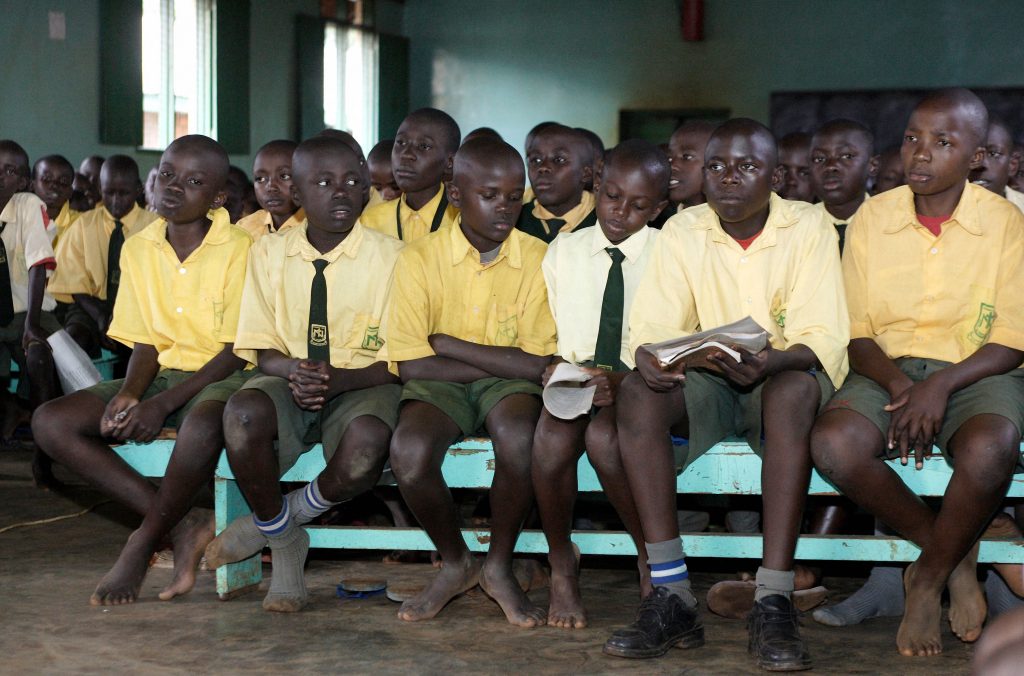
Cardinal Sarah warns Europe against ‘ideological colonisation’ of Africa
Cardinal Robert Sarah has warned that Europe is using aid, trade and diplomacy to export ideological values to Africa, arguing that ambiguous language on issues such as abortion and gender is being used to influence sovereign nations Cardinal Robert Sarah has warned that Europe risks using its economic and diplomatic influence to impose heterodox ideological values on African nations through what he described as “ideological colonization”. Speaking at a conference in the European Parliament in Brussels examining relations between Europe and Africa, Cardinal Sarah centred his address on what he called a growing “crisis of language” in international diplomacy, contending that key political concepts have become so ambiguous that they can be used to advance ideological objectives without transparent public debate. The conference, organised by the European Conservatives and Reformists (ECR) Group in collaboration with Pro Vita & Famiglia at the initiative of MEPs Paolo Inselvini and Nicolas Bay, brought together politicians, diplomats and representatives of civil society. It opened with remarks from the organisers before institutional greetings from Antonella Sberna, Vice-President of the European Parliament, and Archbishop Bernardito Cleopas Auza, the Apostolic Nuncio to the European Union. The meeting also saw the presentation of a Pro Vita & Famiglia dossier entitled Conditional Aid: The European Union and Africa: Financial, Legal, and Commercial Instruments on Abortion, the LGBTQ+ Agenda, and Sexuality Education . The report uses official documents covering the period from 2000 to 2026 to examine international treaties, parliamentary resolutions, funding mechanisms and African governmental responses relating to European engagement with the continent. Building on themes raised in that report, Cardinal Sarah questioned whether Europe and Africa still understood the language that increasingly shapes international negotiations. “Can we still understand each other?” he asked. “Do the words we use – human rights, dignity, development, freedom, health, gender, family – still mean the same thing to those who pronounce them in Brussels, Strasbourg, Kampala, or Conakry?” The cardinal argued that expressions frequently used in international agreements no longer possess universally accepted meanings. Referring specifically to the phrase “sexual and reproductive health”, Cardinal Sarah maintained that the expression is often understood as including abortion, while the language of “gender equality” may be interpreted as promoting “the deconstruction of the sexual difference between man and woman inscribed in the human body”. According to Cardinal Sarah, such ambiguity allows politically contentious policies to become embedded within international cooperation frameworks without governments or citizens fully recognising their wider implications. “A treaty, a resolution, or an action plan that uses imprecise and ambiguous vocabulary is not an instrument of cooperation, but an instrument of perversion and silent power,” Cardinal Sarah said. The Guinean cardinal argued that whoever controls the meaning of political language ultimately determines the direction of negotiations themselves, describing the process as “a form of cultural and economic neocolonialism”. Much of the address focused on the European Union’s cooperation agreements with African states, particularly the Samoa Agreement signed in 2023, alongside wider EU financial programmes supporting development across the continent. Referring to those frameworks, Cardinal Sarah stated: “Here appears in a verifiable way the ideological colonization: the use of trade and finance to intervene in the criminal and family legislation of a sovereign state, directly violating the principle of self-determination of peoples.” Summarising his appeal, Cardinal Sarah declared: “No to ideological colonization of Africa, but genuine subsidiarity.” Throughout the address, the cardinal referenced papal teaching. He cited Pope Leo XIV’s encyclical Magnifica Humanitas , particularly passages warning against manipulative language capable of reducing human beings to statistics. Cardinal Sarah also referred to Pope Leo’s address to the diplomatic corps earlier this year, recalling the pontiff’s appeal that “we need words to once again express certain realities unequivocally. Only in this way can authentic dialogue, free from misunderstandings, resume.” The cardinal also drew upon the teaching of Pope Benedict XVI, questioning whether European legislation presented as neutral in fact advances a particular vision of the human person. “Isn’t European legislation that claims to be neutral toward every anthropological vision but imposes a specific and contestable vision of humanity slipping into the irrationality against which Pope Benedict warned us?” Cardinal Sarah asked. The address likewise echoed Pope Francis’s repeated criticism of what the late pontiff termed “ideological colonization”. Cardinal Sarah recalled Pope Francis’s warning: “Let us be wary of new ideological colonizations that seek to destroy the family.” Developing that argument, Cardinal Sarah criticised funding arrangements and international assistance which he said are increasingly linked to policies concerning abortion and gender ideology. Referring to the Pro Vita & Famiglia report presented during the conference, Cardinal Sarah argued that development partnerships should respect the sovereignty of African nations rather than seek to reshape their domestic legislation through financial incentives. The cardinal also challenged what he described as changing definitions surrounding abortion and sexuality within international discourse. “The lack of access to abortion is defined as ‘violence’,” Cardinal Sarah said, “while the unborn child—the weakest, the most innocent among us—is deprived of any voice, any representation, any rights.” Similarly, Cardinal Sarah argued that programmes promoting sexual education without consultation in receiving countries could themselves constitute a form of external interference rather than genuine international cooperation. As examples of African constitutional traditions, Cardinal Sarah referred to Kenya and Uganda. Kenya’s constitution, he noted, provides that “a person’s life begins at conception”, while Uganda’s constitution states that “no person has the right to end the life of an unborn child, except as authorized by law”. Rather than viewing such constitutional provisions as outdated, Cardinal Sarah described them as “a fragment of legal wisdom… that the West would do well to reconsider rather than correct”. Returning to the broader relationship between Europe and Africa, Cardinal Sarah argued that African societies possess religious and cultural traditions deserving of respect rather than reinterpretation through external political frameworks. “We need respect for Africa’s religious and cultural history, which is not an obstacle to development, as is sometimes insinuated in the corridors of Brussels, but is a fundamental requirement,” Cardinal Sarah said. “A people has the right to live, preserve, and transmit its own religious and family culture, just as every individual has the right to profess their faith.” He concluded by urging Europe to reassess the foundations of its engagement with African nations. “Europe must examine its conscience, listen to Africa, and respect its cultural sovereignty, offering free cooperation unconstrained by ideologies. Africa itself can offer the testimony of a living faith and a sense of family that can help Europe rediscover its own logos .” Speaking afterwards to members of the foreign press on the sidelines of the conference, Cardinal Sarah returned to the principle of self-determination that had underpinned his address. “We must respect the centrality of man, because he is the image of God, just as we must respect peoples in their self-determination,” Cardinal Sarah said. “No one should be forced to accept a law that goes against their nature, against their religious convictions, or against their human convictions. And so we can live together in peace.”
Jul. 16, 2026
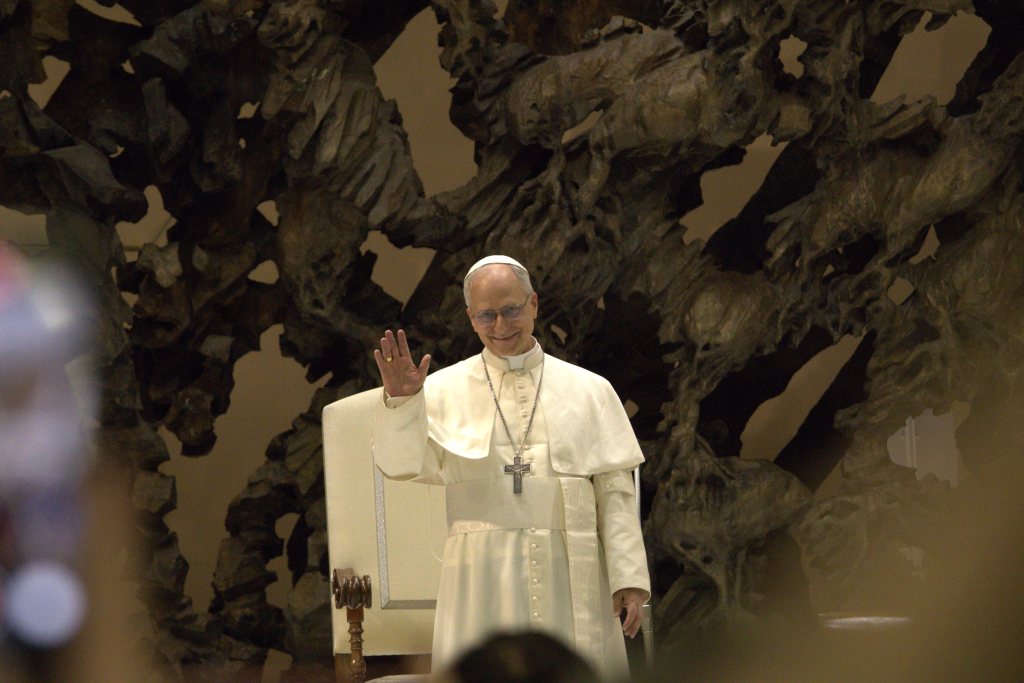
Pope Leo concludes 11 day Africa visit with Holy Mass in Malabo
Pope Leo has brought his first African journey to a close with a final Mass in Malabo, ending an 11 day visit across Algeria, Cameroon, Angola and Equatorial Guinea The final Mass in Malabo, Equatorial Guinea, has brought to a close the first African journey of Pope Leo XIV, ending an 11 day visit that has taken him across four countries. Speaking at the end of the Mass, the Pope told the faithful plainly: “The time has come” to depart, thanking “the Archbishop, the bishops, the clergy and all the people of God journeying in this land”, and marking the conclusion of a visit that has combined large public gatherings with pointed addresses to political authorities. The journey, which ran from April 13 to 23, brought the Pontiff to Algeria, Cameroon, Angola and Equatorial Guinea, covering more than 11,000 miles and including 18 flights, alongside a programme of Masses, formal addresses and meetings with civil and religious leaders. It is the first apostolic journey of his pontificate to Africa, a continent now home to almost 300 million Catholics. In Malabo, closing the visit, the Pope spoke of what he described as “an immeasurable treasure of faith, hope and charity”, adding that “this treasure consists of stories, faces and testimonies, both joyful and sorrowful, which will greatly enrich my life and ministry as the Successor of Peter”. He thanked the country’s civil authorities for their welcome and entrusted the people of Equatorial Guinea and the wider continent to the care of the Virgin Mary. The Pope made several brief greetings to journalists aboard the papal plane on key legs of the journey. These were not full press conferences with questions and answers but short, unprompted or lightly interactive addresses. During the outbound flight from Rome to Algiers, Pope Leo addressed early comments from the US President Donald Trump criticising his stance on geopolitical issues. His Holiness said: “I have no fear of neither the Trump administration nor of speaking out loudly about the message of the Gospel. And that’s what I believe I am called to do and what the Church is called to do. We’re not politicians. We’re not looking to make foreign policy, as he calls it, with the same perspective that he might understand it. But I do believe that the message of the Gospel, ‘Blessed are the peacemakers’, is a message that the world needs to hear today.” The visit began in Algiers on April 13, where the Pope was received with official honours and met President Abdelmadjid Tebboune. Addressing civil authorities and the diplomatic corps, he spoke of the importance of coexistence before visiting the Great Mosque of Algiers. There, His Holiness said: “To seek God is also to recognise the image of God in every creature … it is very important to learn to live together with respect for the dignity of every human person.” He added that such encounters show that “we can learn to respect one another, live in harmony and build a world of peace”. Later the same day, the Pope met the small Catholic community at the Basilica of Our Lady of Africa, describing them as a “humble and faithful sign of Christ’s love”. The following day, Leo travelled to Annaba, the ancient Hippo Regius associated with St Augustine of Hippo. Visiting the ruins and celebrating Holy Mass, Pope Leo said: “God’s heart is torn apart by wars, violence, injustice and lies … God’s heart is with the little ones, with the humble, and with them he builds up his Kingdom of love and peace day by day.” Speaking to journalists aboard the flight from Algeria to Cameroon on April 15, Pope Leo XIV offered a brief but reflective account of the opening stage of his journey, describing it as “a very blessed trip” and “a special blessing for me personally”. He did not take questions, instead delivering a short prepared reflection in a notably relaxed tone. He expressed gratitude to the Algerian authorities for their welcome, including the military escort for the papal plane, stating: “It is a sign of the goodness, of the generosity, of the respect that the Algerian people and the Algerian government have wished to show to the Holy See, to myself.” Turning to the visit to the Great Mosque of Algiers, he underlined its significance, saying: “I think the visit to the mosque was significant and to say that although we have different beliefs, we have different ways of worshipping, we have different ways of living, we can live together in peace.” Reflecting on the Catholic presence in Algeria, he described the local community as “very small, but very significant”, before returning to the previous day’s visit to Annaba, associated with St Augustine of Hippo: “It was a special honor for me to return to Annaba yesterday also to offer the Church and the world the vision that St Augustine offers us in terms of that search for God and the struggle to build community, to seek for unity among all people, and respect for all peoples in spite of the differences.” From Algeria, the Pope travelled to Cameroon on April 15, where His Holiness met President Paul Biya in Yaoundé and addressed authorities, civil society and diplomats. In one of the most direct passages of the journey, Leo said: “In order for peace and justice to prevail, the chains of corruption must be broken. Hearts must be set free from an idolatrous thirst for profit.” The Pope added that “authentic peace arises when … the law serves as a secure safeguard against the whims of the rich and powerful”. The following day, he travelled to Bamenda, the centre of the country’s Anglophone crisis, where he met Christian and Muslim leaders. Speaking at a peace gathering, he said: “The world is being ravaged by a handful of tyrants, yet it is held together by a multitude of supportive brothers and sisters.” He warned against those who “manipulate religion and the very name of God for their own military, economic or political gain”, adding: “Peace is not something we must invent: it is something we must embrace.” Large public gatherings followed, including Holy Mass in Douala attended by tens of thousands, where he urged young people to resist corruption and remain rooted in faith and family life. During the subsequent flight from Yaoundé to Angola on April 18, the Pope delivered a more extended in-flight address in which he both reviewed the Cameroon leg and addressed media interpretations of his remarks. Opening with a multilingual greeting, “Buongiorno. Bonjour. Good morning everyone. Good afternoon already. I hope you had a good time in Cameroon. And, as you know of course, we are on our way now to Angola”. He referred to a monument at the Catholic University depicting St Augustine of Hippo at the centre of the continent, before restating his purpose: “I primarily come to Africa as a pastor, as the head of the Catholic Church to be with and to celebrate with, to encourage and accompany all of the Catholics throughout Africa.” Addressing reports that his peace remarks in Bamenda had been directed at US President Donald Trump, he rejected that interpretation, saying: “At the same time, there has been a certain narrative that has not been accurate in all of its aspects … Much of what has been written since then has been more commentary on commentary trying to interpret what has been said.” His Holiness added a specific clarification: “Just one little example: the talk that I gave at the prayer meeting for peace a couple of days ago was prepared two weeks ago, well before the President ever commented on myself and on the message of peace that I am promoting.” Concluding, he reiterated the continuity of the journey’s message: “So we go on the journey, we continue proclaiming the Gospel message … promote fraternity, brotherhood, trusting in the Lord, but also looking for ways to promote justice in our world, promote peace in our world.” The visit continued in Angola from April 18, where the Pope met President João Lourenço in Luanda. Addressing authorities, the Pope criticised what he called the “logic of extractivism” and the “cycle of interests” that has long shaped the exploitation of resources. At the Marian shrine of Muxima, he led the Rosary and told pilgrims: “It is love that must triumph, not war”, calling on the faithful to become “messengers of life”. In Saurimo, addressing a large crowd, His Holiness said: “We can see today how the hope of many people is frustrated by violence, exploited by the powerful and defrauded by the rich … when injustice corrupts hearts, the bread of all becomes the possession of a few.” The final leg of the journey brought him to Equatorial Guinea on April 21, where His Holiness was received by President Teodoro Obiang Nguema Mbasogo. Addressing authorities, he drew on the City of God to frame a contrast between political choices, asking leaders to consider whether they wished to serve “the city of God” or “the earthly city”. He said that governance must be rooted in “authentic liberty, justice, respect and promotion of the rights of every person”. During the visit, he met young people, cultural representatives and the country’s bishops, and visited a psychiatric hospital, where he told patients: “God loves us just as we are.” In Bata, he visited a prison, telling inmates: “You are not alone. Your families love you and are waiting for you … If any of you fear being abandoned by everyone, know that God will never abandon you, and that the Church will stand by your side.” He added: “No one is excluded from God’s love.” He also prayed at a memorial to victims of the March 7, 2021 explosions, before meeting families and young people, urging them to form “free and responsible consciences” and to work for the common good. The journey concluded on April 23 with the final Mass in Malabo Stadium, attended by large crowds. In his closing words, the Pope returned to the themes that have marked the visit, thanking those he had encountered and pointing to the enduring presence of the Church.
Apr. 24, 2026