

Latest
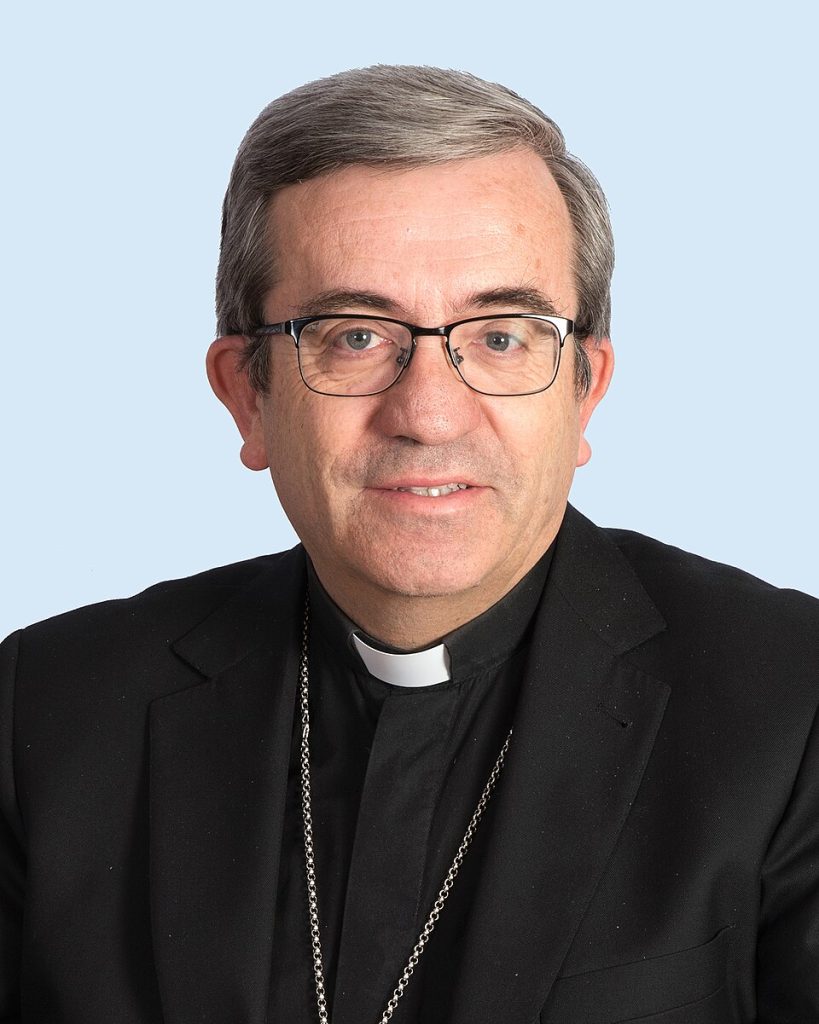
Archbishop Argüello issues Corpus Christi reminder on who may receive Communion
Archbishop Luis Argüello, president of the Spanish Bishops’ Conference, has reiterated that Catholics living in a new conjugal relationship following the breakdown of a valid sacramental marriage cannot receive Holy Communion The president of the Spanish Bishops’ Conference has reminded Catholics that those living in a new conjugal relationship following the breakdown of a valid marriage cannot receive Holy Communion. Archbishop Luis Argüello of Valladolid made the remarks in a pastoral message for Corpus Christi in which he reflected on the Eucharist and the dispositions required to receive it worthily. “When a marital relationship has broken down and those who were part of that marriage are living a new conjugal relationship,” Communion cannot be received, the archbishop said. Archbishop Argüello said those in such circumstances remained members of the Church, but that “this breaking of the Sacrament of the Covenant prevents Eucharistic communion”. “They may participate in the celebration, as well as in the life of the Church in many ways, but receiving Holy Communion is not possible,” the president of the Bishops’ Conference said. The Archbishop of Valladolid issued the message as Catholics in Spain prepare to celebrate Corpus Christi later this month. In the reflection, published as part of his diocesan pastoral programme for the first half of June, Argüello also referred to other situations which he said were incompatible with receiving Communion. These included “participating in a sinful relationship”, as well as abuses committed against others “whether in the economic or labour sphere, or in the psychological or emotional sphere”. He also referred to those publicly defending positions contrary to Christian morality. “In those cases, we cannot approach Communion without a firm decision to change our lives, making reparation for the damage caused by our situation of sin,” the archbishop said. Archbishop Argüello said the inability to receive Communion should encourage Catholics to seek a resolution consistent with the Church’s teaching on both marriage and the Eucharist. “The pain of not receiving Communion should awaken the desire to seek a solution that respects the meaning of the two sacraments at stake: Matrimony and the Eucharist,” Archbishop Argüello said. The intervention comes as Archbishop Luis Argüello prepares to accompany Pope Leo XIV during the pontiff’s apostolic visit to Spain from 6 to 12 June. Archbishop Argüello, who was elected president of the Spanish Bishops’ Conference in 2024, has become one of the most prominent voices in the Spanish Church. His election was widely viewed as signalling a more doctrinally direct approach from the episcopal conference following the presidency of Cardinal Juan José Omella. Catholic teaching holds that a valid sacramental marriage is indissoluble. For that reason, those who enter a new conjugal relationship while a previous sacramental marriage remains valid are ordinarily unable to receive the Eucharist. The issue received renewed attention during and after the Synods on the Family convened by Pope Francis and following the publication of the apostolic exhortation Amoris Laetitia in 2016. Archbishop Argüello’s latest remarks, however, amounted to a straightforward restatement of the Church’s doctrine.
Jun. 2, 2026

Pope Leo XIV appoints EWTN COO as first lay woman prefect
Maria Montserrat Alvarado, president and chief operating officer of EWTN News, has been appointed Prefect of the Dicastery for Communication by Pope Leo XIV, becoming the first lay woman to head a department of the Roman Curia. She will take up the role on 1 November, succeeding Paolo Ruffini Pope Leo XIV has appointed Maria Montserrat Alvarado, president and chief operating officer of EWTN News, as Prefect of the Dicastery for Communication, making her the first lay woman to head a department of the Roman Curia. The Vatican announced that the Mexican-born media executive will assume office on 1 November, succeeding Paolo Ruffini, who was himself a trailblazer when he became the first lay prefect of a Vatican dicastery in 2018. Dr Alvarado has led EWTN News since 2023, overseeing the Catholic broadcaster’s global news operations across television, radio, print and digital media in seven languages. Prior to joining EWTN, she spent 14 years in senior roles at the Becket Fund for Religious Liberty, the Washington-based legal organisation known for defending religious freedom cases before courts in the United States and internationally. Her appointment places one of the most prominent figures in Catholic media at the head of the Holy See’s vast communications apparatus, which includes Vatican News, Vatican Radio, Vatican Media, L’Osservatore Romano, the Holy See Press Office and the Vatican publishing house. The decision also marks a significant milestone in the increasing involvement of lay people, and particularly women, in senior Vatican leadership positions. In a statement released following the announcement and provided to EWTN, Alvarado said she had received the news “with deep gratitude, humility, and trust in the Lord”. She added that her years working alongside colleagues at EWTN had strengthened her faith and prepared her for the new responsibility entrusted to her by the Pope. Michael Warsaw, chairman and chief executive of EWTN, praised her leadership and described her as having helped shape the network’s international outreach during a period of rapid expansion into digital media. “Montse’s background in international media, public affairs, and Church engagement has helped shape EWTN’s outreach at a critical moment in the history of our apostolate: the pivot into a deeper engagement with the digital space,” he said. “Just as importantly, she has remained deeply committed to the mission that defines EWTN: proclaiming the truth of Jesus Christ and the teachings of His Church with clarity, fidelity, and charity.” Ruffini, who will work alongside his successor during the transition period, said he had come to know Alvarado over recent years and looked forward to assisting her in the months ahead “in the spirit of communion that unites us in the Church”. The Dicastery for Communication was created by Pope Francis in 2015 as part of his wider reform of the Roman Curia. The restructuring merged a collection of previously separate Vatican media institutions into a single department intended to coordinate the Church’s global communications strategy and modernise its engagement with contemporary media. While women religious have held influential offices within the Roman Curia, Alvarado becomes the first woman who is neither a nun nor a member of a religious order to be appointed prefect of a dicastery. Born in Mexico City, she studied at Florida International University and George Washington University before building a career focused on public policy, religious liberty and Catholic communications. Her writings and commentary have appeared across a range of international media outlets, and she has received recognition for her work promoting religious freedom. The appointment places her among the most senior lay officials in the Vatican and gives her responsibility for shaping how the Holy See communicates with more than 1.4 billion Catholics around the world. Although Ruffini had been expected to leave office later this year at the conclusion of his mandate, Pope Leo has effectively brought forward that transition by naming his successor several months in advance, allowing for an extended handover before Alvarado formally takes up the post on 1 November.
Jun. 2, 2026
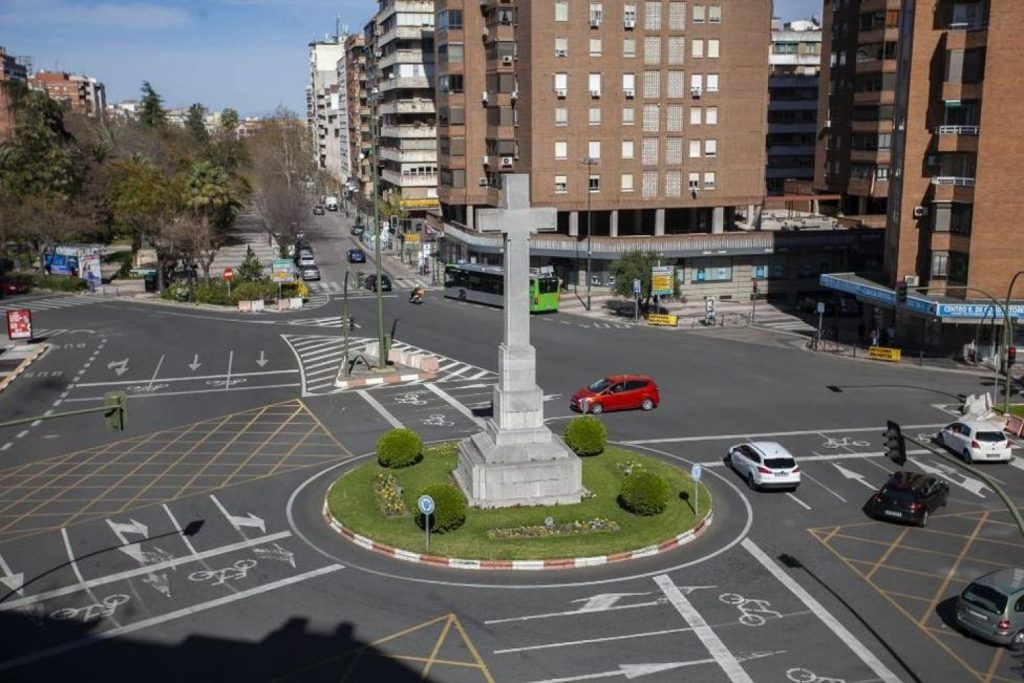
Spanish government orders removal of Cáceres Civil War cross amid heritage battle
The Spanish government has given Cáceres three months to remove the Cross of the Fallen, arguing it is a Francoist symbol incompatible with Spain’s Democratic Memory Law. Local and regional authorities are challenging the order in court and seeking heritage protection for the monument The Spanish government has given the city of Cáceres three months to remove a prominent Civil War-era cross after formally designating the monument as a symbol contrary to Spain’s democratic memory laws. The Cross of the Fallen, which stands in Plaza de América in the western city of Cáceres, was added in April to the national catalogue of symbols and elements considered incompatible with the principles of Spain’s 2022 Democratic Memory Law. The measure was accompanied by an order requiring its removal from public space, with the government arguing that the monument constitutes a Francoist symbol and lacks the artistic or historical significance necessary to justify an exemption. The decision has been fiercely opposed by local and regional authorities, who insist the cross is primarily a religious monument and forms part of the city’s historic landscape rather than a political statement. Rafael Mateos, the Popular Party mayor of Cáceres, has pledged to challenge the order through the courts. The city council argues that the monument has long since ceased to function as an instrument of political exaltation and that its presence in the city centre is now understood in a broader historical and cultural context. Municipal officials have also raised procedural objections. According to the council, the original removal order issued in April was signed by an authority that lacked the legal competence to do so. Although the government later issued a fresh resolution in May, the city intends to contest that decision as well and seek a suspension of the deadline while legal proceedings are underway. The dispute has drawn in the regional government of Extremadura, which has begun proceedings to grant the monument Bien de Interés Cultural status, Spain’s highest form of heritage protection. Such a designation would strengthen the case for preserving the cross and could complicate attempts to remove it. Laureano León, Extremadura’s regional minister for culture, tourism and sport, has indicated that he believes the monument fulfils the criteria required for heritage protection. Speaking to journalists before appearing before the regional parliament’s culture committee, León said the designation process was already under way and would continue through the normal administrative channels. “Certainly, my opinion is that it meets the conditions,” he said, while adding that the final determination would depend on technical reports produced during the process. The controversy has also become a flashpoint in wider political tensions between Madrid and Extremadura. The regional administration is governed by the Popular Party with the support of Vox, and both parties have defended the monument’s continued presence. Álvaro Sánchez-Ocaña Vara, Vox’s deputy spokesman in the Extremadura Assembly, accused the central government of targeting the cross for political reasons and linked the dispute to the governing arrangement between Vox and regional president María Guardiola. “The Cross is not to be touched,” Sánchez-Ocaña told reporters in Mérida. He described the government’s resolution as “an outrage” and “political persecution”, arguing that the monument is “inherently religious, but above all historical and devoid of any political exaltation”. Sánchez-Ocaña further maintained that the legal justification for removing the cross was flawed because the monument no longer serves any ideological purpose. He called on the government to allow the structure to remain in place while appeals are considered. “We demand that the central government, until the appeal is resolved, leave the Cross where it is,” he said. “The Cross is the heritage of the people of Cáceres and it must remain so.” The dispute centres on competing interpretations of the monument’s meaning nearly nine decades after it was erected. The cross was built in 1938 during the Spanish Civil War, a conflict that claimed hundreds of thousands of lives and culminated in the victory of General Francisco Franco’s Nationalist forces. Throughout Spain, monuments dedicated to the “fallen” were erected during and after the war, often commemorating those who died fighting for the Nationalist cause. Many of these memorials incorporated overt political symbolism linked to Franco’s regime, while others took the form of large Christian crosses that remained in public spaces long after Spain’s transition to democracy. Since the end of the Franco dictatorship, Spanish governments have grappled with how to address such monuments. Efforts to remove Francoist symbols accelerated under the Historical Memory Law of 2007 and were expanded significantly through the Democratic Memory Law adopted in 2022. The legal challenge now being prepared by the city council is likely to determine whether the monument remains in Plaza de América or becomes the latest casualty of Spain’s long-running reckoning with the legacy of the Civil War and the Franco era.
Jun. 1, 2026
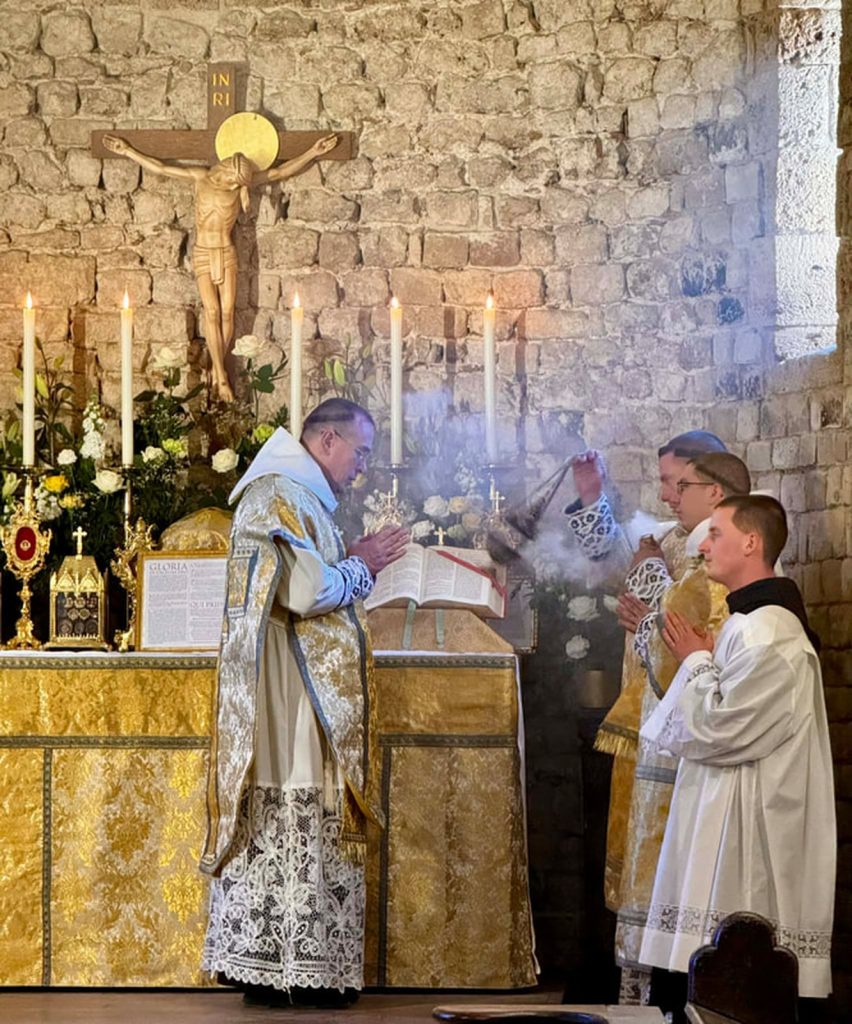
Dom Alcuin Reid calls for month of prayer for the unity of the Church as SSPX consecrations approach
Dom Alcuin Reid, prior of the Monastère Saint-Benoît in France, has called on Catholics to make June a month of prayer and fasting for the unity of the Church ahead of the SSPX’s planned episcopal consecrations on 1 July. He has urged prayers for Pope Leo XIV, his advisers and the Society of St Pius X Monastère Saint-Benoît, an international English-speaking traditional Benedictine monastery in the Diocese of Fréjus-Toulon, France, has called on Catholics to make June a month of prayer for the unity of the Church. The monastery’s prior, Dom Alcuin Reid, explained that “the Church faces the possibility of the hardening of divisions through the positions held by various parties in respect of the episcopal consecrations announced for 1 July by the Society of St Pius X.” The monk also drew on reflections made by Pope Benedict XVI in 2007, in which he stated that, “looking back over the past, to the divisions which in the course of the centuries have rent the Body of Christ, one continually has the impression that, at critical moments when divisions were coming about, not enough was done by the Church’s leaders to maintain or regain reconciliation and unity.” With this in mind, he appealed to Catholics to “make the month of June a time of earnest prayer and fasting for the unity of the Church, praying in particular for the Holy Father and his advisers as well as the leaders of the Society of St Pius X.” For its part, the monastery will offer up one day a week in particular for the intention. Dom Reid stated: “The monastery will observe one day each week as a day of particular prayer and fasting: Wednesdays, June 3, 10 and 17, and Friday, June 26 (respecting the feasts of the Sacred Heart and St John the Baptist). On these days the Conventual Mass will be a votive Mass Pro unitate Ecclesiae, and a Holy Hour of adoration will be offered before the Most Blessed Sacrament from the Office of Sext, concluding with Benediction of the Most Blessed Sacrament.” Dom Alcuin Reid is a renowned liturgical scholar whose 2004 book, The Organic Development of the Liturgy , featured a foreword by the then Cardinal Joseph Ratzinger. In 2011, he went on to found the Monastère Saint-Benoît at the invitation of the then Bishop of Fréjus-Toulon, Bishop Dominique Rey. The monastery seeks to live a classical Benedictine life, celebrating the sacred liturgy in all its fullness according to the older traditional Latin forms of the Roman and monastic rites.
Jun. 1, 2026
A (Catholic) Communist Manifesto
Is the future of Catholicism communal? Oscar Yuill argues that Catholics should begin thinking seriously about communal living and sets out his proposals for a new Catholic land movement When, late last year, I moved into a comfortable house in East Sussex (specifically Brighton), my dream of living on a Catholic commune of the Dorothy Day variety faded into the background. Until, that is, I realised that one of my favourite writers, the painter-poet David Jones, had joined a Catholic artists’ commune in Ditchling, a mere twenty-minute drive away. I then discovered that my soon-to-be newborn son’s godparents, as well as a growing number of our fellow parishioners, are entertaining similar notions. Coincidence began to look a lot like providence; the dream, a reality. Reality, of course, has the especially unwelcome habit of asserting itself. The obstacles to realising anything like a Catholic commune are, in Britain at least, legion. Even on privately owned land, the building of so much as a toilet, let alone a chapel, requires planning permission from the local council. There are agricultural restrictions on what and how much one can grow. Tax law is, as ever, a living nightmare, which is to say naked, broad-daylight, open, overt, explicit, gleeful, unapologetic robbery achieved by means of a Byzantine labyrinth of small print, instilling in the taxpayer a sense of Kafkaesque futility and ultimate despair. Still, it is precisely these hindrances that incentivise the growing anti-statism, not to be confused with libertarianism, that animates people like me to think of these alternative living arrangements. Catholics especially must now ask whether the country in which they live is a country in which they have a secure future. Our moral convictions have long been ridiculed, amounting to a sort of de facto criminalisation. Now, though, the persecution is increasingly de jure , as shown by Isabel Vaughan-Spruce’s numerous arrests and, recently, criminal charge. Nor is it difficult to imagine a future in which Parliament passes a more subtle version of the Terminally Ill Adults (End of Life) Bill, or, as I like to call it, Harold Shipman’s Law, under which Catholics faithful to the duty of palliative care, including towards their only family members, face significant legal repercussions. The Covid lockdowns showed that the State is quite willing to prevent, with force if necessary, the celebration of Easter. The rapid growth of Islam, driven not just by mass immigration but by a dismal indigenous fertility rate, seems likely to drive distinctly Christian moral values farther and farther from the range of tolerable opinion. Moreover, Britain is perched atop a number of economic time bombs, such as the inevitable implosion of the pension system. Inflation remains high, wages stagnant, debt astronomical. Trump’s (i.e. Israel’s) war against Iran will be seen by future historians as a catalyst for our impending financial meltdown. All will be affected. If, then, the “prepper” mentality has begun to seep into the Christian mindset, that is because the writing is very much on the wall. But since when was the Gospel an optimist’s creed? There was always a kind of improbable insanity to the command to give all that one has to the poor, to strive for meekness rather than pride, for forgiveness rather than revenge, for peace rather than conquest. Nietzsche called it “the transvaluation of values”; and indeed the whole history of Christendom could with justice be described as a periodic attempt to ask which values, exactly, it was committed to. As the meme puts it: Which way, western man? The Cluniacs and the Cistercians attest to this pattern of renewal. The Gospel refreshes and restores moribund people, places and institutions, much as the water from Christ’s side splashed onto Longinus’ eyes, healing his partial blindness. If, then, I am far from optimistic, I remain abundantly hopeful that, in the not too distant future, East Sussex, or Scotland or France or Italy (we have cast a wide net), may see the genesis of a Catholic land movement. Which brings me to the nub of this essay: by what Ordo shall our little community be governed? The Rule of Saint Benedict seems the obvious solution. Yet there is no getting round the fact that this foundational masterpiece of brevity, sanity and spiritual moderation is intended for monasteries proper. It also contains some quite hearty endorsements of corporal punishment, and, while my grandfather often spoke with misty-eyed nostalgia of “the cane”, our prospective communist gang would rather spare the rod. No, we shall need a more “contemporary” regula. To wit, I offer the following ten broad brushstrokes: To gain admittance, all visitors will be forced at hoe-point to recite the Nicene Creed. Roosters caught crowing during the Angelus shall be summarily casseroled. All conversation, including about the weather, shall be conducted in one of the eight Gregorian psalm tones. No less than 75 per cent of arable land shall at any time be dedicated to viticulture. A tiered system of preferential treatment shall apply to all Protestant visitors. Calvinists shall be informed that their accommodation, the pigsty, was double predestinated, so there’s no use complaining. Anglicans are required to fold thirty-nine articles of clothing before they are permitted to leave. Quakers must sit in silence for the duration of their stay. A large rock shall be placed at the highest point in the commune. Orthodox visitors must hug said rock while chanting “Peter, Peter, Peter,” etc. until such time as the Great Schism of 1054 is miraculously forgotten. We shall have a moat. State-employed homeschooling auditors shall be cast into the moat. Rescue to be contingent upon their observance of Rule No. 1. A feast day for G.K. Chesterton shall be inserted into the General Calendar; on this day, all fences shall be mended. Anyone found using technology invented after the Casio F-91W digital watch, the indisputable zenith of human technological achievement, shall be forced, again at hoe-point, into exile for an arbitrary period. The Casio rule is apt. I have owned several good mid-range watches. None of them lasted longer than three or four years, and I take care of my possessions. I then switched to using my smartphone, which simply increased the time I spent on my smartphone. So, I decided to go back to basics. The Casio F91-W has retained the same design for 35 years: a clock, an alarm clock and a stopwatch. It’s timeless (if you’ll pardon the pun), classless and reliable. It’s also painfully, albeit endearingly, unfashionable. Louis Theroux was seen sporting one in his documentary Inside the Manosphere , a refreshing Everyman rebuke of the gaudy Rolexes worn by his unwitting (and witless) victims. (It seems Osama bin Laden was also a Casio devotee, but the company chose not to lead with that particular endorsement.) It does the job. Three million are manufactured annually. The Amish would approve: they trial new technologies to determine whether they benefit the community. One thinks, as well, of the British economist E.F. Schumacher’s wheelbarrow. A Catholic convert, Schumacher wrote that good technologies should answer to needs, not desires; they are usually cheap and scalable, and tend to lighten labour without adding unnecessary headaches. The wheelbarrow was his favourite example: invented some 3,500 years BC, and still to be seen in every garden and building site in the world. Schumacher’s most famous book is titled Small Is Beautiful . That, it seems to me, must be the governing philosophy of any Catholic commune worth its salt, lest the whole enterprise degenerate into an unnecessarily cumbersome replica of the modern world, a sort of ridiculous LARP, instead of a haven from it. No use living off the land and praying by candlelight if one creeps back to the glowing laptop and the latest Catholic ragebait. The Pope said WHAT?! Indeed, much as the internet siphons people away into little cultic feedback loops, adherents of the Catholic land movement must guard against setting themselves over and above the “normie” world of everyday parish life. This is already a danger. Catholics attracted to communal living are likely sympathetic to the Traditionalist liturgical movement as a whole, and that movement, while often unfairly traduced, can no longer deny that parts of it harbour schismatic tendencies. Whatever one’s view of the SSPX’s planned consecrations this coming July, I suspect most fair-minded Catholics see both sides, it is difficult to deny how the Society may drift farther and farther from the centre and become, in the end, something like the Old Catholics: a voice crying wolf in the wilderness. Certainly, the perceived heroism in this stance can be attractive. But the octogenarian extraordinary Eucharistic minister at one’s local parish is as dear to God as the Texan Thomist whingeing about Pachamama for the third time that week. If there are no atheists in foxholes, there ought to be no Catholics in bunkers. A Catholic commune should be porous to outside involvement and contribution. A fine example is Worth Abbey, which I found, on my first visit, both mysteriously forbidding and delightfully welcoming. Visitors are free to peruse the gift shop, which has an electronic honesty box for payment, as well as the main church and the abbey grounds. But there are clear limits, too, as my wife and I found when a brother gently told us off for having trespassed, by accident, into the monks’ private gardens. Many of those monks have spent time living in Brighton as “Monks in the City”, an initiative for bringing the monastic mindset to the churn of secular city life, and they, in turn, are nourished by the lay concerns they encounter. We are treading carefully, my wife and I. To live on a commune, whether Catholic or tie-dyed-in-the-wool hippy, is no small ask, affecting everything from finance to privacy and healthcare to parenting. It may never happen. But I hope it does. The case is there: many young people already live with their parents to save money. A Catholic commune is, in one sense, merely a spiritualised extension of this intergenerational principle. And if such arrangements were the norm in the past, they may, perhaps, not be entirely abnormal in the future.
Jun. 1, 2026

Italian bishop urges Catholics to evangelise Muslims living in Europe
An Italian bishop has called on Catholics to share the Gospel with Muslim migrants and said that failing to proclaim Jesus Christ would amount to a betrayal of the Church’s mission An Italian bishop has urged Catholics to evangelise Muslims living in their communities, warning that failing to proclaim Jesus Christ would be a betrayal of the Church’s mission. In a pastoral letter issued for the Diocese of Ventimiglia-Sanremo, Bishop Antonio Suetta said Christians should welcome Muslim migrants with charity and respect while remaining committed to sharing the Gospel. “To neglect the proclamation of Jesus Christ would be to disregard His saving Cross and His universal mediation. Ultimately, it would be to betray our mission as the baptised,” the bishop wrote in a new diocesan pastoral letter, There Is No Greater Love Than This . The letter, published ahead of a diocesan initiative aimed at strengthening engagement with local Muslim communities, comes as parts of Italy continue to experience significant migration from North Africa and the Middle East. Drawing on the example of St Francis of Assisi’s encounter with Sultan al-Malik al-Kamil in Egypt during the Fifth Crusade in 1219, Bishop Suetta argued that Christians should neither conceal their faith nor approach Muslims with hostility. Instead, he pointed to the saint’s instructions in the Regula non bullata of 1221, which encouraged friars living among non-Christians to bear witness through the example of their lives while also proclaiming the Christian faith. The bishop said many Muslims arriving in Europe encounter a secularised society and often mistake moral decline for Christianity itself. “Muslims arriving in Western countries are often bewildered by the secularisation of society, as they tend, mistakenly, to be sure, yet understandably, to equate public immorality with the Christian faith,” he wrote. “Only when they come into contact with Christians who live consistently with their faith do they realise that secularisation is a corruption of Christianity; thus, they begin to discover the true face of Jesus.” While emphasising the importance of dialogue and collaboration, Bishop Suetta insisted that Christian witness could not stop at hospitality alone. “Hospitality and collaboration are, in themselves, two ways of bearing practical witness to true faith in Jesus,” the bishop said. “Such acts must always be accompanied by our spiritual identity, speaking of Jesus Christ not through imposition, but with love.” The bishop devoted a significant section of the letter to the Church’s missionary mandate, citing both St John Paul II and Pope Francis. He argued that the changing religious landscape of Europe meant that the traditional missionary territories of previous centuries were now present within Western societies themselves. “If in the past the mission ad gentes to non-Christians had as its privileged setting countries with a non-Christian majority, the time has now come to take up this responsibility here at home, particularly towards Muslim immigrants,” Bishop Suetta wrote. Among the most striking passages of the document is a comparison between evangelisation and rescuing a drowning person. “If we see someone struggling to climb out of a river, yet being swept away by the current, and we happen to have a rope to assist them, it would be an act of grave negligence not to throw that rope,” the bishop wrote. “How many Muslims living among Christians will turn to them on the Day of Judgment and ask: ‘Why did you not throw me the rope? Why did you not make the truth known to me?'” The pastoral letter was issued as the Church prepares to mark the 800th anniversary of the death of St Francis of Assisi and follows Pope Leo XIV’s decision to designate a special Year of St Francis from January 2026 to January 2027. The document also coincides with the 60th anniversary celebrations of Nostra Aetate , the Second Vatican Council declaration on relations between the Church and non-Christian religions..
Jun. 1, 2026